Pork Shoulder Braised With Apples is a cozy, beginner-friendly main dish with deep savory flavor, tender meat, and a fragrant apple cider broth that feels special without demanding constant attention. It is a great choice for a relaxed weekend dinner, holiday table, or make-ahead family meal.
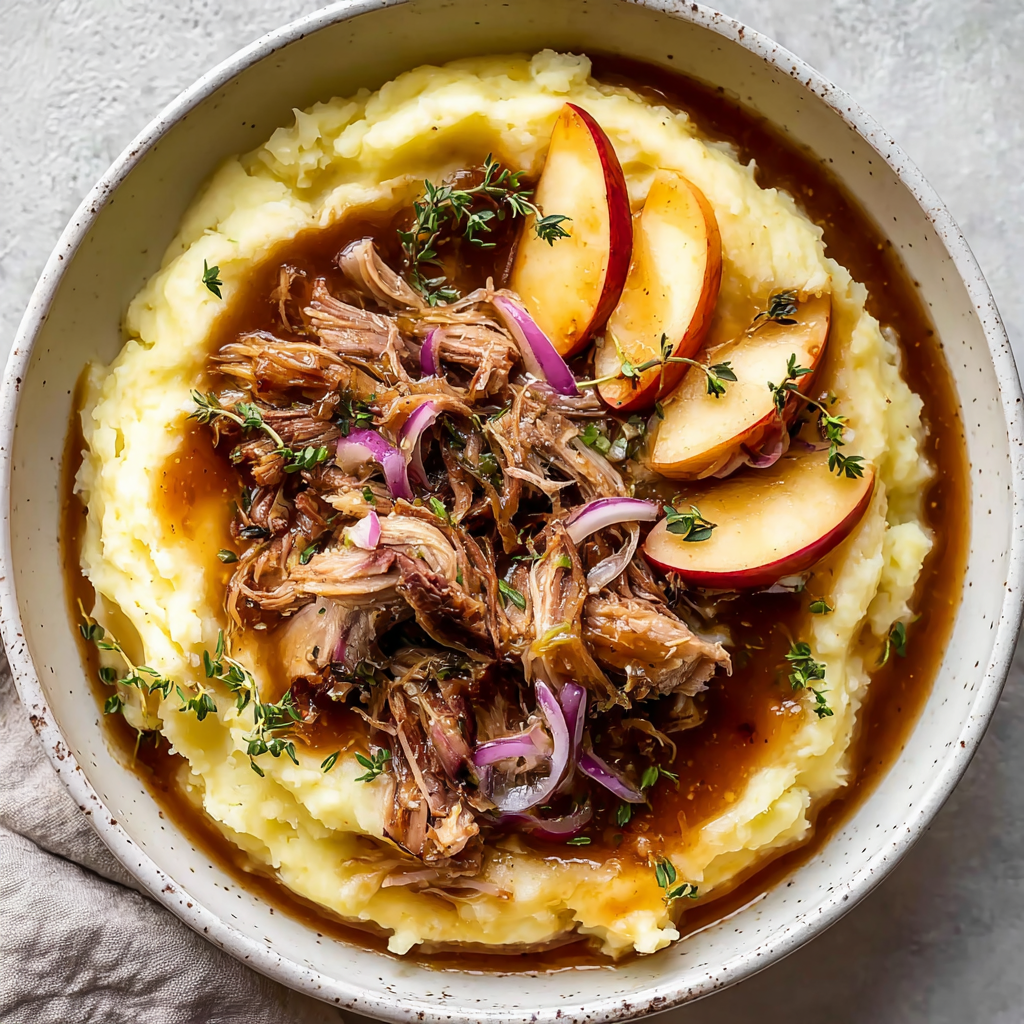
This is the kind of dish that makes your kitchen smell warm and inviting long before dinner is served. Once the pork is browned and tucked into the pot, the oven takes over and slowly turns everything rich, soft, and deeply flavorful.
The flavor combination works beautifully because the tart apples brighten the richness of the pork instead of making it sweet. Onion, garlic, rosemary, and thyme add classic comfort, while Dijon and cider give the braising liquid a little extra depth.
It is also a very practical recipe. You can prep it in stages, the pan sauce tastes even better after a rest, and the finished pork pairs easily with simple sides you may already have on hand.
Pork Shoulder Braised With Apples Ingredients
Pork shoulder – Start with a 4- to 5-pound roast, preferably Boston butt, for juicy, tender meat that holds up well to long oven braising.
Apple cider – Unsweetened cider gives the braising liquid a gentle fruitiness that supports the pork instead of overpowering it.
Chicken broth – This keeps the sauce savory and balanced while helping create plenty of spoonable pan juices.
Dijon mustard – Just a small amount adds subtle sharpness and rounds out the broth.
Red onion – Thick slices soften in the pot and become sweet, silky, and perfect alongside the pork.
Tart apples – Firm apples such as Granny Smith or Honeycrisp keep their shape better and bring welcome brightness to the finished dish.
Whole garlic bulb – Braising it whole turns the cloves mellow and spreadable, which adds extra richness at the end.
Fresh rosemary and thyme – These herbs bring the familiar woodsy flavor that makes a braised pork dish feel especially comforting.
Dried minced onion – This quietly boosts the savoriness of the liquid without adding fuss.
Neutral oil, kosher salt, and black pepper – These basics help you build a strong sear and season the pork properly from the start.
Cooking Steps
STEP 1: Heat your oven to 325°F, then trim away any very large pieces of surface fat from the pork. Cut a boneless roast into four large chunks for more even braising, or leave it whole if you are working with bone-in pork. Pat it dry well and season it generously with kosher salt and black pepper.
STEP 2: Warm the oil in a heavy lidded pot over medium-high heat. Sear the pork until it is deeply browned on all sides, giving each surface enough time to develop color. Do this in batches if needed so the pieces brown properly instead of steaming.
STEP 3: In a bowl or large measuring cup, whisk together the apple cider, chicken broth, Dijon mustard, and dried minced onion. Tie the rosemary and thyme together so they are easy to remove later, then return the browned pork to the pot and pour in the liquid.
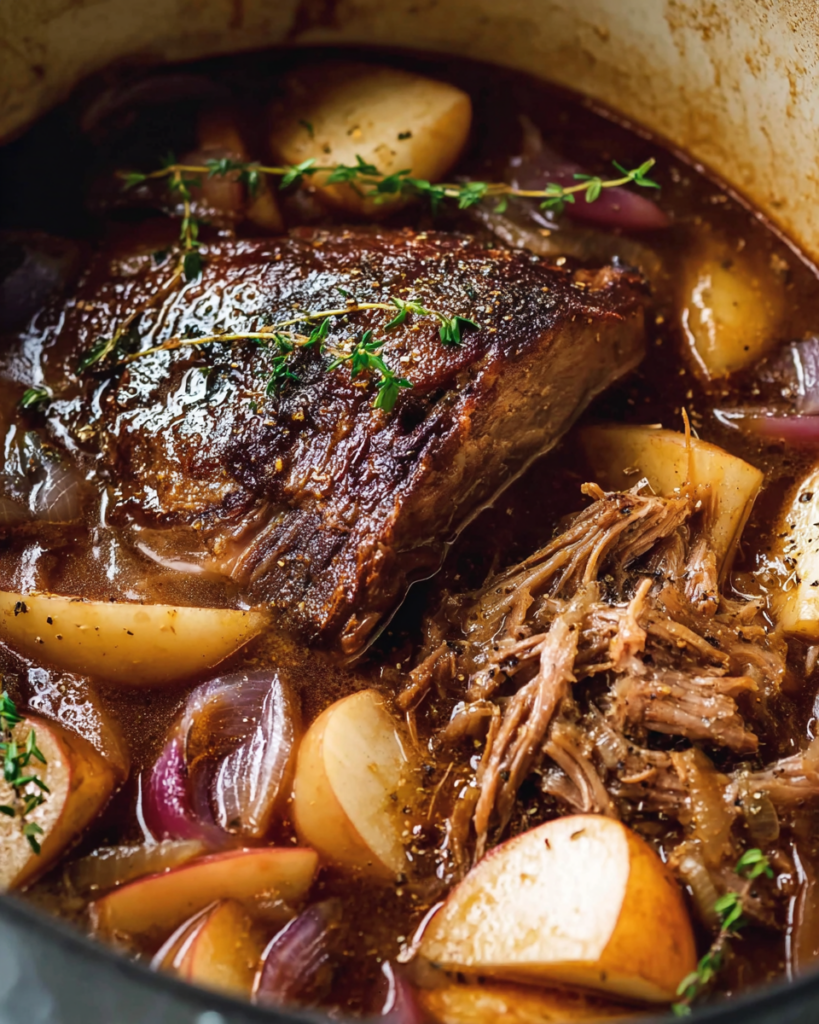
STEP 4: Add the herb bundle and the whole garlic bulb, cover the pot, and braise until the pork is very tender. If your roast is boneless, start checking a little earlier, around the 2 1/2-hour mark. Turn the pork once during cooking so it stays evenly bathed in the liquid.
STEP 5: When the pork is nearly fork-tender, add the onion rounds and apple wedges around the meat. Cover the pot again and continue cooking until the pork yields easily and the apples and onions are soft but still recognizable.
STEP 6: Let the pork rest in the braising liquid for about 30 minutes before serving. Squeeze the softened garlic cloves from their skins into the broth or directly over the pork, then taste the sauce and adjust the seasoning. Serve each portion with apples, onions, and plenty of the fragrant juices spooned over the top.
Perfect Pairings
Mashed potatoes are a natural fit here because they catch every bit of the apple cider pan sauce. If you want the meal to feel especially cozy and complete, this is probably the best first choice.
Buttered egg noodles work well when you want something simple and family-friendly. They are mild enough to let the braised pork stay the focus, but they still make the meal feel hearty.
Roasted green beans or Brussels sprouts bring a little freshness and color to the plate. A vegetable with a slightly crisp edge balances the tenderness of the pork and the softness of the apples and onions.
Can I make this ahead of time?
Yes, this dish is very make-ahead friendly. The pork can be braised earlier in the day or even the day before, then gently rewarmed in its juices. The flavor becomes even deeper after it sits, which makes it a smart choice for hosting.
What apples are best for this dish?
Choose firm, tart apples that can handle heat without collapsing too quickly. Granny Smith is a reliable option because it keeps its shape and adds bright contrast, while Honeycrisp gives you a slightly softer finish with balanced sweetness.
How do I know when the pork is done?
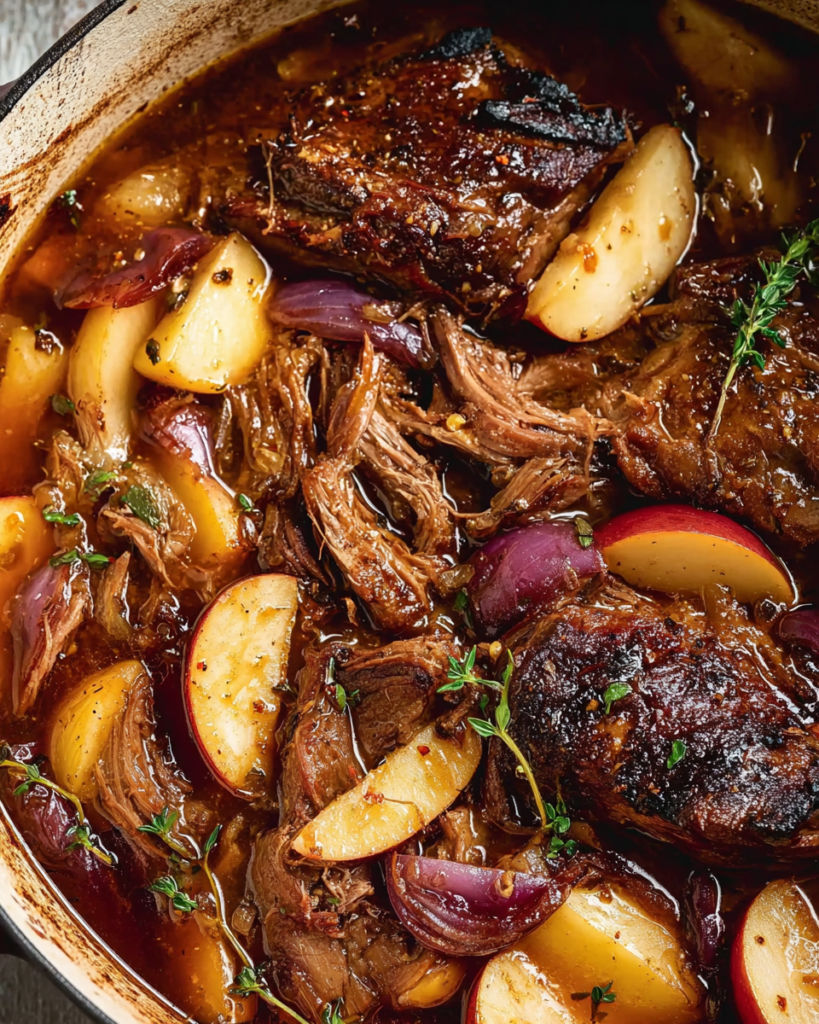
The pork is ready when a fork slides in easily and the meat feels very tender, not tight or springy. It should hold together when sliced or pulled into large pieces, and the fat should look soft and fully rendered.
Can I use a bone-in pork shoulder?
Absolutely. Bone-in pork shoulder works very well in this braise and often brings extra richness to the pot. It may take a little longer to cook than boneless pork, so start checking later and use tenderness, not the clock alone, as your guide.
Pro Tips for Pork Shoulder Braised With Apples
- Take the time to get a real brown crust on the pork at the start. That color adds a lot of the deep flavor that makes the finished broth taste so satisfying.
- Add the apples near the end, not at the beginning. This helps them stay tender and flavorful without disappearing into the liquid.
- Let the pork rest in the braising juices before serving. That short pause gives the meat time to relax and helps the sauce settle into a richer, rounder finish.
Keeping Leftovers Fresh
Store leftover pork, apples, onions, and sauce together in an airtight container in the refrigerator for up to 4 days. Keeping everything in the braising liquid helps prevent the meat from drying out.
For longer storage, freeze cooled portions with some of the sauce for up to 3 months. It is best to freeze the pork in meal-sized portions so you can thaw only what you need.
To reheat, warm the pork gently on the stove over low heat or in a covered baking dish in the oven until hot throughout. Add a splash of broth if the sauce has tightened too much in the fridge. The microwave works too, but gentle reheating gives you the best texture.
Pork Shoulder Braised With Apples
Ingredients
- 2 cups unsweetened apple cider not made from concentrate
- 1 garlic bulb left whole
- 2 tablespoons Dijon mustard
- 4 to 5 pounds pork shoulder preferably Boston butt roast
- 2 cups chicken broth
- 4 sprigs fresh thyme
- 1 red onion cut into thick 1/2-inch rounds
- 2 tablespoons neutral oil such as canola or grapeseed
- Kosher salt as needed
- 2 firm tart apples peeled and cut into wedges, such as Granny Smith or Honeycrisp
- Freshly ground black pepper as needed
- 3 sprigs fresh rosemary
- 1 tablespoon dried minced onion
Instructions
- Heat the oven to 325°F. Trim away any large excess pieces of fat from the pork shoulder. Cut the meat into 4 substantial pieces, unless using a bone-in roast, which may be left whole. Blot the pork dry with paper towels, then season generously on all sides with kosher salt and black pepper.
- Warm the oil in a large Dutch oven over medium-high heat. When the oil is hot, arrange the pork in a single layer and sear until well browned, about 4 to 5 minutes per side. Brown all surfaces thoroughly, working in batches if needed so the pot is not overcrowded. Transfer the browned pork to a plate.
- In a bowl or measuring jug, whisk together the apple cider, chicken broth, Dijon mustard, and dried minced onion until fully combined. Tie the rosemary and thyme together with kitchen twine to form a compact herb bundle.
- Return the pork to the Dutch oven and pour in the prepared braising liquid. Add the herb bundle and the whole garlic bulb to the pot. Cover with the lid and place in the oven. Cook for about 3 hours, checking at around 2 1/2 hours if the pork is boneless. Turn the pork over once during the braising time.
- When the pork is nearly fork-tender, remove the pot from the oven. Nestle the onion slices and apple wedges around the meat. Cover again and return the pot to the oven for 30 to 45 minutes more, until the pork is completely tender.
- Take the Dutch oven out of the oven and allow the pork to rest in the braising liquid for 30 minutes. Press the softened garlic cloves from their skins into the broth or over the pork. Taste the braising liquid and adjust with additional salt and black pepper as needed.
- Serve the pork with the apples and onions, spooning plenty of the fragrant braising juices over each portion.