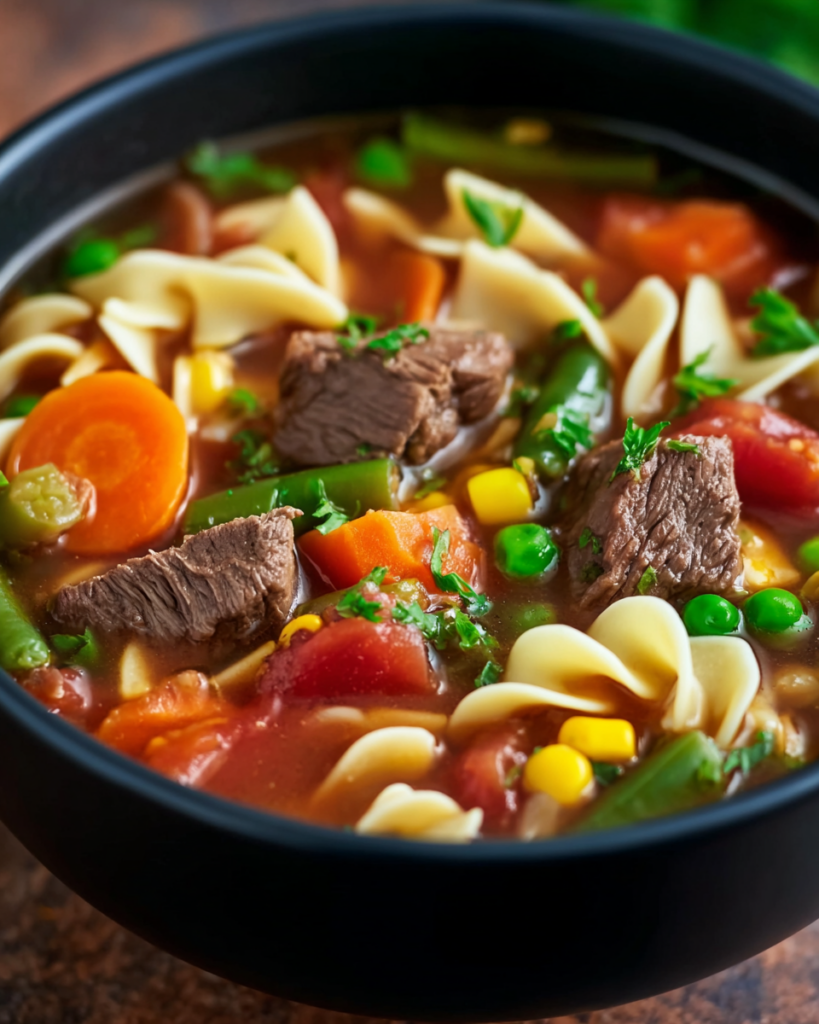
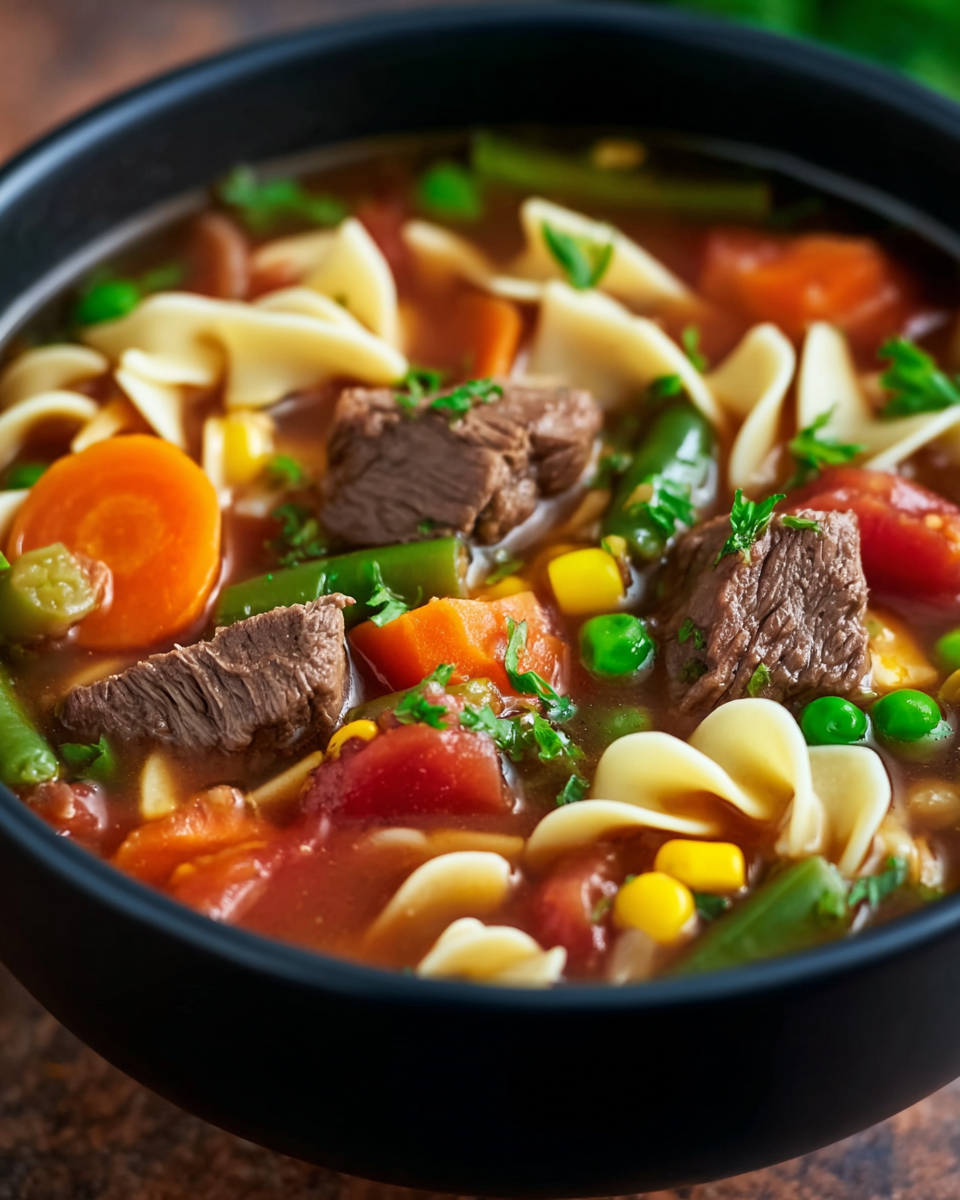
Prime Rib Bone Soup is a hearty, make-ahead soup that turns leftover bones into a deeply savory pot of comfort with tender barley, plenty of vegetables, and your choice of silky pappardelle or soft potatoes for a satisfying finish.
This is the kind of meal that feels especially useful after a holiday dinner or Sunday roast, when you want to stretch leftovers into something that still tastes special. The long simmer gives you that rich, beefy depth you cannot rush, while the overnight chill makes the broth even better.
What makes this soup work so well is the layering. You start by drawing flavor from the bones, broth, herbs, wine, and barley, then build in sweetness and texture with sautéed vegetables before finishing the pot with pasta or potato for extra body.
It is practical too. Much of the work happens ahead of time, so the next day feels simple. Skim the fat, warm the base, add the vegetables, and let everything come together into a robust soup that tastes like you spent the whole day in the kitchen.
What You Need to Make This Prime Rib Bone Soup
Cooked prime rib bones with attached meat form the foundation of the soup, giving the broth its rich, slow-developed flavor and leaving you with tender shredded beef for the final pot.
Beef broth and water create the cooking liquid and give you enough volume for a soup that feels full and generous without becoming too heavy.
Barley adds a hearty, pleasantly chewy texture and helps the broth feel more substantial while it simmers.
Red wine brings a little depth and balance, rounding out the beefy flavor without making the soup taste sharp.
Garlic, thyme, and bay leaf quietly build the aromatic base, giving the broth warmth and a classic slow-simmered character.
Carrots, onion, and celery are the fresh vegetable backbone, adding sweetness and that familiar homemade soup flavor.
Frozen mixed vegetables make the soup feel abundant and practical, filling it out with color and extra texture.
Pappardelle or russet potato lets you choose your finish. Pasta gives the soup a rustic noodle feel, while potato makes it even heartier and more stew-like.
Salt, black pepper, olive oil, and beef bouillon sharpen the savory notes and help every layer taste complete.
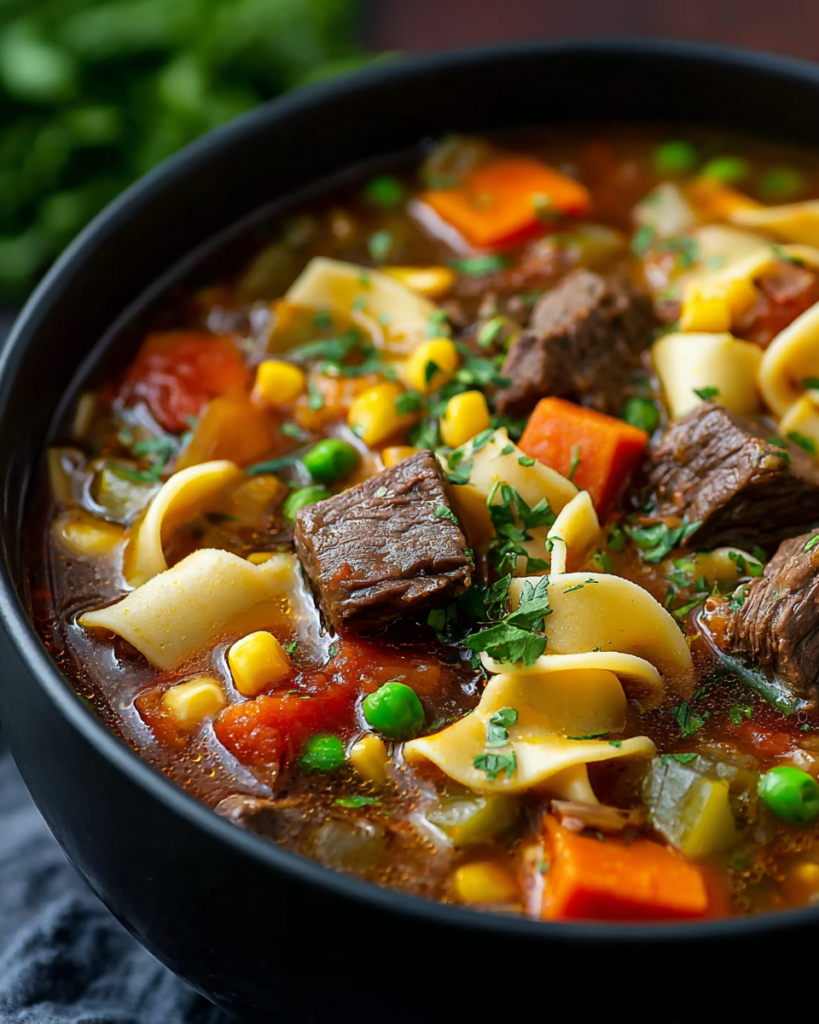
Cooking Steps
STEP 1: Build the first layer of flavor by combining the beef broth, water, bouillon, red wine, barley, garlic, thyme, bay leaf, and cooked ribs in a large Dutch oven. Bring it all to a boil, then lower the heat and let it settle into a gentle simmer.
STEP 2: Cover the pot and simmer for about 2 hours. This is where the broth develops its character. The barley softens, the herbs infuse the liquid, and the bones help create that rich, beefy backbone that makes the soup so satisfying.
STEP 3: Let the soup base cool enough to handle, then remove the bones and pull off any meat still clinging to them. Shred the beef into bite-size pieces and discard the bones. Refrigerate the broth overnight so the flavors deepen and the fat rises and firms on top.
STEP 4: The next day, skim off the hardened fat from the chilled soup base. This step keeps the finished soup rich but not greasy, and it gives the broth a cleaner, more balanced taste.
STEP 5: In a skillet, warm the olive oil and cook the carrots, onion, and celery for a few minutes until they begin to soften. This quick sauté adds another layer of sweetness and keeps the vegetables from tasting flat once they go into the pot.
STEP 6: Return the soup base to the heat with the remaining broth, then add the sautéed vegetables, frozen mixed vegetables, shredded beef, salt, and black pepper. Simmer with the lid slightly ajar for about 35 minutes so everything becomes tender and the flavors fully blend.
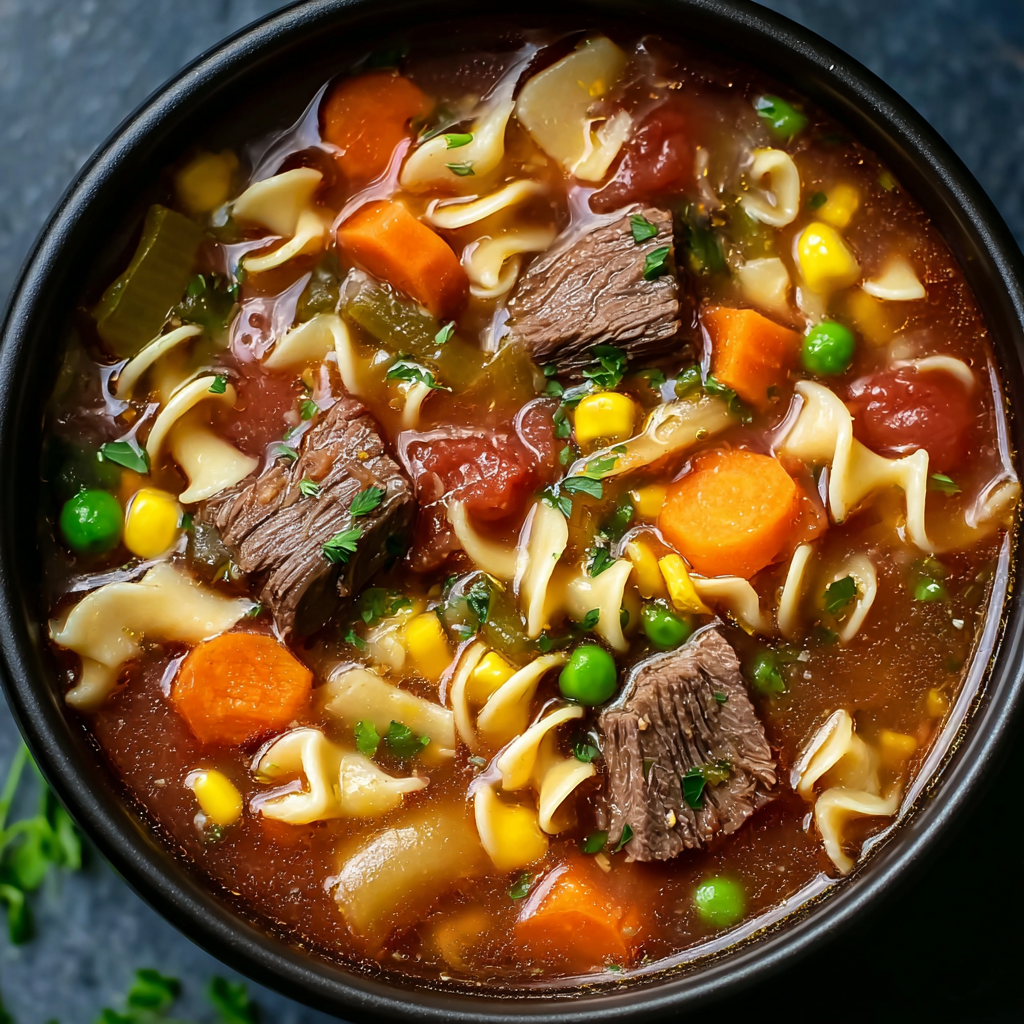
STEP 7: Finish the soup with broken pieces of pappardelle or cubed potato. Cook just until the pasta is tender with a little bite left, or until the potatoes are soft all the way through. Serve it hot, with plenty of broth in every bowl and a good mix of beef, barley, and vegetables.
Serving Ideas for Prime Rib Bone Soup
A bowl this hearty does not need much on the side, but the right pairing can turn it into a full cold-weather meal. Warm bread is always a strong choice, especially something crusty enough to soak up the broth without falling apart. A slice of toasted sourdough or a rustic dinner roll works beautifully here.
A crisp green salad also balances the soup nicely. Because the broth is rich and savory, something fresh with a tangy vinaigrette can lighten the meal and keep it from feeling too heavy. Even a simple salad with lettuce, cucumber, and a sharp dressing does the job.
If you are serving this for a family dinner, roasted green beans or simple buttered peas make an easy side. They do not compete with the soup, and they add a little extra color to the table.
Can I make this soup entirely in advance?
Yes, and it actually benefits from it. The overnight chill helps the broth taste fuller and makes the fat easy to remove, so the finished soup feels richer in flavor but cleaner on the palate when you reheat it.
Should I use pappardelle or potato?
That depends on the kind of bowl you want. Pappardelle makes the soup feel more rustic and noodle-forward, while potato gives it a thicker, heartier texture that leans closer to a beef vegetable stew.
Do I need to chill the broth overnight?
You do not absolutely have to, but it is worth it when you have the time. Chilling improves the flavor, gives the ingredients time to settle together, and makes it much easier to lift off excess fat before the final cook.
Can I use leftover roast beef if there is not much meat on the bones?
Yes. If your bones do not carry much meat, stir in a little shredded leftover prime rib or roast beef during the final simmer. Add it near the end so it warms through gently without drying out.
Will the barley keep absorbing broth?
It will. Barley continues to drink up liquid as the soup sits, especially after refrigeration. Keep a little extra broth on hand when reheating leftovers so you can loosen the soup back to the texture you like.
Helpful Tips
- Simmer gently rather than boiling hard once the soup starts cooking. A softer simmer keeps the broth clearer and helps the beef flavor develop without turning muddy.
- If you plan to store leftovers for a couple of days, cook the pasta separately or keep it slightly underdone so it does not become too soft in the broth.
- Taste the soup again after the final simmer. Broth strength can vary, so a final pinch of salt or a few turns of black pepper may be all it needs.
How to Store & Reheat
Let the soup cool before storing it in the refrigerator. It will keep well for up to 4 days in a covered container. The flavor often improves by the next day, which makes this a very good leftover soup.
For longer storage, freeze it for up to 3 months. The best texture usually comes from freezing the broth, beef, barley, and vegetables first, then adding fresh-cooked pasta or potatoes when serving. That keeps the final bowl from becoming overly soft.
To reheat, warm the soup gently on the stovetop over medium-low heat until hot all the way through. Add an extra splash of broth if it has thickened too much in the fridge, especially if the barley or pasta has absorbed more liquid overnight. If you are reheating a single portion, the microwave works too, but stir halfway through so the bowl heats evenly.
Prime Rib Bone Soup
Ingredients
- 4 cups water
- 2 fresh thyme sprigs
- 16 ounces frozen mixed vegetables
- 1 tablespoon olive oil
- 4 cooked beef ribs
- 2 whole garlic cloves
- 1 celery stalk chopped
- 1 tablespoon beef bouillon
- 2 teaspoons salt
- 4 ounces uncooked pappardelle pasta or 1 large russet potato cut into 1/2-inch cubes
- 1 bay leaf
- 1/4 cup red wine
- 1/4 cup barley for a hearty texture
- 1 teaspoon freshly ground black pepper
- 3 large carrots cut into 1/2-inch pieces
- 1/2 large Vidalia onion finely chopped
- 4 cups beef broth
- 2 additional cups beef broth
Instructions
- Place the water, 4 cups of beef broth, beef bouillon, red wine, garlic cloves, thyme sprigs, barley, cooked beef ribs, and bay leaf into a Dutch oven.
- Bring the mixture to a full boil over medium-high heat.
- Lower the heat to a gentle simmer, cover the pot, and cook for 2 hours so the broth develops a rich, layered flavor.
- Remove the pot from the heat and let the soup base cool to room temperature.
- Lift out the beef bones, pull the meat from them, shred it, and discard the bones.
- Refrigerate the soup base overnight so the flavor can mature and the fat can firm up on the surface.
- The following day, remove the chilled soup base from the refrigerator and skim away the hardened fat from the top.
- Warm the olive oil in a skillet over medium heat.
- Add the carrots, Vidalia onion, and celery, then cook over medium-low heat for about 5 minutes, stirring occasionally, until the vegetables begin to soften.
- Pour the remaining 2 cups of beef broth into the soup base and bring it to a boil.
- Add the sautéed vegetables to the pot along with the frozen mixed vegetables.
- Season the soup with salt and black pepper.
- Reduce the heat and let the soup simmer for 35 minutes with the lid slightly ajar.
- Stir in the pappardelle, breaking the noodles into smaller pieces as they are added, or use the cubed russet potato instead.
- Continue cooking for 10 to 15 minutes, until the pasta is tender but still slightly firm, or until the potatoes are fully tender when pierced with a fork.
- Serve the soup hot.