Prime Rib on the Grill is a special-occasion main dish that delivers juicy, evenly cooked slices, deep beefy flavor, and a beautifully seasoned crust without making your kitchen do all the work. This rotisserie-style roast is dependable, impressive, and ideal for holiday dinners, weekend gatherings, or any meal where you want a true centerpiece.
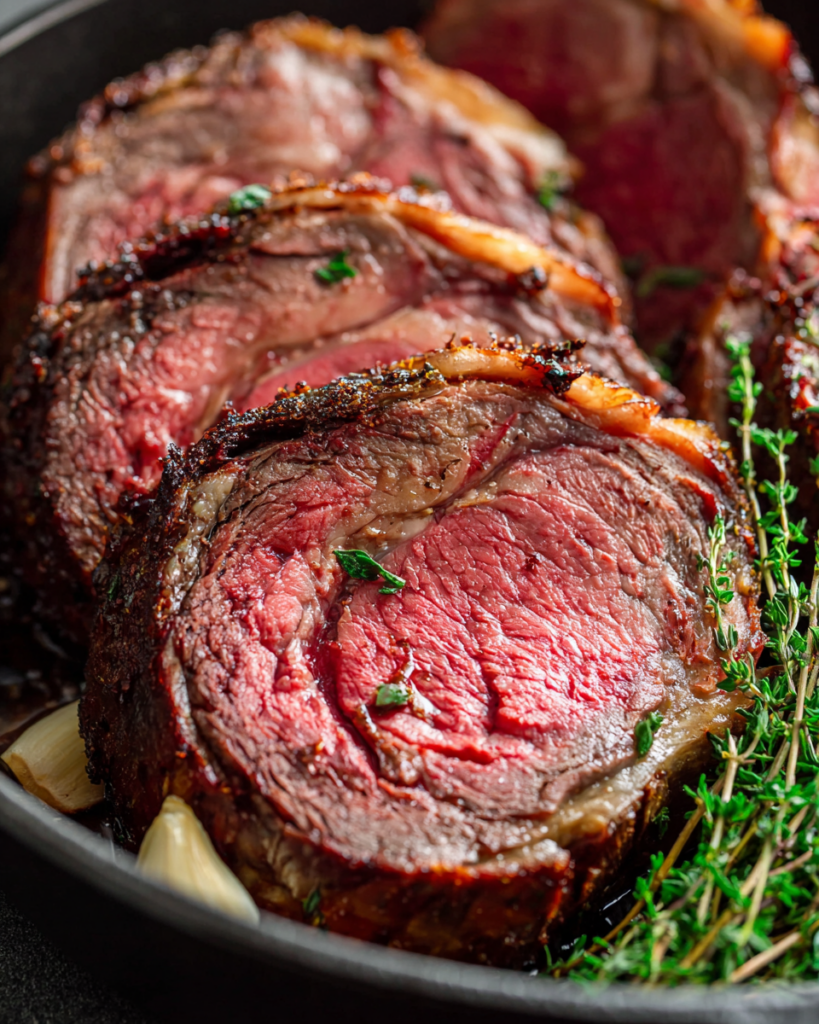
This is the kind of roast that feels celebratory the second it hits the table. It has that classic prime rib appeal you want for a crowd, but the grilling method gives it an extra layer of outdoor flavor that makes it feel even more memorable.
The garlic tucked into the roast adds flavor from the inside, while the seasoning on the exterior builds a savory crust as the meat slowly turns over indirect heat. You get a roast that tastes rich and well-balanced without needing a long ingredient list.
What makes this one work so well is the timing. Letting the meat sit before grilling encourages more even cooking, and pulling it at the right temperature keeps the center rosy and tender after the rest. It is simple, but every step has a purpose.
Prime Rib on the Grill Ingredients
- Bone-in prime rib roast keeps the roast richly flavored and gives you that classic holiday-style presentation while staying tender and juicy.
- Whole garlic cloves are tucked directly into the meat so the roast picks up gentle garlic flavor throughout instead of only on the surface.
- Beef seasoning rub creates the savory outer crust; you can use a prime rib blend or a simple salt-and-pepper style seasoning if that is what you prefer.
How to Make This Prime Rib on the Grill
STEP 1: Take the roast out of the refrigerator about 2 hours before cooking. This gives the meat time to lose some of its chill, which helps it cook more evenly once it goes on the grill.
STEP 2: Use a small knife to make several deep slits all around the roast, then press a whole garlic clove into each opening. Spread them out so every part of the roast gets a little flavor.
STEP 3: Coat the outside of the roast well with the beef seasoning rub. Once it is seasoned, loosely cover it and let it sit at room temperature for the remainder of the resting time.
STEP 4: Set up the grill for indirect cooking and preheat it to high heat, around 450°F. If you are using a multi-burner gas grill, the idea is to keep the heat on the outer burners and leave the center area off so the roast cooks without sitting over direct flame.
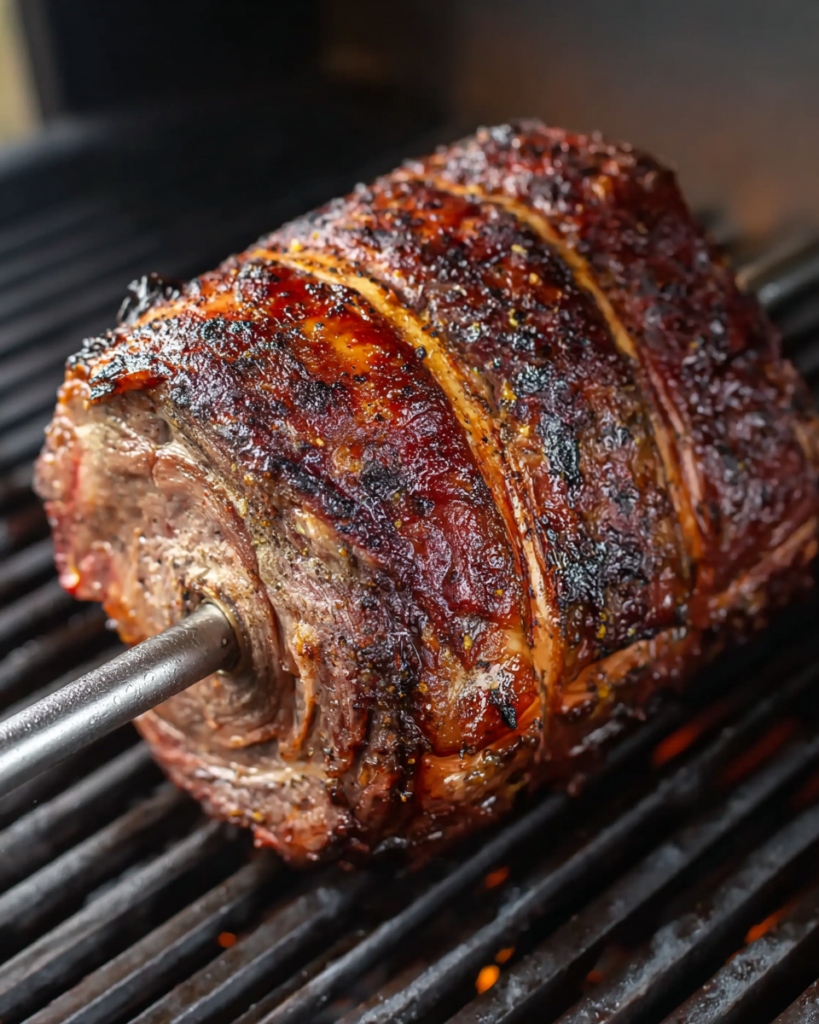
STEP 5: Secure the roast on the rotisserie rod so it is centered and balanced. This matters more than it may seem, because even rotation helps the roast cook steadily and brown nicely on all sides.
STEP 6: Grill the roast with the lid closed until the internal temperature reaches 125°F. For a 6-pound roast, that will usually be around 2 hours, but temperature matters more than time here, so use a meat thermometer for the most reliable result.
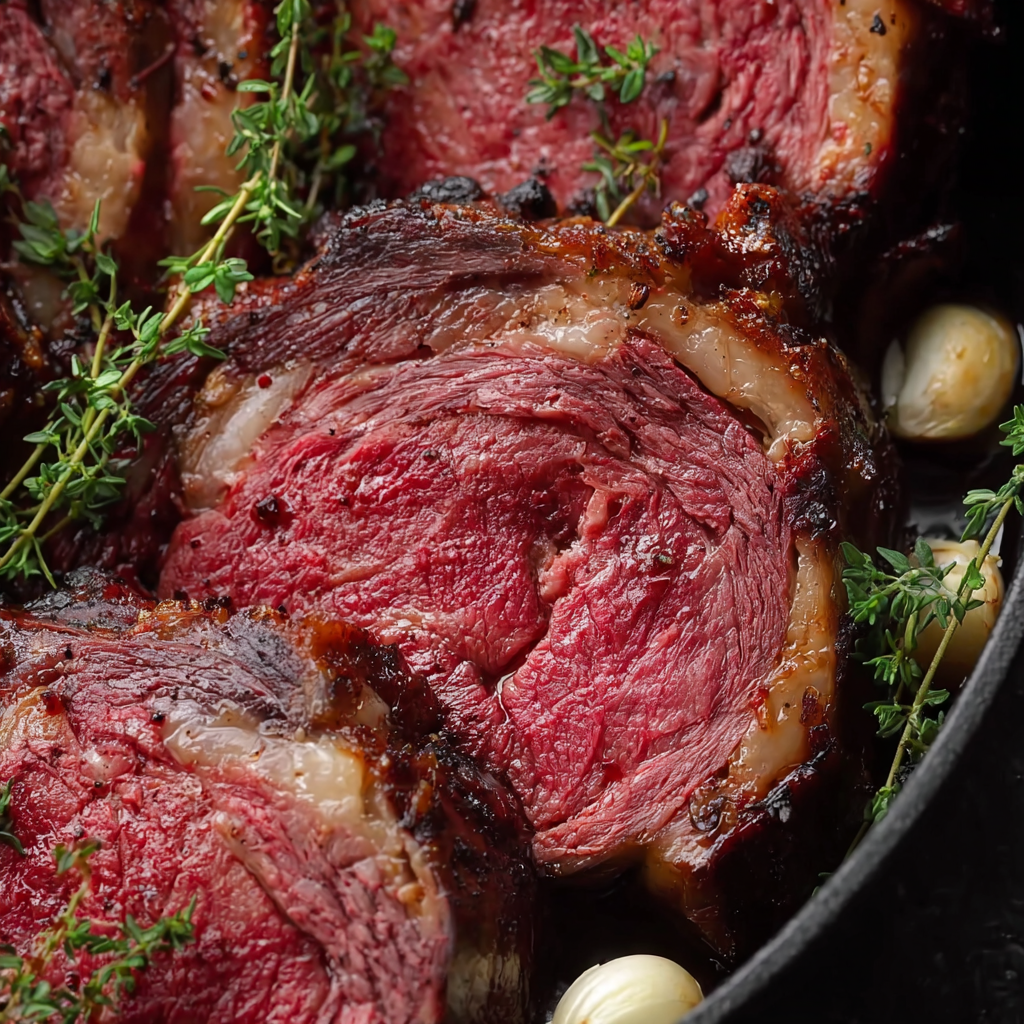
STEP 7: Remove the roast from the grill and let it rest for 30 minutes before slicing. During this time, the temperature rises further and the juices settle back into the meat, which gives you cleaner slices and a much juicier final result.
Perfect Pairings
Prime rib is rich, so it shines next to sides that bring contrast, texture, or something creamy and comforting. A crisp green salad with a sharp vinaigrette is a great way to balance the roast, especially if the rest of the meal leans hearty.
Roasted potatoes are another natural fit. They echo the classic steakhouse feel of the meal and hold up well next to the juices from the carved beef. Mashed potatoes also work beautifully if you want something softer and more traditional.
For a vegetable side, go with something simple that lets the roast stay the star. Roasted asparagus, green beans, or Brussels sprouts all fit well because they add freshness without competing with the beef.
Can I make this without a rotisserie?
Yes, but the final texture and browning will be a little different. The rotisserie helps the roast cook very evenly and builds a consistent crust all the way around, so it is worth using when you have it.
What is the best internal temperature for medium-rare?
For this roast, 125°F is the pull temperature. After the 30-minute rest, carryover cooking should bring it to around 135°F, which gives you a warm, rosy medium-rare center.
Do I really need to let the roast rest before and after cooking?
Yes, both resting periods help. The pre-grill rest promotes more even cooking, and the final rest after grilling keeps the juices from running out too quickly when you carve the meat.
How do I keep the roast from cooking too fast on the outside?
Make sure you are truly using indirect heat. The roast should not sit over an active burner. Closed-lid grilling with the heat around the sides allows the inside to cook through while the exterior browns gradually.
Helpful Tips
- Use a thermometer instead of relying only on time, because grill temperatures and roast shape can change the pace of cooking.
- Secure the roast tightly and evenly on the rotisserie rod so it turns smoothly and browns consistently.
- Slice only what you plan to serve right away to help the remaining meat stay warm and juicy longer.
What to Serve with Prime Rib on the Grill
A roast like this works beautifully for holidays, family dinners, and weekend entertaining because it pairs well with both simple and more elaborate sides. If you want a classic plate, serve it with potatoes and a green vegetable, then let the carved juices do part of the seasoning on the plate.
It is also excellent with dinner rolls or crusty bread, especially if you are serving a crowd. Bread makes it easy to soak up the flavorful juices and rounds out the meal without adding much extra work.
For a more polished spread, add a creamy side and a fresh side. Something silky like mashed potatoes or a baked potato casserole gives the meal body, while a salad or roasted vegetable keeps the plate from feeling too heavy.
Storage & Reheating
Leftover prime rib keeps well in the refrigerator for up to 4 days when wrapped tightly or stored in a covered container. For best texture, keep larger pieces intact instead of slicing everything at once.
You can also freeze it for up to 2 months. Wrap the beef well to protect it from freezer burn, and thaw it in the refrigerator before reheating.
To reheat, warm slices gently so they do not overcook. A low oven works well, especially if you add a little broth or pan juice to help keep the meat moist. Avoid blasting it with high heat, which can quickly push a beautiful medium-rare slice toward medium or beyond.
Prime Rib on the Grill
Ingredients
- 4 tablespoons beef seasoning rub such as Lawry’s or another preferred prime rib blend
- 16 whole garlic cloves peeled
- 1 bone-in prime rib roast 6 pounds
Instructions
- Remove the bone-in prime rib roast from the refrigerator 2 hours before grilling so it can gradually come to room temperature.
- Using a small paring knife, make 16 openings around the roast, each approximately 1 inch deep.
- Place 1 whole peeled garlic clove into each slit, distributing the garlic evenly throughout the roast.
- Coat the exterior of the roast thoroughly with the beef seasoning rub. A simple combination of kosher salt and black pepper may also be used in place of a prepared beef seasoning.
- Loosely cover the seasoned roast with foil or plastic wrap, then let it stand at room temperature for 2 hours. This helps promote more even cooking.
- When the resting time is nearly complete, remove the grill grates and preheat the grill for indirect cooking. On a Weber Genesis II, turn on burners 1 and 4 and leave the two center burners off. Bring the grill temperature to approximately 450°F.
- Insert the rotisserie rod through the center of the roast and fasten it securely with the rotisserie forks so the meat rotates evenly.
- Position the roast on the rotisserie, close the grill lid, and cook while the roast turns continuously.
- Grill for about 2 hours, or until the internal temperature reaches 125°F. This will produce a medium-rare result after carryover cooking raises the temperature to about 135°F.
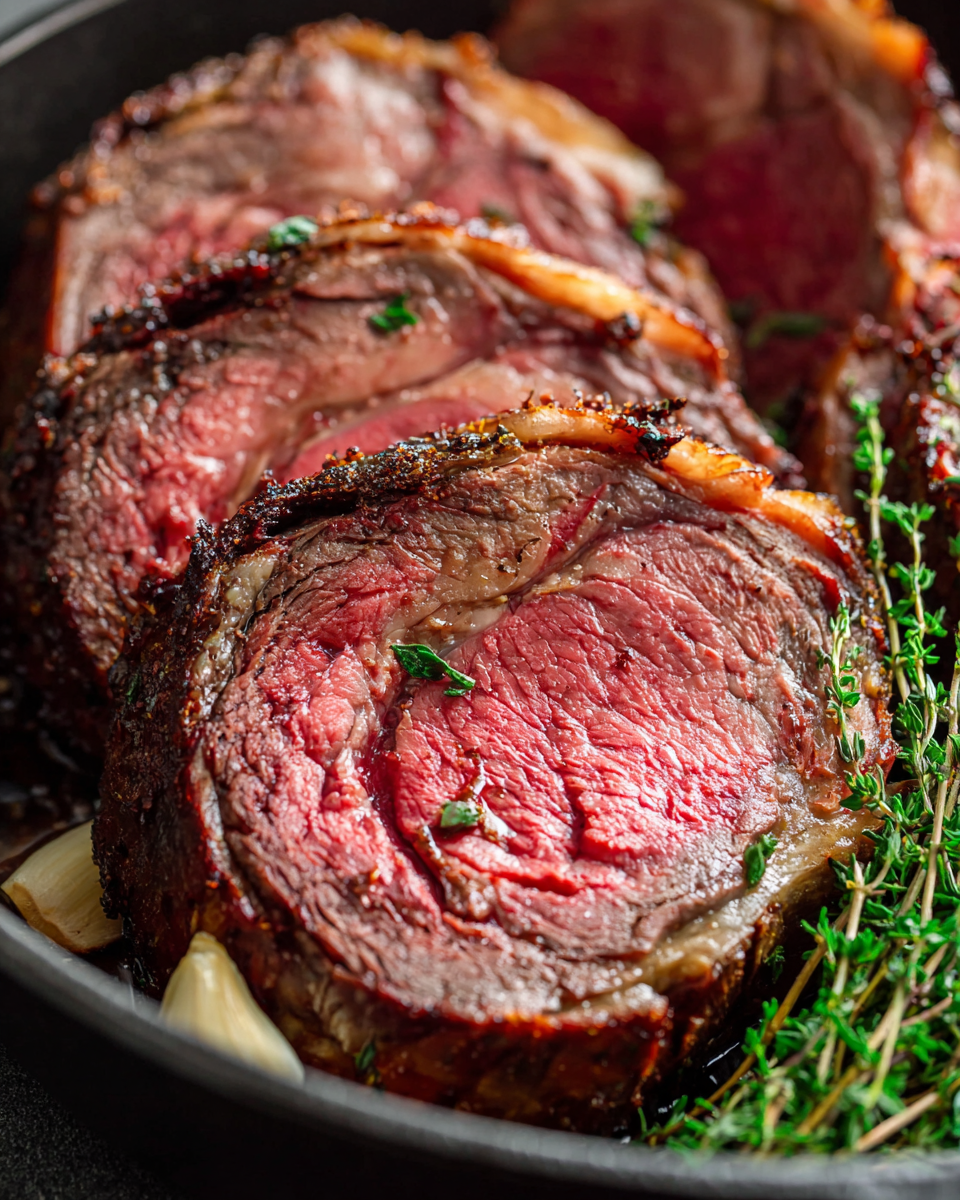
- Transfer the roast from the grill and allow it to rest for 30 minutes so the juices can redistribute throughout the meat.
- Remove the rotisserie rod, carve the roast into slices, and serve.
Notes
The 30-minute resting period is important for maintaining a moist and tender texture.
For medium-rare doneness, remove the roast from the grill at 125°F and allow the temperature to rise during rest.