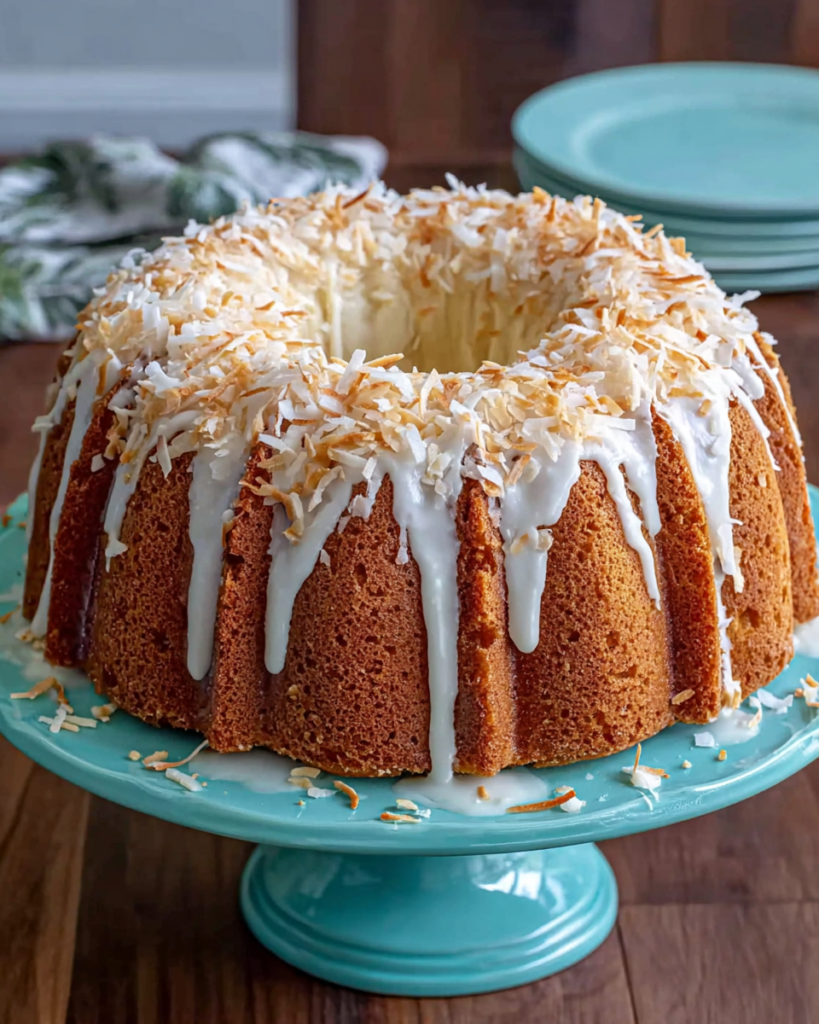
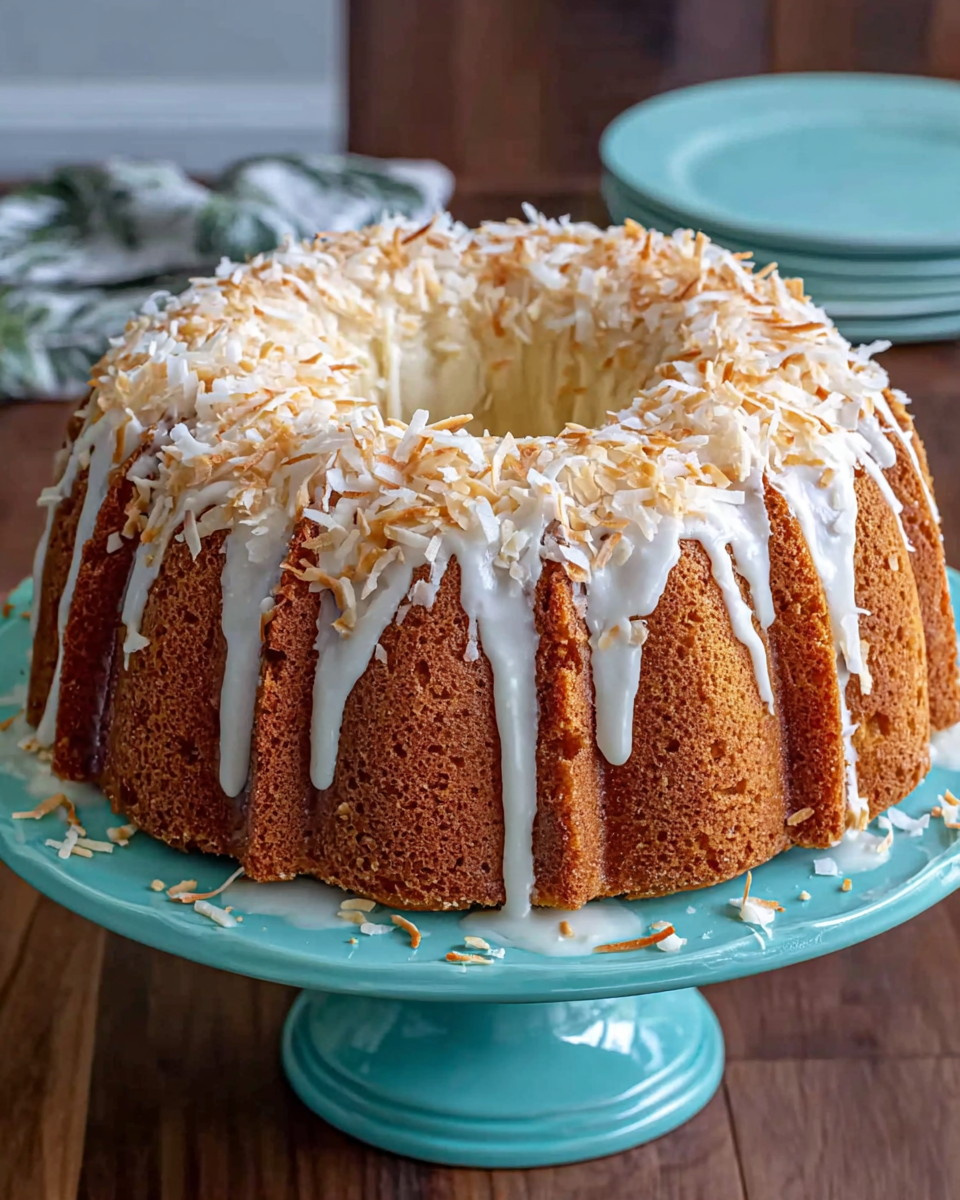
Rich Old Fashioned Coconut Bundt Cake is a buttery, dependable dessert with tender crumb, true coconut flavor, and a smooth glaze that makes it ideal for holidays, brunches, gifting, or any time you want a make-ahead cake that still feels special.
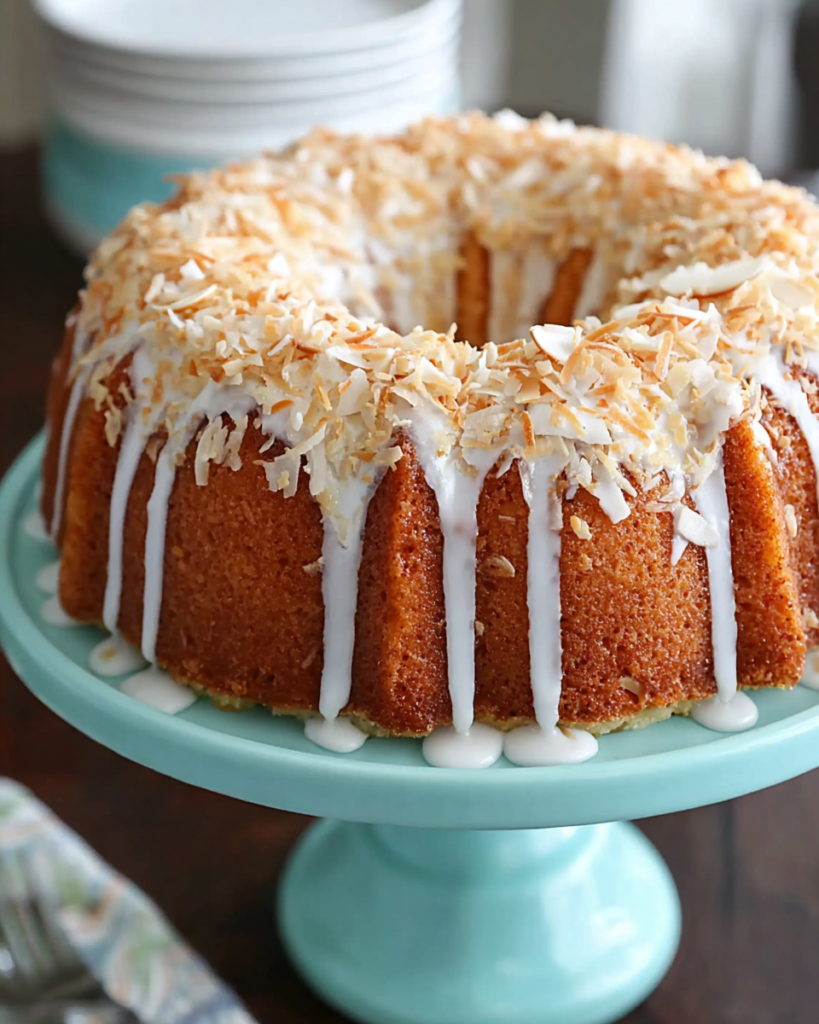
This is the kind of cake that looks elegant on the table without asking much from you in the kitchen. The batter is straightforward, the flavor is classic, and the toasted coconut on top gives every slice a little extra texture.
What makes this cake work so well is the balance. You get rich butter, fragrant coconut extract, a soft crumb from the milk, and just enough shredded coconut folded into the batter to keep each bite interesting.
It is also a very practical dessert. You can bake the cakes ahead, glaze them once cool, and serve them for everything from a casual family gathering to a more dressed-up dessert spread with coffee or tea.
Coconut Bundt Cake Ingredients
All-purpose flour gives the cake enough structure to hold its Bundt shape while still baking up soft and tender.
Baking powder provides a steady lift so the crumb stays light instead of heavy.
Salt sharpens the sweetness and helps the coconut flavor come through more clearly.
Unsalted butter creates the rich, old-fashioned base that gives this cake its classic buttery texture.
Granulated sugar sweetens the cake and also helps with that pale, fluffy creamed mixture that leads to a finer crumb.
Eggs add richness, stability, and a smooth texture when beaten into the butter and sugar.
Vanilla extract rounds out the flavor and keeps the coconut from tasting one-note.
Coconut extract brings the signature flavor forward in both the cake and the glaze.
Whole milk loosens the batter just enough and keeps the finished cake moist.
Sweetened shredded coconut is folded into the batter for texture and flavor, then used again as a toasted topping for extra character.
Confectioners’ sugar forms the base of the glaze and gives you that soft white finish over the cooled cake.
Melted butter for the glaze makes the topping smoother and a little richer than a simple sugar-and-milk drizzle.
Step-by-Step Coconut Bundt Cake
STEP 1: Start by heating your oven to 325°F and preparing the pans very well. A generous coating of grease and a light dusting of flour matter here because Bundt cakes have more surface detail than layer cakes, and you want those edges to release cleanly.
STEP 2: Whisk the dry ingredients in a separate bowl before you begin mixing the batter. This small step helps distribute the baking powder and salt evenly, which gives you a more consistent rise and crumb throughout both cakes.
STEP 3: Beat the softened butter and sugar until the mixture looks lighter in color and noticeably fluffy. This is one of the most important parts of the recipe because it creates air in the batter and sets up that rich but tender texture you want in an old-fashioned Bundt cake.
STEP 4: Add the eggs, vanilla, and coconut extract and continue mixing until everything looks smooth and fully combined. Once the milk goes in, keep the mixer on low and stop as soon as it is incorporated so the batter stays soft rather than overworked.
STEP 5: Add the dry ingredients and mix just until you no longer see dry streaks, then fold in the shredded coconut by hand. That final fold keeps the batter from getting too dense and spreads the coconut evenly without knocking out the air you built earlier.
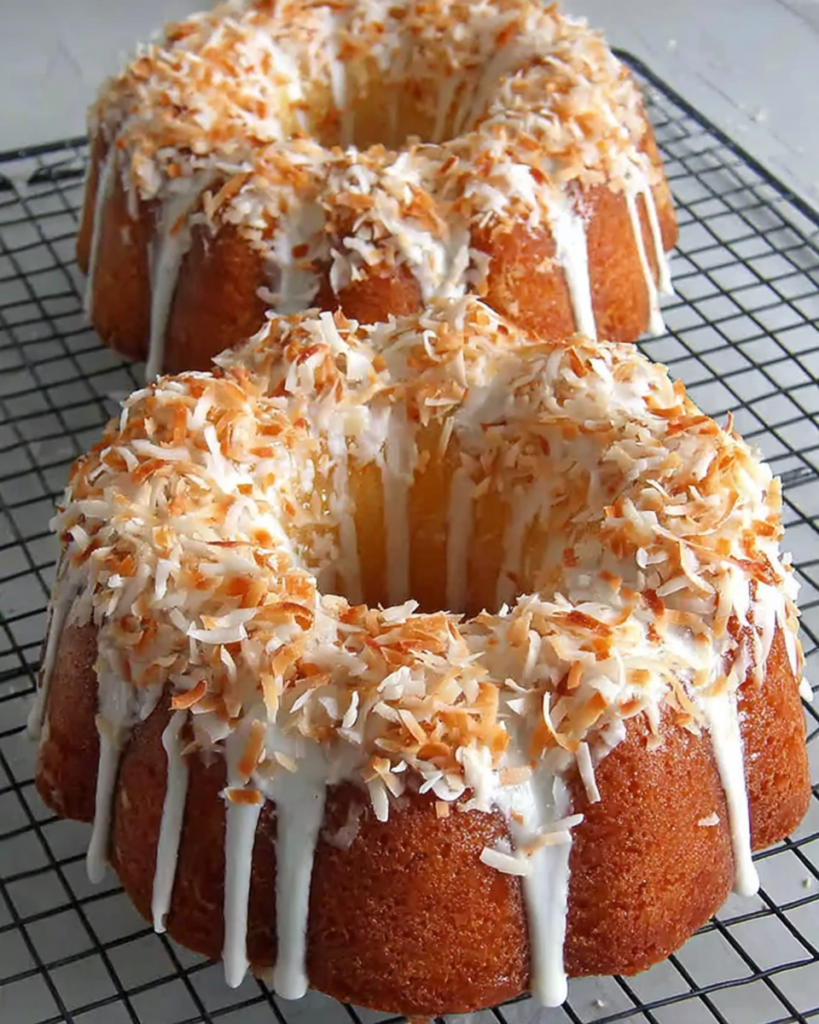
STEP 6: Divide the batter between the prepared pans and bake until the tops are golden and a toothpick comes out with a few moist crumbs. Let the cakes rest in the pans briefly, then invert them onto racks and leave them alone until completely cool before glazing. Once cooled, whisk the glaze until it falls in a smooth ribbon, spoon it over the cakes, and finish with toasted coconut for a bakery-style look.
Serving Ideas for Coconut Bundt Cake
This cake is lovely on its own, but a few simple pairings can make it feel even more complete.
Serve it with hot coffee or strong black tea if you want to lean into its buttery, classic dessert style. The slight bitterness of the drink balances the sweet glaze nicely.
Fresh berries are another easy addition. A spoonful of strawberries or raspberries on the side gives the plate a little brightness without competing with the coconut flavor.
For a more dessert-like presentation, add a small scoop of vanilla ice cream or lightly sweetened whipped cream. Keep it simple so the cake stays the focus.
Can I bake this in one larger Bundt pan?
Yes, as long as the pan has enough capacity for the full batter. A larger single Bundt pan may need a different baking time, so begin checking a little earlier than you expect and continue until a tester comes out with a few moist crumbs.
Why does the cake need to cool completely before glazing?
A warm cake will melt the glaze and cause it to slide off too quickly. Letting the cake cool fully gives you a cleaner finish, more visible drips down the sides, and a topping that sets instead of soaking into the surface.
How do I keep a Bundt cake from sticking to the pan?
Grease every curve of the pan thoroughly, then lightly flour it so the batter has less chance of clinging. Also, do not rush the unmolding. Let the cake rest briefly after baking so it firms up enough to release without breaking.
Can I freeze coconut Bundt cake?
Yes. Freeze the cake once it is fully cooled, either whole or in slices, wrapped well to protect the crumb. You can freeze it plain or glazed, though glazing after thawing usually gives the neatest look and freshest finish.
Pro Tips for Coconut Bundt Cake
- Toast the coconut topping until lightly golden, not dark brown, so it adds nuttiness without tasting bitter.
- Use room-temperature butter and eggs for a smoother batter and a more even crumb.
- Do not overmix after adding the flour or the cake can lose some of its soft, tender texture.
How to Store & Reheat
This cake keeps very well, which is one reason it is so useful for gatherings. At room temperature, keep it loosely covered for 3 to 4 days so it stays moist without trapping too much moisture against the glaze. In a warm kitchen, you can refrigerate it for up to 5 days, but bring slices back to room temperature before serving for the best texture.
For longer storage, wrap the cooled cake tightly and freeze it for up to 2 months. Thaw it overnight in the refrigerator or on the counter until fully softened. This is not really a cake that needs reheating, since warming can melt the glaze and soften the crumb too much. Instead, serve it at cool room temperature so the buttery texture and coconut flavor come through at their best.
Rich Old Fashioned Coconut Bundt Cake
Ingredients
For the cake
- 2 1/4 cups all-purpose flour
- 1 cup unsalted butter softened to room temperature
- 1 teaspoon vanilla extract
- 1/2 teaspoon salt
- 4 large eggs at room temperature
- 1 cup sweetened shredded coconut
- 2 teaspoons coconut extract
- 1 teaspoon baking powder
- 1/2 cup whole milk
- 2 1/2 cups granulated sugar
For the glaze
- 2 tablespoons unsalted butter melted
- 1 teaspoon coconut extract
- 2 tablespoons whole milk with more as needed for consistency
- 1 1/2 cups confectioners’ sugar sifted
For the topping
- 2/3 cup sweetened shredded coconut toasted
Instructions
- Preheat the oven to 325°F and place a rack in the center position. Grease and lightly flour two 6-cup Bundt pans thoroughly so the cakes release cleanly after baking.
- In a medium bowl, whisk the flour, baking powder, and salt together until evenly blended. Set the dry mixture aside.
- In a large mixing bowl, beat the softened butter and granulated sugar on medium speed until pale and fluffy. Add the eggs, vanilla extract, and coconut extract, then continue beating until the mixture is smooth and well incorporated.
- Reduce the mixer speed to low and pour in the milk, mixing only until combined. Add the flour mixture and beat just until no dry streaks remain, then gently fold in the shredded coconut.
- Divide the batter evenly between the prepared Bundt pans. Bake for 50 to 55 minutes, or until the tops are golden, the edges are lightly browned, and a toothpick inserted into the center comes out with a few moist crumbs attached.
- Place the pans on a wire rack and allow the cakes to cool for about 15 minutes. Set a cooling rack over each pan, carefully invert, and release the cakes. If needed, tap the pans lightly with a wooden spoon to help loosen them.
- Leave the cakes on the racks until they are completely cool before glazing. This helps the topping set properly rather than melting into the surface.
- To prepare the glaze, combine the melted butter, sifted confectioners’ sugar, whole milk, and coconut extract in a small bowl. Whisk until smooth and pourable. The finished glaze should fall from a spoon in a steady white ribbon. Add a little more milk to thin it, or additional confectioners’ sugar to thicken it as needed.
- Spoon or drizzle the glaze over the cooled cakes, allowing it to run naturally down the sides. Finish by scattering the toasted coconut over the top.