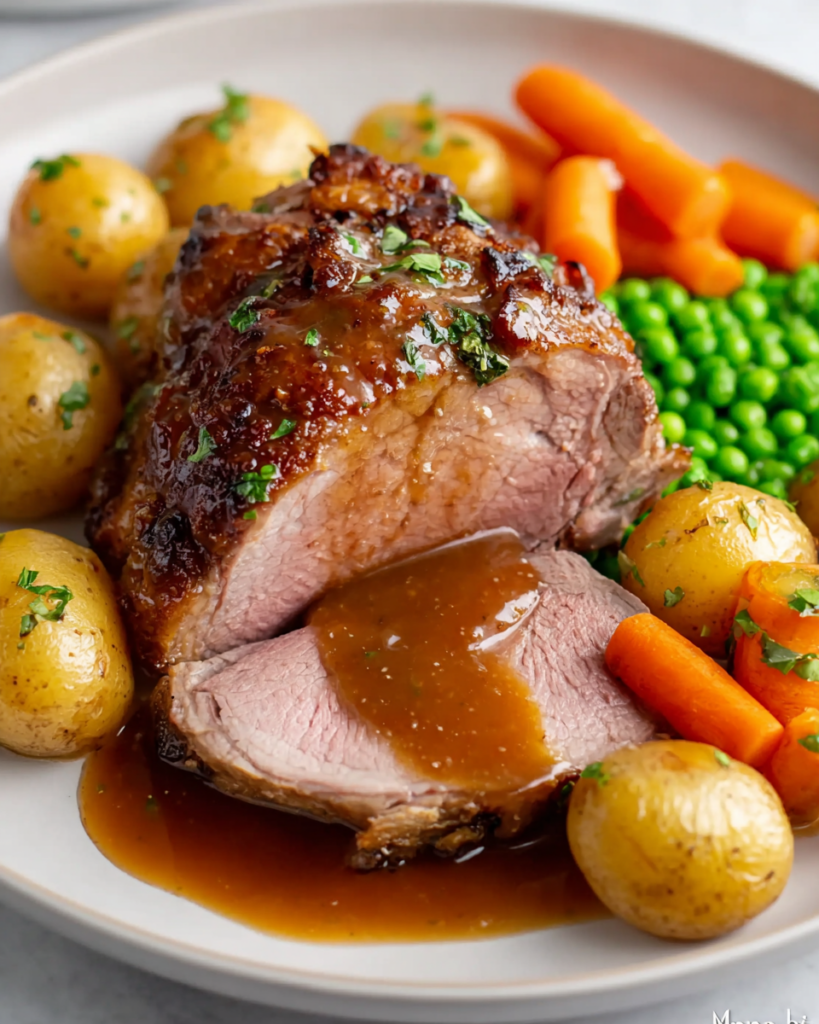
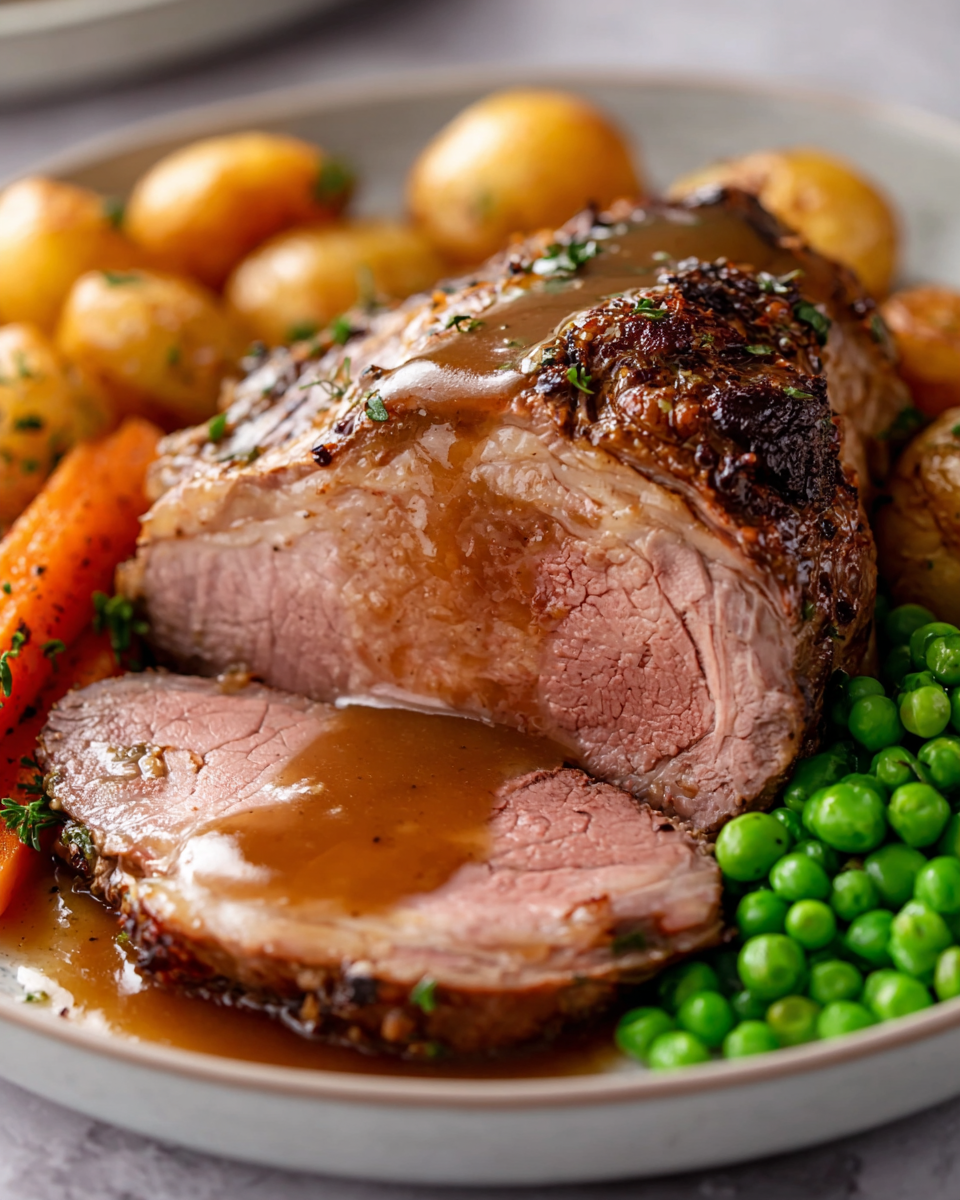
Quick, comforting, and full of classic flavor, Roast Lamb Gravy brings together juicy bone-in lamb, fragrant rosemary, mellow roasted garlic, and a smooth pan gravy that makes the whole meal feel special without making the method complicated.
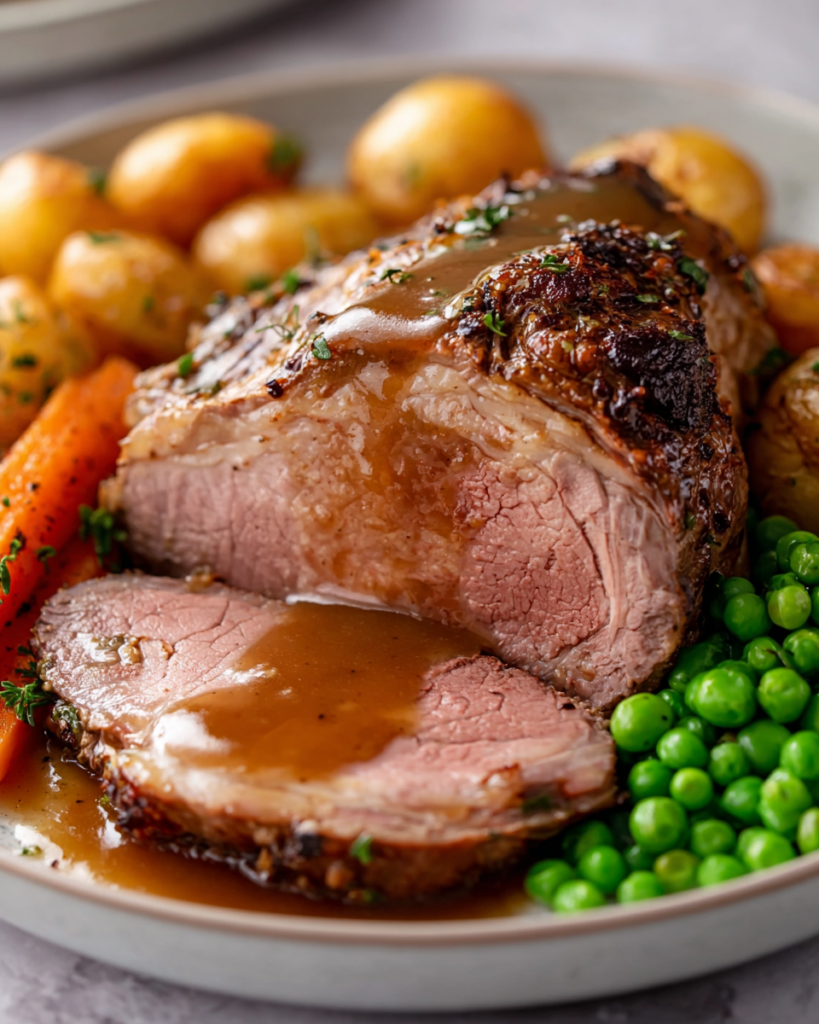
This is the kind of roast that works beautifully for a Sunday lunch, a holiday table, or any dinner when you want something generous and reliable. The lamb gets a deeply savory crust from the rosemary-garlic rub, while the gravy captures every bit of flavor left behind in the pan.
What makes this dish so dependable is the simple structure. A hot start builds color, a gentler roast finishes the meat evenly, and the resting time gives you the perfect window to make a rich, silky gravy.
You also get a lot of payoff from just a handful of familiar ingredients. The garlic tucked under the lamb softens as it roasts, the rosemary perfumes the pan, and the stock turns those drippings into something worth spooning over every slice.
Roast Lamb Gravy Ingredients
Bone-in leg of lamb brings the main flavor here and stays especially succulent when roasted and rested properly.
Garlic bulbs sit under the meat as it roasts, turning sweet and soft while also flavoring the pan juices for the gravy.
Rosemary sprigs create an aromatic base beneath the lamb and reinforce that classic roast-lamb flavor.
Plain flour helps turn the roasting juices into a smooth gravy with body and a traditional finish.
Reduced-sodium beef stock deepens the gravy without overpowering the lamb, while giving you enough liquid for a pourable, silky sauce.
Fresh rosemary in the rub adds a piney, savory note that pairs naturally with lamb.
Minced garlic cloves give the surface of the roast extra depth and help build a fragrant crust.
Extra virgin olive oil carries the rub, helps it cling to the meat, and encourages browning.
Salt seasons the lamb well enough for the meat and the drippings to taste balanced.
Ground black pepper adds gentle heat and rounds out the herb-and-garlic rub.
Cooking Steps
STEP 1: Take the lamb out of the refrigerator about 1 hour before roasting so it loses some of its chill. This helps it cook more evenly from the center to the outer layers and gives you a more predictable roast.
STEP 2: Heat the oven to a high temperature and mix the chopped rosemary, minced garlic, and olive oil. Rub that mixture all over the lamb, then season with the salt and black pepper. Set the lamb in a roasting pan over the halved garlic bulbs and rosemary sprigs.
STEP 3: Roast the lamb at the higher temperature first to build color and give the outside a flavorful, well-browned finish. This early blast of heat helps create the savory foundation that makes the final gravy taste so rich.
STEP 4: Lower the oven temperature and continue roasting until the lamb is nearly done to your liking. Start checking the internal temperature early rather than waiting too long, especially with a large bone-in cut that can move quickly near the end.
STEP 5: Remove the lamb once the center reaches about 53°C/127°F for medium-rare. Transfer it to a plate, cover loosely with foil, and let it rest for at least 20 minutes. This resting time keeps the juices in the meat and lets the temperature climb gently.
STEP 6: While the lamb rests, place the roasting pan over medium heat. Remove the rosemary sprigs, then stir the flour into the hot fat and drippings. Cook briefly so the flour loses its raw taste before adding the stock in stages.
STEP 7: Pour in part of the stock and stir well, scraping up the browned bits from the pan. Add the remaining stock, then mash the roasted garlic into the gravy so its sweetness and depth melt right into the sauce.
STEP 8: Simmer the gravy until lightly thickened, then taste and adjust the seasoning. Strain it into a bowl or jug for a smoother finish, slice the rested lamb, and serve everything hot.
Perfect Pairings
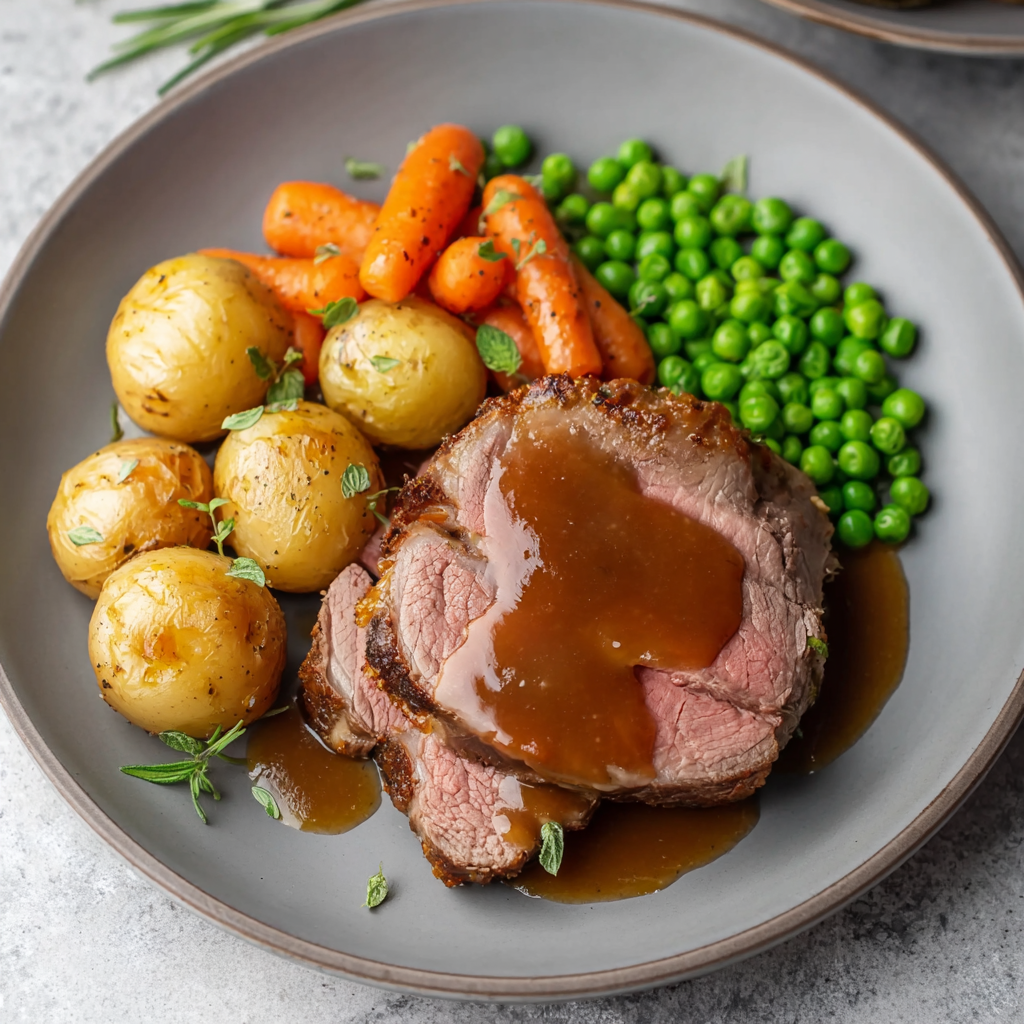
Roast potatoes are the most natural side here because they soak up the gravy beautifully and match the hearty feel of the lamb.
Buttered carrots and peas add color and a little sweetness, which balance the savory richness of both the meat and the sauce.
A simple green bean dish or a lightly dressed salad also works well when you want something fresh alongside a heavier roast dinner.
Can I make the gravy while the lamb rests?
Yes, that is the ideal time to do it. The lamb needs that resting window anyway, and the pan stays full of flavorful drippings, roasted garlic, and browned bits that are perfect for building the gravy.
What internal temperature should roast lamb reach?
For medium-rare, pull the lamb from the oven when the center reads 53°C/127°F. As it rests, the temperature continues to rise, bringing it closer to a finished medium-rare texture without overcooking it.
Do I have to strain the gravy?
No, but straining gives you a smoother, more polished result. If you enjoy a more rustic gravy with bits of softened garlic and pan solids, you can leave it unstrained and serve it as is.
Can I use boneless lamb instead?
Yes, although the cooking time may change and the flavor in the pan may be slightly different. Keep a close eye on the internal temperature, since boneless cuts can roast a bit faster than a bone-in leg.
Why does the lamb need to rest so long?
Resting gives the juices time to settle back into the meat, which makes slicing cleaner and serving more satisfying. It also gives you space to finish the gravy without rushing the meal.
Helpful Tips
- Use a thermometer instead of relying only on time, because roast size, shape, and oven performance can shift the final cooking time.
- Add or remove a little fat from the roasting pan before making the gravy so the flour and stock balance properly.
- Stop cooking the gravy just before it looks perfect, since it will thicken a little more as it stands.
How to Store & Reheat
Store leftover lamb and gravy separately when possible. The lamb will keep well in the refrigerator for up to 3 days in an airtight container, and the gravy should hold for about the same amount of time.
For longer storage, freeze sliced lamb and cooled gravy in separate freezer-safe containers for up to 2 months. This makes it easier to thaw only what you need and helps preserve the texture better.
To reheat, warm the lamb gently, covered, in a low oven with a splash of stock or water to keep it from drying out. Reheat the gravy in a saucepan over low heat, stirring often until smooth and hot. If it thickens too much in the fridge, loosen it with a small splash of stock before serving.
Roast Lamb Gravy
Ingredients
For the lamb:
- 1 bone-in leg of lamb 5.5 lb, patted dry
- 2 entire garlic bulbs cut in half horizontally
- A few rosemary sprigs for roasting beneath the meat
For the gravy:
- 4 tbsp plain flour
- 2 1/2 cups reduced-sodium beef stock
For the lamb rub:
- 1 1/2 tbsp finely chopped fresh rosemary
- 3 garlic cloves minced
- 2 tbsp extra virgin olive oil
- 1 1/2 tsp salt suitable for cooking
- 1/2 tsp black pepper ground
Instructions
- Remove the lamb from the refrigerator at least 1 hour before roasting so it can lose its chill and cook more evenly.
- Position an oven rack in the center and preheat the oven to 240°C/475°F, or 220°C fan-forced.
- Prepare the seasoning mixture by combining the chopped rosemary, minced garlic, and olive oil in a small bowl.
- Set the lamb in a roasting pan and rub it thoroughly with the rosemary-garlic mixture. Season the surface with the salt and black pepper. Arrange the halved garlic heads and rosemary sprigs underneath the lamb, keeping the cut side of the garlic facing upward.
- Place the lamb in the oven and roast for 20 minutes.
- Lower the oven temperature to 200°C/400°F, or 180°C fan-forced, and continue roasting for about 1 hour more.
- Begin checking the internal temperature after 45 minutes. For medium-rare lamb, remove it when the center reaches 53°C/127°F.
- Transfer the roasted lamb to a plate and cover it loosely with foil. Let it rest for at least 20 minutes and up to 1 hour. During this time, the internal temperature will rise to approximately 62°C/144°F for medium-rare.
- Discard the rosemary sprigs from the roasting pan. You should be left with about 4 to 5 tablespoons of fat and juices. If there is too little, add butter to make up the difference; if there is too much, spoon some off.
- Set the roasting pan over medium heat on the stovetop. Once the drippings begin to bubble, add the flour, stir well, and cook for 1 minute.
- Pour in half of the beef stock and stir well, scraping up any browned bits from the pan. Add the remaining stock and continue stirring until smooth.
- Use a potato masher to crush the roasted garlic in the pan, pressing out as much flavor as possible and helping any flour caught in the garlic dissolve into the gravy.
- Taste the gravy and adjust with additional salt and pepper if required.
- Let the gravy simmer for several minutes, stirring constantly, until it begins to thicken. Remove it from the heat just before it reaches the final consistency, as it will continue to thicken slightly afterward.
- Strain the gravy into a bowl, pressing the garlic well to extract as much liquid and flavor as possible. Transfer the finished gravy to a serving jug.
- Serve the rested roast lamb with the warm gravy. Complete the meal with roast potatoes, peas, and steamed carrots finished with butter and parsley.