Roast Lamb Shanks are a hearty, slow-cooked main with tender meat, rich pan juices, and deep garlic-herb flavor, making them perfect for a cozy dinner, a relaxed weekend meal, or a simple make-ahead centerpiece for guests.
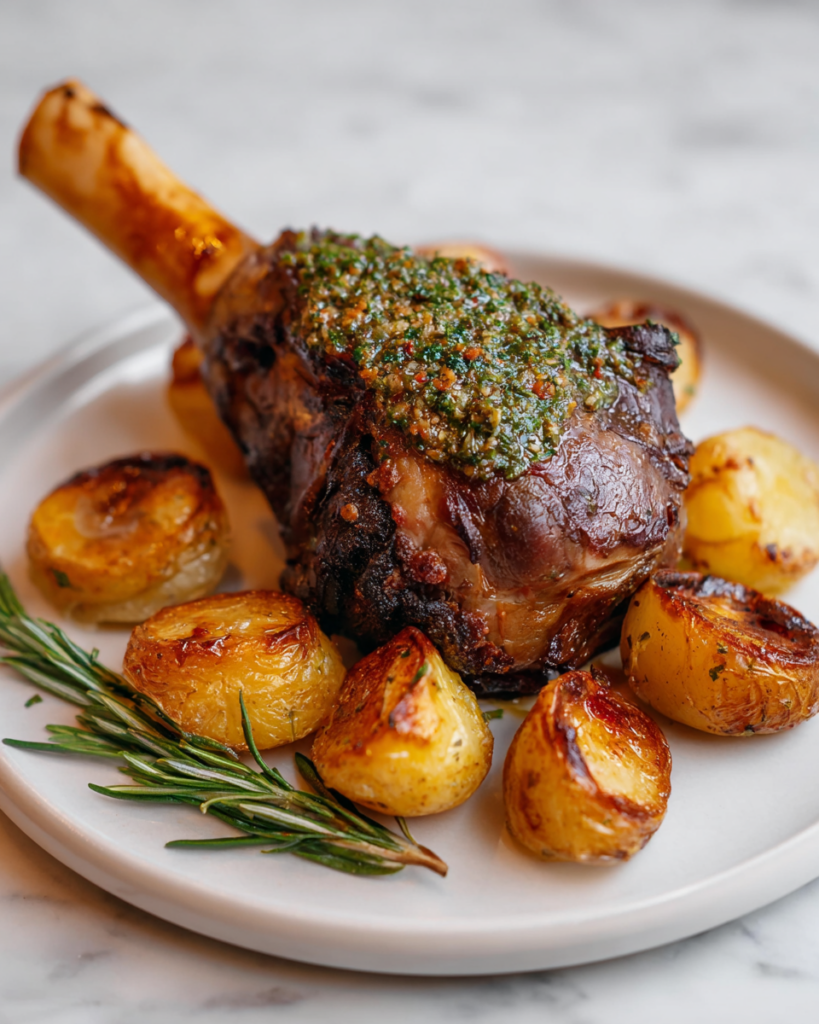
This is the kind of dish that feels far more luxurious than the effort suggests. You get that classic braised-lamb comfort, but the method stays wonderfully manageable because the oven does almost all the work for you.
The high-heat start is what makes this version especially appealing. It gives the lamb a head start on color and flavor, then the lower oven temperature and tightly covered dish create the moist environment that helps the meat turn beautifully tender.
I also love how focused the ingredient list is. You are not building a heavy sauce or juggling a long prep session. A little broth, plenty of garlic, and fresh rosemary and oregano are enough to make the whole kitchen smell incredible.
What You Need to Make This Roast Lamb Shanks
Lamb shanks — These are ideal for braising because the long cooking time helps the meat become tender and flavorful while the bones and connective tissue enrich the juices.
Extra-virgin olive oil — Helps the seasoning coat the lamb evenly and encourages a nicely developed exterior during the first roast.
Fine salt — Brings out the natural richness of the lamb and seasons the dish from the start.
Black pepper — Adds a little warmth and keeps the flavor profile savory and balanced.
Herbes de Provence — Gives the lamb an instant herbal backbone and complements the fresh rosemary and oregano beautifully.
Low-sodium chicken broth or lamb broth — Creates the braising liquid and catches all the savory drippings as the lamb cooks.
Garlic cloves — Lightly crushed garlic softens in the pan and infuses the broth with mellow, aromatic flavor.
Fresh rosemary — Adds a woodsy, classic pairing that works naturally with lamb.
Fresh oregano — Brings a fresher, slightly earthy note that keeps the finished dish vibrant.
Helpful Tips
- Use a baking dish that holds the lamb fairly snugly so the broth and aromatics stay concentrated around the shanks.
- Seal the foil tightly before the long roast, since trapped steam is the key to moist, tender meat.
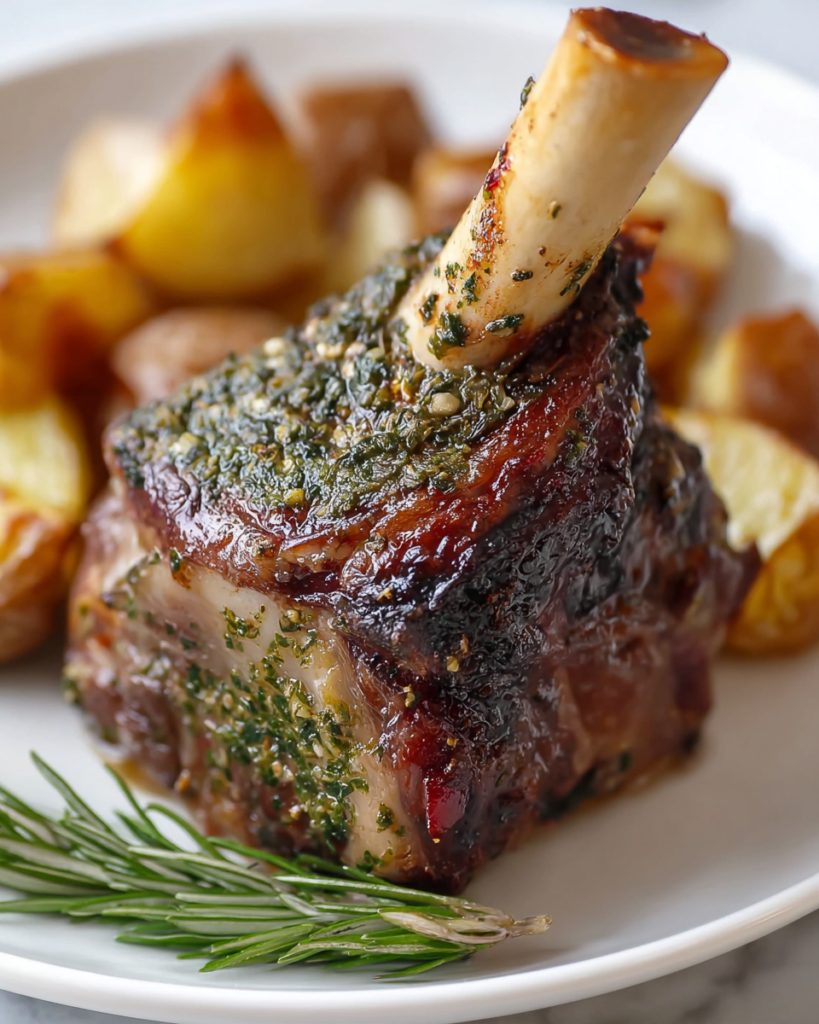
- Spoon the pan juices over the lamb just before serving so every portion stays glossy and flavorful.
How to Make This Roast Lamb Shanks
STEP 1: Place the lamb shanks in a baking dish large enough to hold them closely in a single layer. Rub them all over with the olive oil, then season every side with the salt, black pepper, and herbes de Provence.
STEP 2: Set the dish in the oven and begin preheating to 450°F. This unusual but effective start allows the lamb to begin roasting as the oven heats, which helps develop flavor without any extra stovetop step.
STEP 3: Once the oven reaches full temperature, roast the lamb uncovered for about 15 minutes. The outside should look more developed and aromatic, giving the shanks a stronger savory base before braising.
STEP 4: Remove the dish from the oven and reduce the oven temperature to 325°F. Pour the broth into the dish, then scatter the crushed garlic, rosemary, and oregano around the lamb.
STEP 5: Cover the dish tightly with foil, overlapping the edges as needed to create a secure seal. This keeps the steam inside and helps the lamb cook gently in the fragrant liquid.
STEP 6: Return the covered dish to the oven and roast for about 2 hours, until the lamb is very tender and infused with the garlic and herb flavors. The meat should feel soft and easy to pull apart with a fork.
STEP 7: Serve the lamb shanks hot with the cooking juices spooned over the top. A little of the softened garlic and pan liquid on each serving makes the dish feel even richer and more complete.
Can I make this ahead of time?
Yes, this is a great make-ahead main course. The lamb can be cooked earlier in the day or even the day before, then gently reheated in its juices. In many cases, braised dishes taste even better after resting because the flavors have more time to settle together.
Do I have to use both rosemary and oregano?
No, but they work especially well together here. Rosemary gives the dish a classic lamb-friendly aroma, while oregano adds freshness and balance. If you only have one, the recipe will still be delicious, though the flavor may feel slightly less layered.
How do I know when lamb shanks are done?
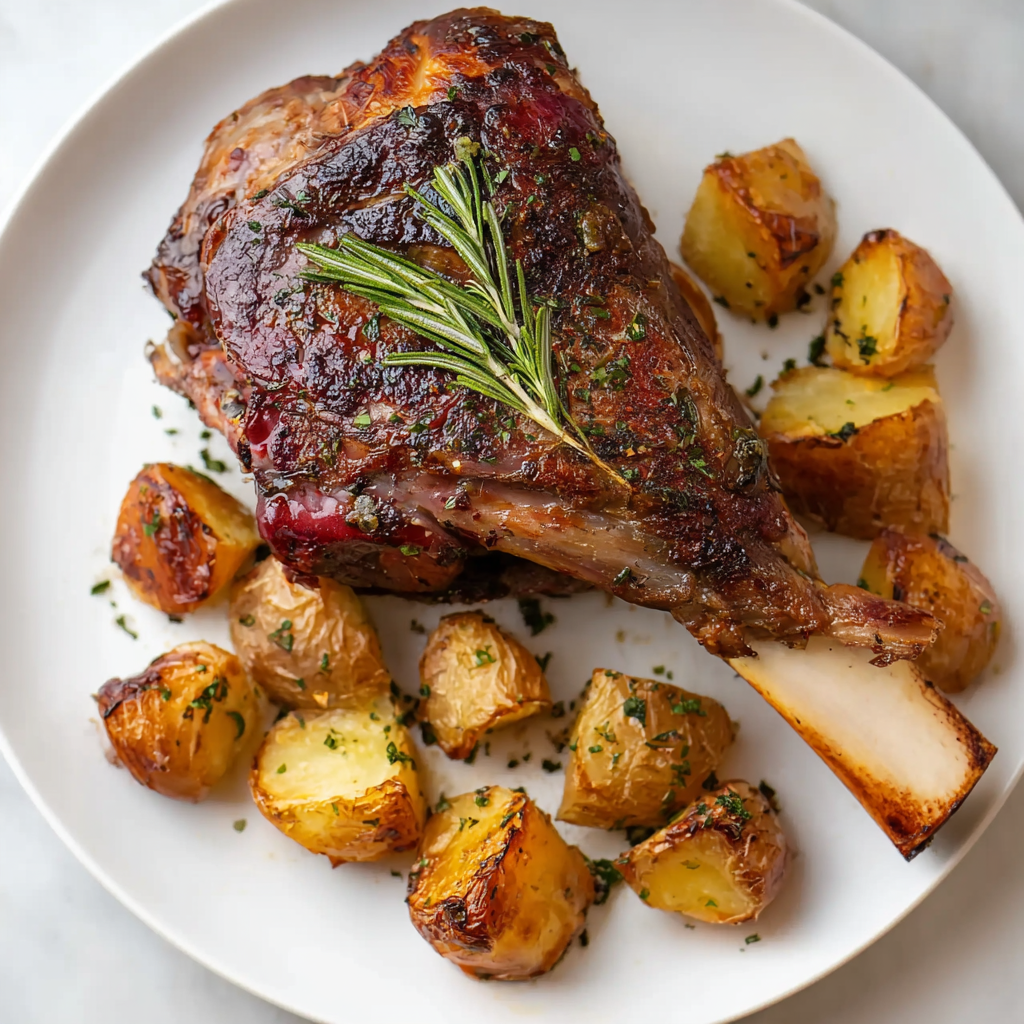
Look at texture more than exact timing. The lamb should feel very tender when pierced with a fork, and the meat should be starting to loosen from the bone. If it still feels firm or tight, it needs a little more covered time in the oven.
Can I use dried herbs instead of fresh?
Yes, dried herbs can work when fresh rosemary or oregano are not available. Since dried herbs are more concentrated, use a smaller amount than you would fresh. They will still flavor the broth nicely during the long roasting time, especially alongside the garlic and herbes de Provence.
How to Store & Reheat
Leftover lamb shanks should be cooled slightly, then stored in an airtight container with as much of the pan juice as possible. Keeping the meat with the liquid helps protect it from drying out and makes reheating much more successful.
In the refrigerator, leftovers will keep well for several days. For longer storage, you can freeze the lamb shanks with their juices in a freezer-safe container. It is especially helpful to portion them individually if you want an easier future meal.
To reheat, place the lamb in a covered baking dish with some of the juices and warm it gently in the oven until heated through. A splash of extra broth can help loosen the liquid if it has thickened too much in the fridge. You can also reheat smaller portions on the stovetop over low heat, again with some of the juices to keep the meat moist.
Because this is a braised dish, gentle reheating works much better than aggressive heat. A low, covered reheat lets the lamb stay tender instead of becoming tight or dry.
What to Serve with Roast Lamb Shanks
Mashed potatoes are one of the most natural pairings for this dish. They absorb the savory broth beautifully and turn every spoonful of juices into part of the meal instead of something left behind on the plate.
Soft polenta is another excellent option, especially if you want the dinner to feel a little more elegant. Its creamy texture matches the tenderness of the lamb and gives the pan juices a perfect base.
For a lighter contrast, add a simple vegetable side. Roasted carrots, green beans, or asparagus all work well because they bring freshness and color without distracting from the lamb itself.
Roast Lamb Shanks
Ingredients
For the lamb
- 4 lamb shanks about 1 1/2 pounds each
- 2 tablespoons extra-virgin olive oil or another oil suitable for high-heat cooking
- 1 teaspoon fine salt
- 1/2 teaspoon black pepper preferably freshly ground
- 1 teaspoon herbes de Provence
For the braising liquid
- 1 cup low-sodium chicken broth or lamb broth
For the aromatics
- 6 garlic cloves peeled and lightly crushed
- 3 sprigs fresh rosemary
- 3 sprigs fresh oregano
Instructions
- Place the 4 lamb shanks in a 9×13-inch baking dish or another oven-safe vessel large enough to hold them closely in a single layer.
- Coat the lamb thoroughly with the olive oil, rubbing or brushing it over every side.
- Season the shanks evenly with the salt, black pepper, and herbes de Provence.
- Set the baking dish in the oven and begin preheating the oven to 450°F (232°C). Allow the lamb to start roasting as the oven comes up to temperature.
- Once the oven reaches 450°F (232°C), roast the lamb shanks for 15 minutes to help form a flavorful exterior.
- Remove the dish from the oven and reduce the oven temperature to 325°F (163°C).
- Pour the broth into the dish, then add the smashed garlic, rosemary sprigs, and oregano sprigs around the lamb.
- Cover the dish tightly with aluminum foil, overlapping the foil as needed to create a secure seal and hold in the steam.
- Return the covered dish to the oven and roast for 2 hours at 325°F (163°C), until the lamb is tender and infused with the aromatic flavors.
- Remove the lamb shanks from the oven and serve at once, spooning the cooking juices from the pan over the top.


