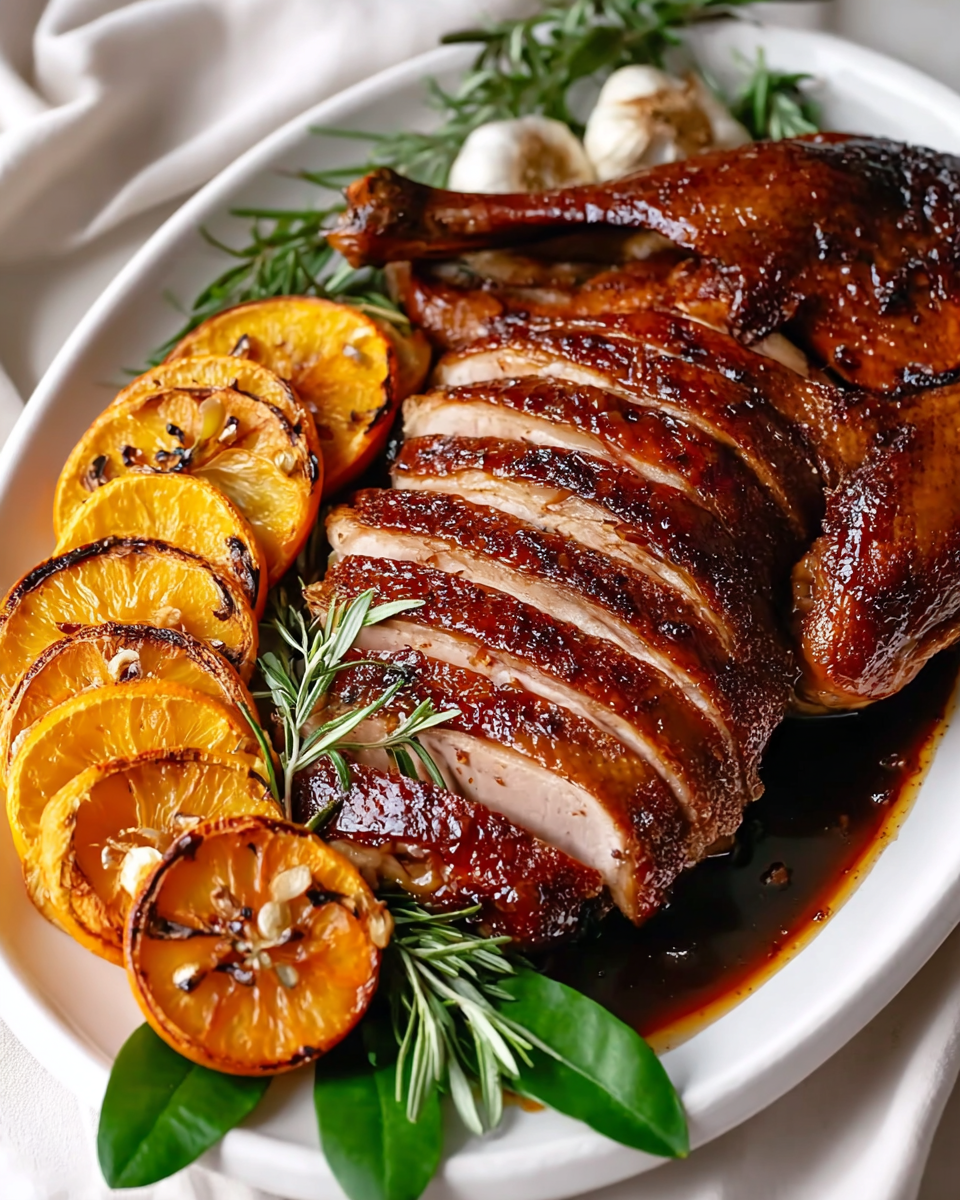
Roasted Duck à l’Orange is a crisp-skinned, special-occasion main dish with tender meat, fragrant herbs, and a glossy orange sauce. It feels elegant and classic, yet the method stays practical enough for a confident home-cooked dinner.
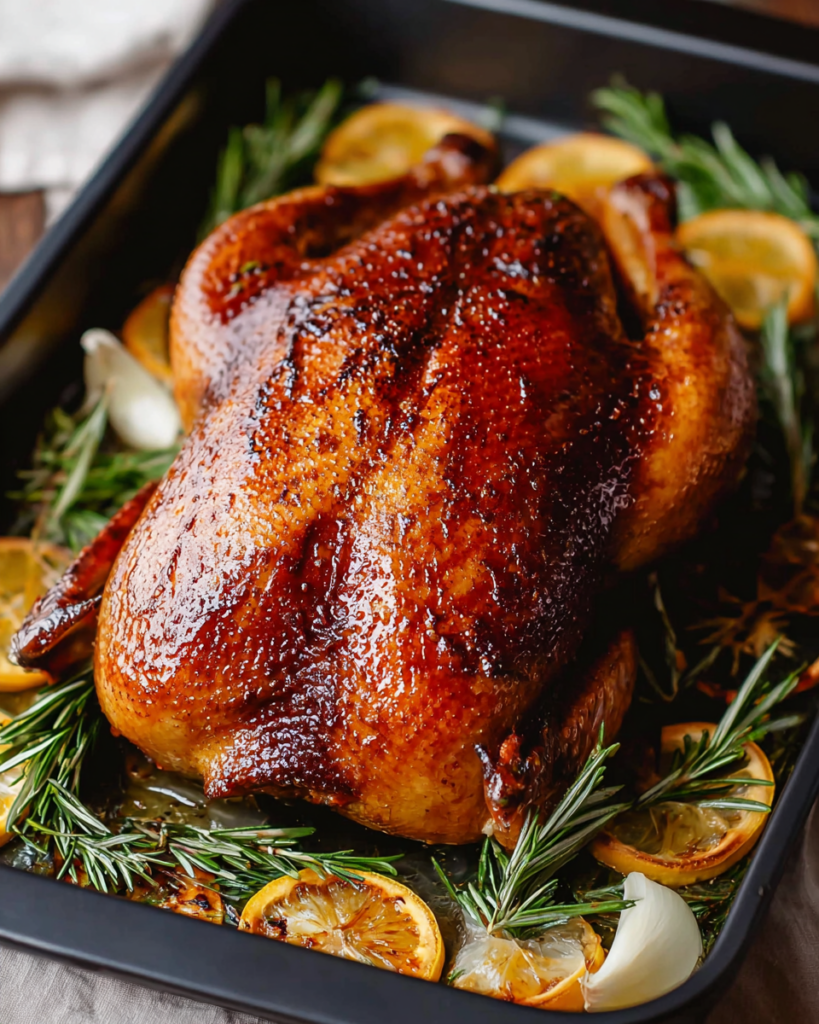
This is the kind of meal that makes your table feel instantly more dressed up without demanding restaurant-level technique. You brown the duck first, roast it over aromatic vegetables, then finish it with orange slices and a bright sauce that brings everything together.
What makes this version work so well is the balance. The duck stays rich and savory, while the honey, vinegar, orange juice, and liqueur give the final dish a sweet-tart edge that keeps every bite from feeling heavy.
It is also a smart choice for a holiday meal, date-night dinner, or small gathering when you want something memorable. The ingredients are straightforward, but the finished platter looks dramatic, polished, and deeply inviting.
What You Need to Make This Roasted Duck à l’Orange
Whole duck — the star of the dish, roasting up rich and flavorful while the skin turns crisp in the final high-heat finish.
Salt and black pepper — simple seasoning is enough here because the duck has plenty of natural depth on its own.
Onion — adds sweetness and savory body to the roasting base beneath the bird.
Carrots — give the pan a gentle earthy sweetness and become tender as the duck roasts.
Garlic bulbs — soften and perfume the pan with a mellow, roasted flavor.
Rosemary, thyme, and bay leaves — these herbs bring a classic aromatic backbone that pairs beautifully with duck and citrus.
Chicken broth — forms the base of the orange sauce and rounds out the sharper citrus notes.
Honey — softens the acidity and gives the sauce a light gloss without making it overly sweet.
Apple cider vinegar — adds the tart note that keeps the sauce lively and balanced.
Orange juice — gives the sauce its fresh citrus flavor and ties the whole dish to the garnish.
Corn flour — helps lightly thicken the sauce so it can coat slices of duck instead of running thin across the plate.
Unsalted butter — stirred in at the end for a smoother, richer finish.
Oranges — used for both zest and slices, bringing freshness, fragrance, and a beautiful classic presentation.
Orange liqueur — marinates the blanched slices and deepens the orange flavor with a slightly more complex finish.
Cooking Steps
STEP 1: Heat your oven and get the duck ready. Pat the duck dry if needed, then season it well with salt and freshly cracked black pepper so the skin and meat are evenly flavored from the start.
STEP 2: Brown the duck in a hot cast-iron skillet over medium-high heat, turning it so all sides take on color. This extra step builds flavor early and helps jump-start the rich, crisp exterior you want later.
STEP 3: Build the roasting pan with the onion, carrots, halved garlic bulbs, rosemary, thyme, and bay leaves. Set the duck on top and roast at 325°F, turning it every 30 minutes so it cooks evenly and the skin develops a better overall texture.
STEP 4: While the duck roasts, make the sauce by simmering the vinegar, orange juice, and honey together first, then adding the broth. Let it stand after mixing so the flavors settle, then finish it with the corn flour and butter for a lightly thickened, glossy texture.
STEP 5: Blanch the orange slices briefly in boiling water, then transfer them to a bowl with the orange liqueur. This softens any harsh bitterness from the peel and leaves you with citrus slices that taste bright, fragrant, and more refined.
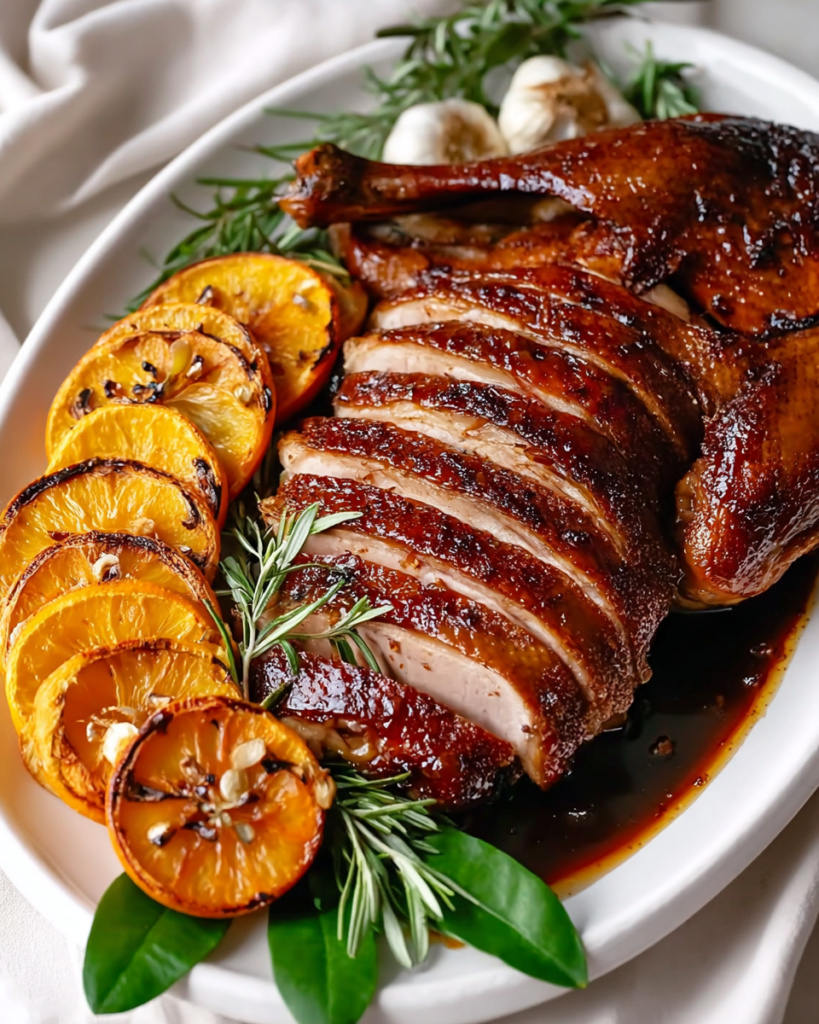
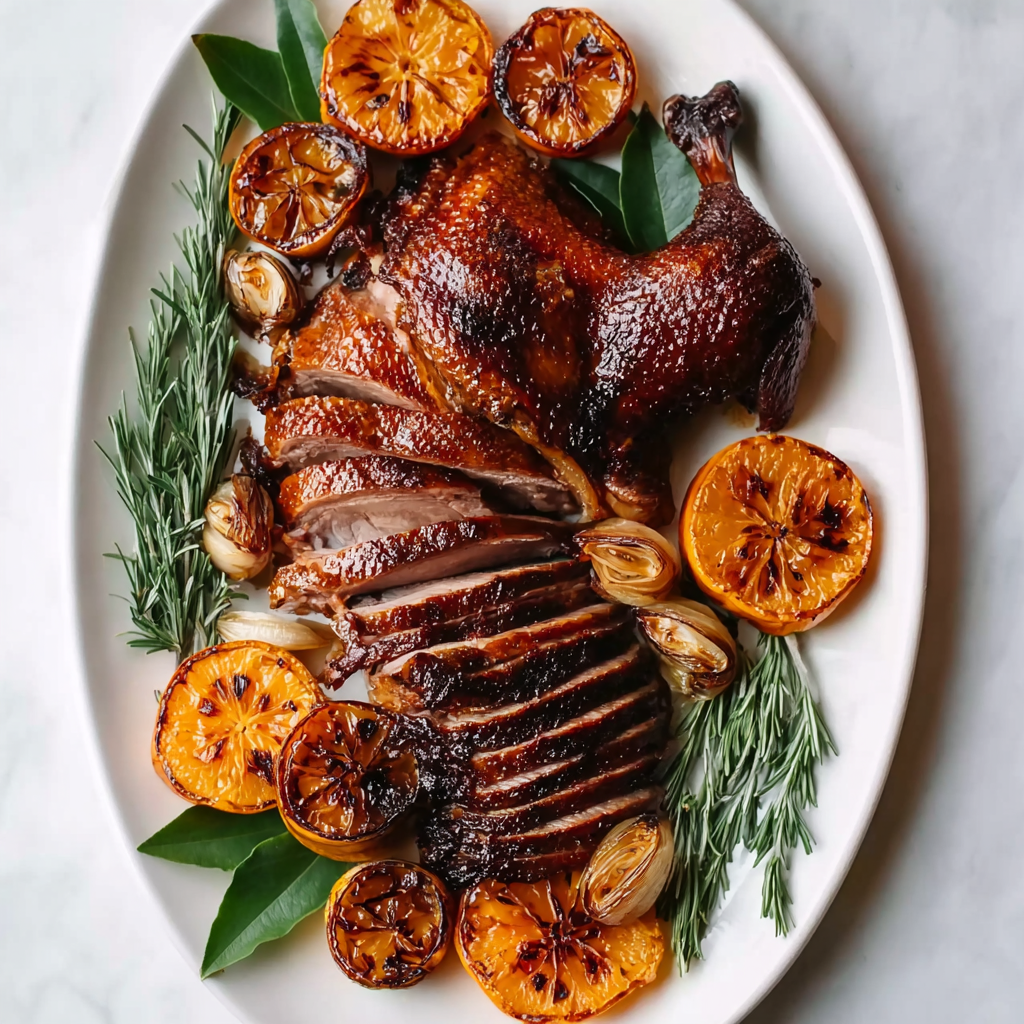
STEP 6: After the main roasting time, tent the duck loosely with foil, increase the oven heat, arrange the marinated orange slices around it, and scatter over the zest. Roast again until the skin is deeply golden and crisp, then let the duck rest before carving and serving with the vegetables and orange sauce.
Helpful Tips
- Start with a well-browned duck. That first sear adds a surprising amount of flavor and gives the finished bird a deeper roasted look.
- Turn the duck carefully during roasting so the fat renders more evenly and the skin does not stay soft on one side.
- Stir the butter into the sauce at the end, off the heat or over very low heat, so it stays smooth and silky instead of separating.
Can I make the orange sauce ahead of time?
Yes. The sauce can be prepared earlier in the day and gently reheated before serving. That actually works well for entertaining because it lets you focus on carving the duck and arranging the roasted orange slices at the end.
Do I really need to blanch the orange slices?
It is worth doing. A quick blanch softens the peel slightly and tones down bitterness, which gives you a more balanced garnish once the slices are marinated in orange liqueur and roasted around the duck.
How do I know when the duck is done?
The duck should look richly golden, and the juices should run clear when the meat is properly cooked. For the most reliable check, the thickest part of the leg should reach a safe internal temperature before the resting time.
Can I skip the orange liqueur?
Yes. The dish will still work without it. The orange slices will taste a little less layered and aromatic, but you can still use the zest and fresh orange juice to keep the citrus finish bright and classic.
Perfect Pairings
A simple potato side works beautifully here. Creamy mashed potatoes, buttered baby potatoes, or even crisp roasted potatoes are all excellent because they catch the orange sauce and balance the richness of the duck.
For something green, try green beans, sautéed Brussels sprouts, or lightly dressed haricots verts. A fresh vegetable side gives the plate contrast and keeps the meal from feeling too heavy.
Warm bread is another good addition, especially for a dinner-party table. A small loaf or a few slices of crusty bread are perfect for soaking up the citrusy pan juices and any extra sauce left on the plate.
Keeping Leftovers Fresh
Store leftover duck in an airtight container in the refrigerator for up to 3 days. If possible, keep the carved meat, roasted vegetables, and orange sauce in separate containers so the texture stays better when you reheat everything.
The sauce can usually be refrigerated for 3 to 4 days. Reheat it gently on the stove over low heat, stirring often, until warmed through and smooth again. If it thickens too much in the fridge, add a small splash of broth or water.
Duck can also be frozen, especially once carved. Wrap it well or place it in a freezer-safe container and freeze for up to 2 months for the best quality. Thaw it overnight in the refrigerator before reheating.
For reheating, the oven is your best option if you want to preserve the skin as much as possible. Warm the duck in a covered dish at a moderate temperature until hot, then uncover it briefly near the end to refresh the exterior. The microwave will work for convenience, but the skin will soften.
Roasted Duck à l’Orange
Ingredients
For the duck:
- 1 whole duck about 3 lb
- 2 tsp salt
- Freshly cracked black pepper to taste
- 1 onion cut into quarters
- 1 small bunch of carrots
- 2 garlic bulbs halved
- 2 to 3 rosemary sprigs
- Fresh thyme leaves
- Fresh bay leaves
For the orange sauce:
- 2 cups low-sodium chicken broth
- 3 tbsp liquid honey
- 1/4 cup apple cider vinegar
- Juice of 1 orange
- 1 tsp corn flour
- 2 tbsp unsalted butter
For the orange garnish:
- 3 oranges zested and sliced
- 3 tbsp orange liqueur
Instructions
- Preheat the oven to 325°F (160ºC).
- Season the duck thoroughly with the salt and freshly cracked black pepper.
- Set a large cast-iron skillet over medium-high heat. Brown the duck on every side for about 10 minutes, allowing the skin to take on color and the flavor to deepen.
- Arrange the halved garlic bulbs, quartered onion, carrots, rosemary, thyme, and bay leaves in a baking pan. Place the browned duck over the vegetables and herbs.
- Roast for 90 minutes, turning the duck upside down every 30 minutes so it cooks evenly and the skin develops a better texture.
- Meanwhile, prepare the sauce. In a small saucepan, bring the apple cider vinegar, orange juice, and honey to a boil.
- Slowly pour in the chicken broth, stirring continuously until the mixture is fully combined. Remove the pan from the heat and leave the sauce to stand so the flavors can develop.
- Blanch the orange slices in boiling water for 2 minutes. Transfer them to a bowl and pour the orange liqueur over the top. Let them marinate while the duck continues roasting.
- After the duck has roasted for 90 minutes, remove it from the oven and loosely cover it with foil to keep it warm.
- Raise the oven temperature to 450°F (230ºC).
- Arrange the marinated orange slices around the duck, then scatter the orange zest over both the duck and the fruit.
- Return the pan to the oven and roast for 10 to 15 minutes more, until the skin is crisp and richly golden.
- Take the duck out of the oven and let it rest briefly before carving.
- Serve the carved duck with the roasted vegetables and the liqueur-marinated orange slices. Spoon the prepared orange sauce over the top before serving.