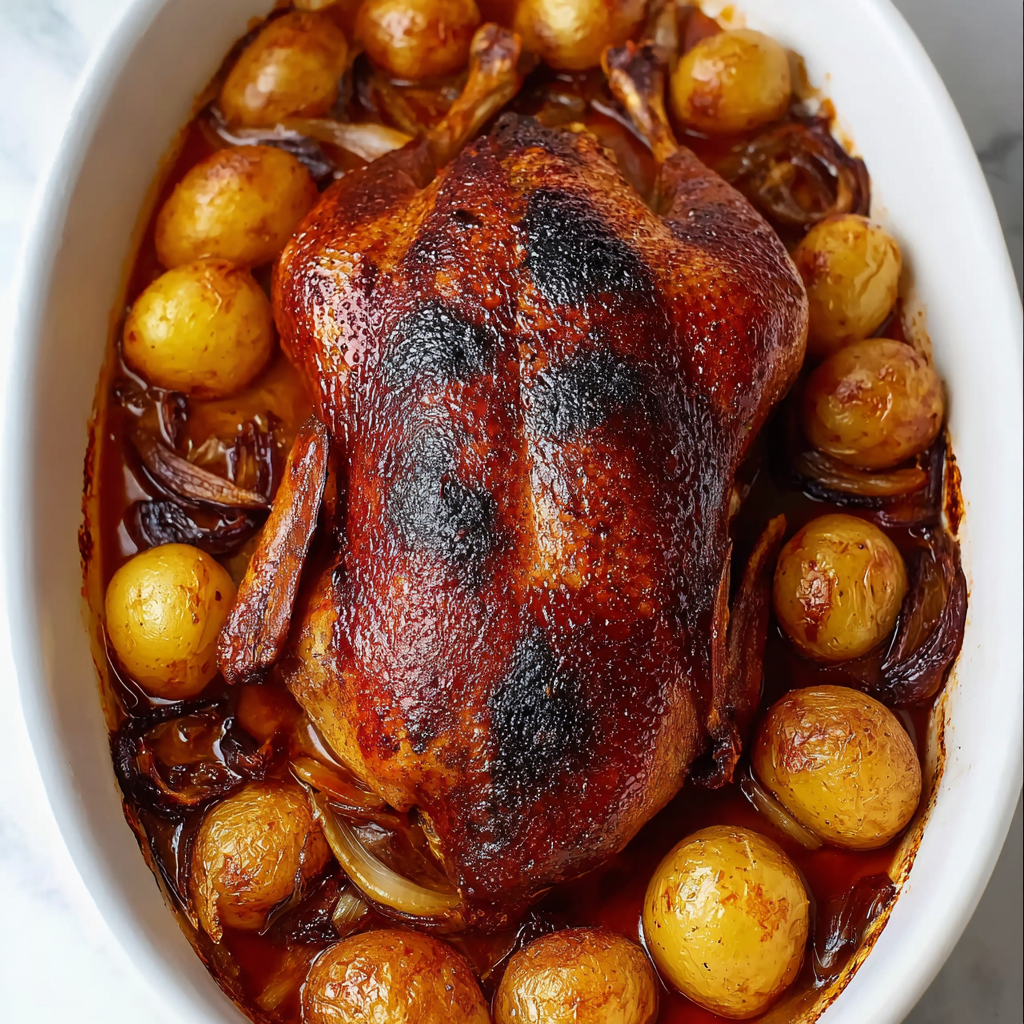
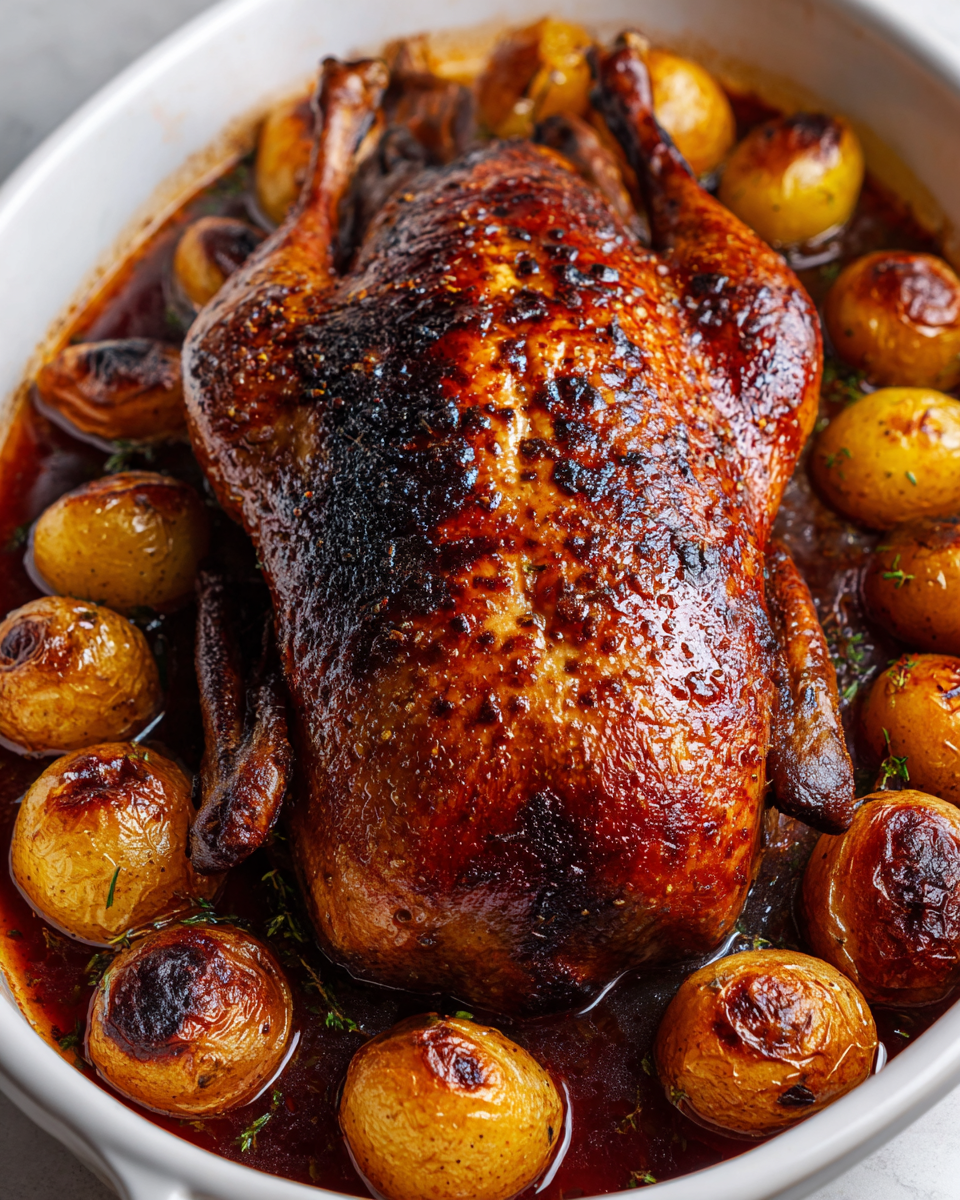
Quick, deeply savory, and special enough for company, Roasted Duck and Potatoes gives you crisped skin, richly roasted meat, and golden potatoes that soak up the flavorful drippings while a soy-ginger glaze adds glossy, balanced finish.
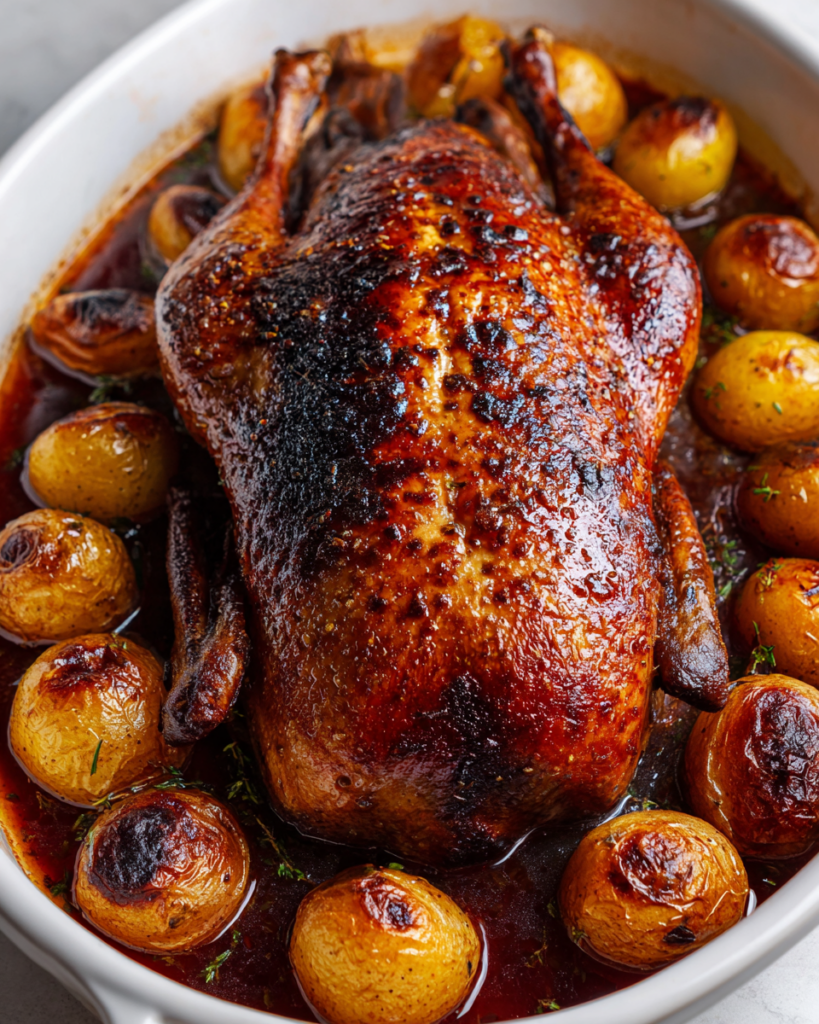
This is the kind of dinner that feels impressive when it lands on the table, but the method is actually very straightforward. Most of the work happens in the oven, which makes it a great choice for a weekend meal or a holiday-style supper without a long list of complicated steps.
The flavor combination is what makes this dish stand out. Chinese five-spice brings warmth and depth, the orange and ginger keep things bright, and the glaze adds that sweet-salty finish that makes duck feel especially luxurious.
It also works because the potatoes and shallots cook right under the bird, catching the rendered fat and turning incredibly flavorful as the duck roasts. You end up with a complete main dish that feels thoughtful, hearty, and worth every minute.
Roasted Duck and Potatoes Ingredients
Whole duck brings the rich flavor and crisp-skinned centerpiece quality that defines this dish. A bird around 3.5 pounds is a practical size for even roasting.
Chinese five-spice powder gives the duck its signature aromatic depth with warm, slightly sweet, and savory notes.
Coarse salt seasons the bird thoroughly and helps the skin dry out a bit during the marinating time, which supports better browning in the oven.
Orange adds brightness to both the cavity and the glaze, balancing the richness of the meat.
Fresh ginger keeps the flavor profile lively and fragrant, tying together the citrus, soy, and spice.
Garlic perfumes the cavity as the duck roasts and adds a mellow savory layer.
Yukon gold potatoes are ideal here because they roast beautifully while staying creamy inside. They also absorb the duck drippings especially well.
Shallots soften and sweeten in the pan, adding a gentle onion note without overpowering the duck.
Reduced-sodium soy sauce gives the glaze its savory backbone and helps create that lacquered finish.
Honey rounds out the glaze with a little sweetness and encourages a shiny surface near the end of roasting.
Rice vinegar adds a light tang that keeps the glaze from feeling heavy.
Mirin adds subtle sweetness and depth, helping the glaze taste balanced rather than simply salty.
Helpful Tips
- Prick the skin carefully without piercing deeply into the meat. This helps the fat render while keeping the duck moist.
- Give the duck the full marinating time whenever possible. Even a few extra hours helps the seasoning settle in and the skin dry slightly.
- Watch the color during the final glazed roast. If the top starts getting too dark, a loose tent of foil will protect the skin while the duck finishes cooking.
Cooking Steps
STEP 1: Start by cleaning and drying the duck very well. Removing excess moisture is one of the most helpful things you can do for better browning later, so take a minute with paper towels and dry both the cavity and the outer skin thoroughly.
STEP 2: Rub the duck all over with the five-spice and salt mixture, including the cavity. Trim away loose fatty bits, secure the extra neck skin if needed, and prick the skin in several places so the fat can render as it roasts. Chill the duck for at least 4 hours or overnight for the best texture and flavor.
STEP 3: Once you are ready to roast, heat the oven and fill the cavity with garlic, fresh ginger, and orange wedges. Tying the legs together helps the bird roast more evenly and keeps the aromatics tucked inside.
STEP 4: Spread the potatoes and shallots in a large oven-safe skillet or roasting pan, then set the duck directly on top. As the bird cooks, the fat renders down over the vegetables, giving you potatoes that taste far more luxurious than a standard roast pan side dish.
STEP 5: While the duck roasts, simmer the glaze until it lightly thickens. You are not looking for a sticky syrup here, just enough body that it brushes on smoothly and clings to the skin.
STEP 6: After the main roasting time, turn the outer potatoes so they brown more evenly, then brush the duck generously with the glaze. Return it to the oven for the final stretch so the skin deepens in color and the glaze turns glossy and savory-sweet.
STEP 7: Check the thickest part of the thigh and breast for doneness, then let the duck rest before carving. That short resting time matters because it helps the juices redistribute and makes carving cleaner and easier.
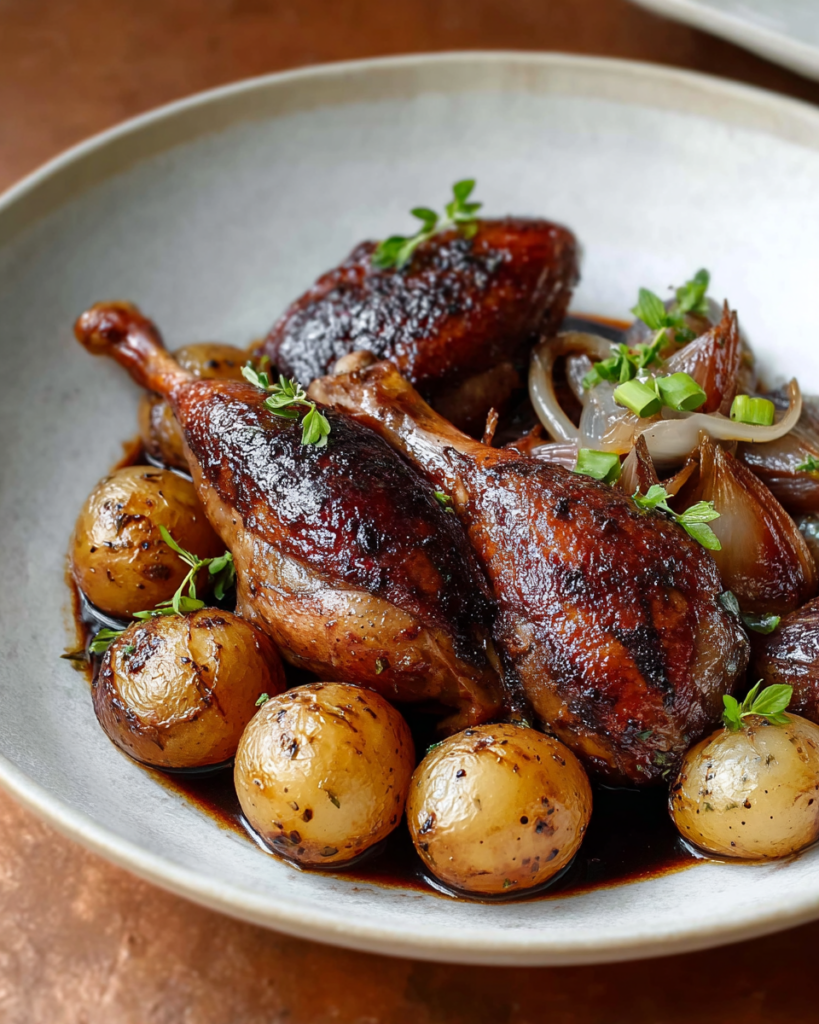
STEP 8: Carve and serve with the roasted potatoes and shallots, spooning over a little of the flavorful pan juices. That final touch ties the whole dish together and makes the vegetables every bit as appealing as the duck itself.
Should I marinate the duck overnight?
Yes, overnight is ideal if your schedule allows it. The seasoning has more time to work into the skin and surface of the bird, and the uncovered chill time also helps the skin dry slightly for better roasting.
How do I know when roasted duck is done?
Check the thickest parts of the breast and thigh with an instant-read thermometer. You are aiming for 165°F, and it is also a good sign when the juices run clear and the skin looks well browned.
Can I make the glaze ahead of time?
Yes. You can simmer the glaze earlier in the day and keep it refrigerated until you need it. Warm it gently before brushing so it loosens up and spreads easily over the duck.
Why are the potatoes cooked under the duck?
They catch the rendered duck fat and roasting juices, which gives them exceptional flavor and a rich golden finish. It is one of the smartest parts of this dish because the side cooks right alongside the main.
Perfect Pairings
A simple crisp green salad works beautifully here because it lightens the plate and balances the richness of the duck.
Steamed green beans or roasted bok choy are great choices when you want a fresh vegetable side that does not compete with the glaze.
Warm rice or a light rice pilaf can also work well, especially if you want something to catch extra pan juices and glaze at the table.
How to Store & Reheat
Store leftover duck, potatoes, and shallots in an airtight container in the refrigerator for up to 3 days. For the best texture, keep the duck pieces as intact as possible instead of shredding or slicing them too early.
You can freeze the duck for up to 2 months, though the potatoes are best enjoyed fresh since their texture tends to soften after freezing and thawing. Wrap the duck well, then place it in a freezer-safe container or bag.
To reheat, place the duck and potatoes in a baking dish and warm them in a 325°F oven until heated through. This keeps the skin and edges in better shape than the microwave. If you have extra glaze or pan juices, spoon a little over the top before reheating so the meat stays glossy and flavorful.
Roasted Duck and Potatoes
Ingredients
For the duck:
- 1 whole duck 3.5 pounds, preferably Pekin or Long Island
- 1 tablespoon Chinese five-spice powder
- 1 whole orange cut in half
- 1 inch fresh ginger
- 1 1/2 teaspoons coarse salt such as Diamond Crystal kosher salt
- 1 head garlic
For the potatoes and shallots:
- 6 shallots peeled and halved
- 9 medium Yukon gold potatoes scrubbed and cut into halves or quarters
For the soy ginger glaze:
- 1/4 cup reduced-sodium soy sauce
- 2 tablespoons honey preferably local wildflower
- 1 tablespoon rice vinegar
- 2 tablespoons mirin
- 3 slices fresh ginger
- 1/4 cup orange juice
Instructions
- Step 1: Prepare the duck
- Work at the sink with a colander set inside a bowl to keep the process tidy and sanitary. Remove the duck from its packaging, then take out the neck, gizzards, and any loose pieces from the cavity. Reserve them for another use or discard them. Set the duck on a rack placed over a quarter sheet pan, and pat the bird thoroughly dry inside and out with paper towels.
- Step 2: Season and marinate
- In a small bowl, stir together the coarse salt and Chinese five-spice powder. Rub the mixture generously over the entire duck, including the cavity. Using kitchen shears, trim away any loose fatty pieces from the back and discard them. Cut off the excess neck skin at the top and fasten it to the bird with two toothpicks. Prick the skin all over with a sharp paring knife. Transfer the duck to the refrigerator and let it marinate for at least 4 hours or overnight.
- Step 3: Preheat the oven and fill the cavity
- Heat the oven to 350°F. Once the duck has finished marinating, place the garlic, three slices of ginger, and two orange wedges inside the cavity. Tie the legs together with kitchen twine.
- Step 4: Arrange the potatoes and roast
- In a large oven-safe skillet with high sides, place the potatoes cut side up in a single, even layer and nestle the shallots between them. Set the duck directly on top of the potatoes. When the oven is fully preheated, transfer the skillet to the oven and roast for 2 hours.
- Step 5: Prepare the soy ginger glaze
- While the duck roasts, make the glaze. In a saucepan over medium heat, combine the soy sauce, orange juice, mirin, honey, rice vinegar, and the remaining ginger slices. Bring the mixture to a gentle boil, then lower the heat and let it simmer for about 10 minutes, or until slightly thickened. Remove from the heat.
- Step 6: Glaze the duck
- After 2 hours of roasting, remove the skillet from the oven. Using two forks, turn over the outermost potatoes. Brush the duck generously with the soy ginger glaze, making sure to coat all surfaces and creases well. Return the skillet to the oven and continue roasting for 30 minutes more. If the skin darkens too quickly, loosely cover it with foil.
- Step 7: Rest and carve
- When the duck is done, check that the thickest parts of the breast and thigh have reached an internal temperature of 165°F. Tent the duck loosely with foil and let it rest for 10 to 15 minutes so the juices can settle. To carve, use a large knife and a meat fork. Cut between each leg and breast to remove the thighs, lifting the bird as needed to pull out the thigh bone by hand. Repeat on the other side. For the breast, slice down along the breastbone from top to bottom, then remove the breast meat and cut it into halves or thirds.
- Step 8: Serve
- Serve the carved duck with the roasted potatoes and shallots. Spoon some of the pan drippings over the top before bringing the dish to the table.