Slow Cooked Dutch Oven Roast Lamb is a hearty, make-ahead-friendly dinner with rich herb flavor, tender slices, and built-in roasted vegetables. This oven braise-style roast feels special enough for guests but practical enough for a cozy family meal.
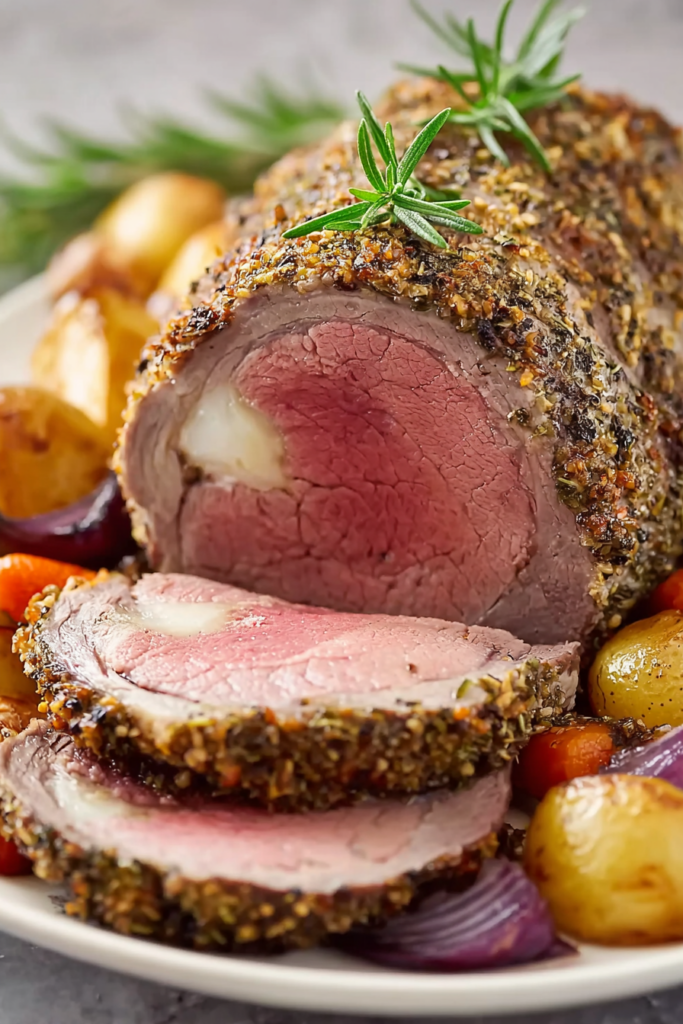
This is the kind of lamb dish that works beautifully when you want something generous, comforting, and full of real flavor without juggling a lot of last-minute cooking. Once the roast is tied and nestled into the pot, the oven does most of the work for you.
The herb paste is what gives this lamb so much character. Garlic, rosemary, oregano, thyme, mint, lemon, and sumac create a savory, bright coating that balances the richness of the meat and keeps every bite interesting.
Roasting the lamb with potatoes, onions, and carrots makes the whole meal feel complete. The vegetables soak up the pan juices and herb mixture as the roast cooks, so you end up with a main dish and side in one Dutch oven.
What You Need to Make This Slow Cooked Dutch Oven Roast Lamb
Boneless leg of lamb brings the main richness and tenderness here, and rolling it into a roast helps it cook evenly while staying juicy.
Kosher salt seasons the meat deeply from the start and helps draw out the lamb’s natural flavor before roasting.
Garlic builds the backbone of the herb rub, giving the roast a bold, savory edge that stands up well to slow oven cooking.
Dried mint adds a classic lamb-friendly note that lifts the heavier flavors and keeps the roast tasting balanced.
Sumac contributes a tangy, slightly citrusy layer that makes the finished dish taste brighter without needing a lot of extra acid.
Fresh rosemary, oregano, and thyme create a fragrant Mediterranean-style herb blend that perfumes both the meat and the vegetables.
Olive oil helps turn the chopped aromatics into a spreadable paste and encourages better browning during the broiling stages.
Lemon juice sharpens the herb mixture and keeps the flavor profile lively rather than overly heavy.
Potatoes make the meal more substantial and absorb the roasting juices beautifully as they soften in the pot.
Onions melt down slightly during cooking and add sweetness that rounds out the sharper garlic and herb notes.
Carrots bring a mild earthy sweetness and hold their shape nicely beside the roast.
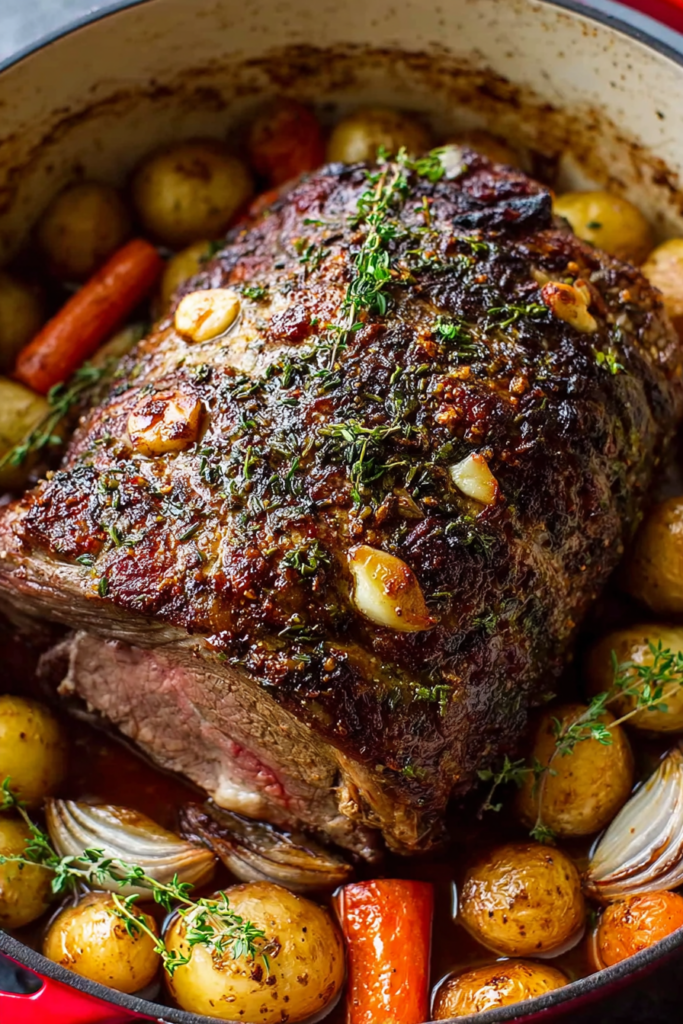
Cooking Steps
STEP 1: Start by scoring the fat on the lamb in a shallow crosshatch pattern, then season the roast all over with salt. Letting it sit for a short rest before cooking gives the seasoning time to settle into the meat and improves the overall flavor.
STEP 2: Make the herb paste by blending the garlic, dried mint, sumac, rosemary, oregano, thyme, olive oil, and lemon juice until thick and fragrant. You want a mixture that clings easily to the lamb instead of running off.
STEP 3: Coat the lamb thoroughly with the herb mixture, making sure the inside and outside are both well covered. Roll the meat into a tight cylinder and tie it securely with kitchen twine so it keeps a neat shape while roasting.
STEP 4: Set the lamb in a large Dutch oven with the fat side facing up, then scatter the potatoes, onions, and carrots around it. Thin any remaining herb mixture with a little water and spoon it over the vegetables so they roast with the same savory flavor.
STEP 5: Broil the uncovered lamb briefly to start the browning. This early blast of high heat helps develop a deeper color on the top of the roast and gives the finished dish a more robust, roasted taste.
STEP 6: Lower the oven temperature, cover the Dutch oven, and roast until the lamb is tender and the vegetables are soft. Check the internal temperature near the thickest part of the meat so you can cook it to your preferred doneness without guessing.
STEP 7: Remove the lid near the end and broil again for a few minutes to deepen the crust. Let the roast rest before slicing so the juices stay in the meat instead of running onto the cutting board.
Perfect Pairings
A crisp green salad with lemon dressing works especially well here because it cuts through the richness of the lamb and keeps the plate from feeling too heavy.
Warm flatbread or a rustic loaf is a great addition when you want to soak up the herby juices left in the pot. It turns the meal into something that feels a little more relaxed and shared.
If you are serving this for a holiday or weekend gathering, a simple yogurt sauce with lemon and herbs pairs nicely with the roast and echoes the Mediterranean-inspired flavors already in the dish.
Can I prepare the lamb ahead of time?
Yes. You can salt, rub, roll, and tie the lamb earlier in the day or even the night before, then keep it chilled. That head start makes dinner easier and also gives the herb mixture more time to flavor the meat.
What internal temperature should roast lamb reach?
That depends on how you like it served, but for this style of tied roast, using a meat thermometer is the smartest approach. The recipe’s target of 150°F gives you a nicely cooked, tender result that still slices well after resting.
Can I use different vegetables in the Dutch oven?
Yes, as long as they can hold up to a fairly long roast. Parsnips, turnips, or chunks of sweet potato can work well. Just keep the pieces fairly large so they do not become too soft before the lamb is finished.
Do I have to broil the lamb twice?
The roast will still cook without both broiling stages, but they do add a lot to the finished texture and color. The first helps kick-start browning, and the second sharpens the crust after the covered roasting time.
Helpful Tips
- Tie the roast firmly but not so tightly that the filling paste squeezes out; a compact shape helps the lamb cook more evenly.
- Cut the potatoes and carrots into large pieces so they stay hearty and do not turn mushy in the Dutch oven.
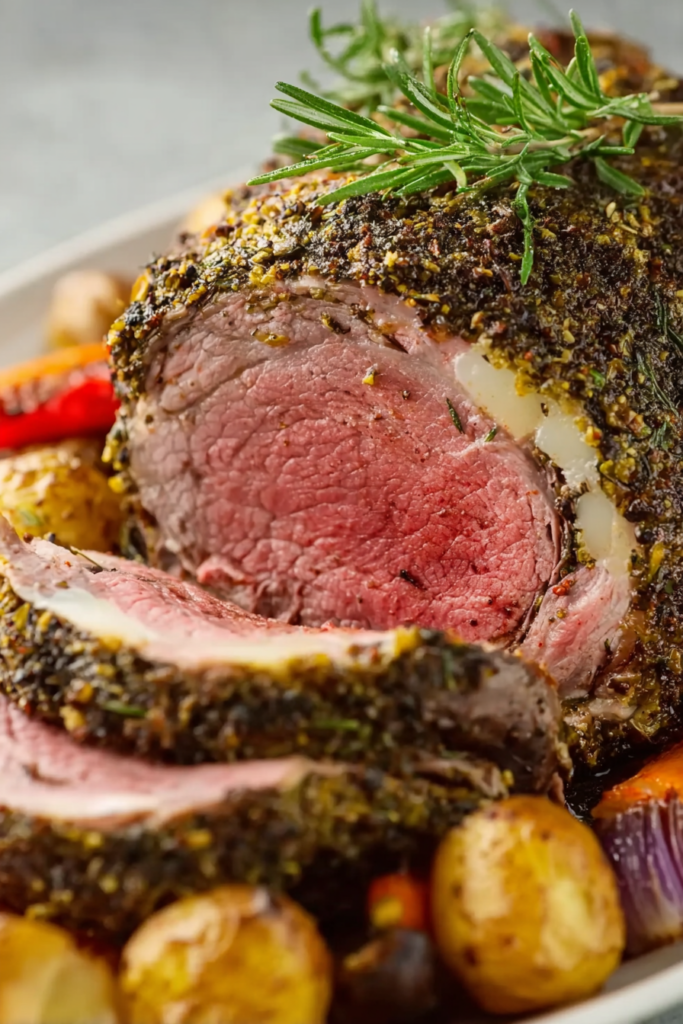
- Rest the lamb the full 20 minutes before slicing to keep the juices in the meat and make cleaner slices.
How to Store & Reheat
Store leftover lamb and vegetables in an airtight container in the refrigerator for up to 4 days. For longer storage, freeze sliced lamb for up to 2 months. The vegetables can be frozen too, though their texture will soften more after thawing.
To reheat, place the lamb and vegetables in a covered baking dish with a splash of water or pan juices and warm at a low oven temperature until heated through. You can also reheat slices gently in a skillet over low heat. Avoid overheating, since lamb can dry out once it is fully cooked.
This roast is especially good the next day because the herb flavors settle in even more. Leftover slices are great tucked into flatbread, served over mashed potatoes, or plated with reheated vegetables for a quick second dinner.
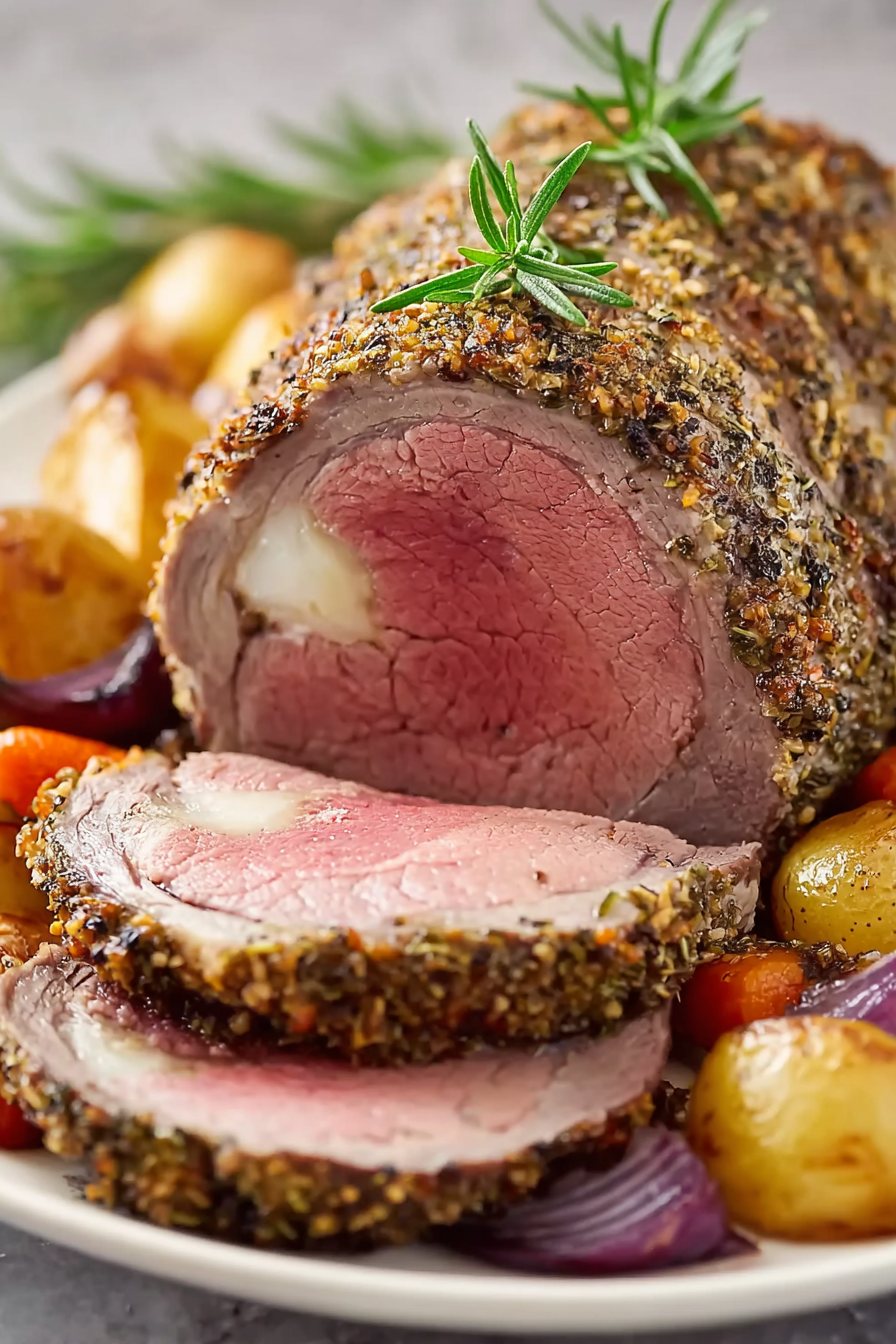
Slow Cooked Dutch Oven Roast Lamb
Ingredients
For the lamb:
- 1 boneless leg of lamb 5 pounds
- 3 teaspoons kosher salt
For the herb rub:
- 1 tablespoon dried mint
- 15 garlic cloves finely minced
- 2 tablespoons sumac
- 2 sprigs fresh rosemary
- 10 sprigs fresh oregano
- 5 sprigs fresh thyme
- 1/4 cup olive oil
- Juice from 1/2 lemon
For the vegetables:
- 3 large potatoes peeled and cut into large pieces
- 2 large onions peeled and quartered
- 3 large carrots peeled and sliced into thick rounds
Instructions
- Carefully score the surface of the lamb fat in a crosshatch pattern, cutting through the skin without slicing into the meat. Season the lamb generously all over with the kosher salt, then leave it to rest for 30 minutes while the herb mixture is prepared.
- Place the minced garlic, dried mint, sumac, rosemary, oregano, thyme, olive oil, and lemon juice in the bowl of a food processor. Pulse until the mixture becomes a thick, aromatic paste.
- Rub the herb paste thoroughly over the lamb, making sure the interior and outer surface are evenly coated.
- Roll the lamb into a tight roast and secure it with cooking twine, tying the center and both ends so it holds its shape during cooking.
- Set the tied lamb, skin side facing upward, in a large Dutch oven. Arrange the potatoes, onions, and carrots around it.
- Combine any remaining herb paste with 1/4 cup water to form a loose slurry, then pour it over the vegetables in the pot.
- Preheat the oven to broil. Transfer the Dutch oven to the oven and broil the lamb for 5 to 6 minutes, watching closely until the top begins to brown and sear.
- Reduce the oven temperature to 375°F. Cover the Dutch oven and roast for about 2 hours, or until the lamb reaches an internal temperature of 150°F when checked with a meat thermometer.
- Remove the lid and broil the lamb again for a few minutes to deepen the crust and color on top.
- Take the Dutch oven out of the oven and let the lamb rest for 20 minutes. Remove the twine, slice the roast, and serve with the roasted vegetables.