Sourdough Blueberry Scones are a beginner-friendly, bakery-style breakfast bake with tender layers, bright lemon flavor, juicy berries, and a lightly crisp sugar topping that makes them feel special without being complicated.
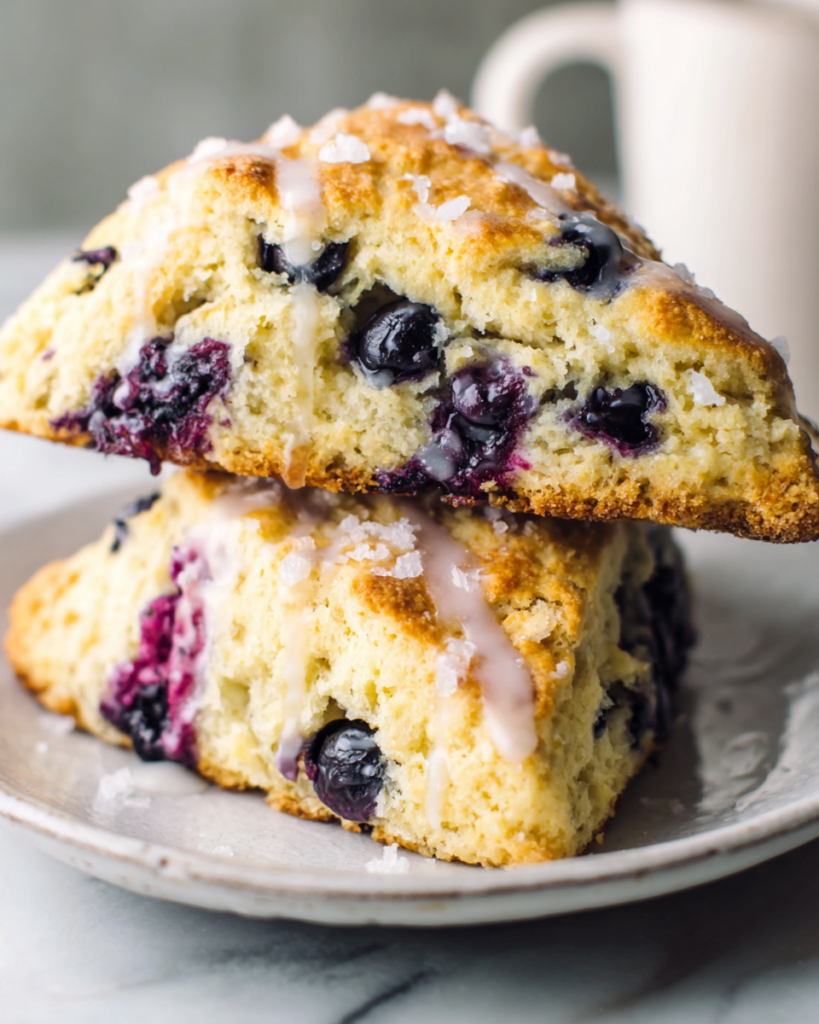
These scones are a lovely choice for slow weekend mornings, brunch trays, or a make-ahead breakfast you can bake fresh from the freezer. They have that satisfying balance of buttery richness, gentle tang, and sweet blueberry pockets in every wedge.
The sourdough discard does not make the scones sour in an overpowering way. Instead, it adds depth and helps create a more interesting flavor than a standard cream scone, especially when paired with fresh lemon zest and a touch of vanilla.
What makes this method reliable is the cold butter and freezer rest. Keeping the dough chilled helps the scones rise higher, hold their shape, and bake with a tender center instead of spreading too much on the pan.
Sourdough Blueberry Scones Ingredients
Fresh blueberries bring juicy bursts of fruit and a naturally sweet-tart flavor throughout the dough.
Cold unsalted butter creates flaky, tender layers as it melts in the oven, so it should stay chilled until baking.
Sourdough discard adds gentle tang, moisture, and a deeper bakery-style flavor without requiring extra rising time.
Lemon zest and lemon juice brighten the berries and keep the scones from tasting too heavy.
Heavy cream enriches the dough and helps create a soft, tender crumb.
Egg gives structure to the dough and helps the scones bake up sturdy enough to slice and serve.
Vanilla essence adds a warm, sweet background flavor that works beautifully with blueberries and lemon.
All-purpose flour forms the base of the dough and gives the scones their classic pastry texture.
Cornstarch helps soften the flour blend slightly, creating a more delicate bite.
Granulated sugar lightly sweetens the dough without making the scones taste like cake.
Baking powder gives lift, helping the wedges rise in the oven.
Fine sea salt balances the sweetness and brings out the butter, lemon, and blueberry flavors.
Egg wash gives the tops a golden finish and helps the sugar cling.
Turbinado sugar adds crunch and a sparkly sweet top that contrasts with the soft interior.

Step-by-Step Sourdough Blueberry Scones
STEP 1: Prepare a parchment-lined baking sheet and make space in the freezer before you begin. This dough benefits from chilling at a few points, so having the pan ready helps you work quickly and keep the butter firm.
STEP 2: Whisk the sourdough discard, cream, egg, vanilla, lemon zest, and lemon juice in a measuring cup or small bowl until smooth. In a separate large bowl, whisk the flour, cornstarch, sugar, baking powder, and salt so the leavening and seasoning are evenly spread.
STEP 3: Grate the cold butter into the dry mixture using the large holes of a box grater. Toss gently until the butter pieces are coated in flour, then fold in the blueberries carefully so they stay as whole as possible.
STEP 4: Pour the wet mixture into the center of the flour mixture and stir lightly until the dough starts to look shaggy. Use your hands to fold the dough over itself several times, pressing just enough to bring it together while keeping the texture rustic and slightly uneven.
STEP 5: Transfer the dough to a lightly floured surface and shape it into a compact disk about 3/4 to 1 inch thick. If the dough feels soft or sticky, place the disk on the prepared pan and freeze briefly before slicing so the wedges cut cleanly.
STEP 6: Cut the disk into 8 wedges with a sharp knife, pressing straight down instead of sawing. Arrange the scones on the parchment-lined sheet with space between them, then freeze for 30 minutes to help them hold their shape in the oven.
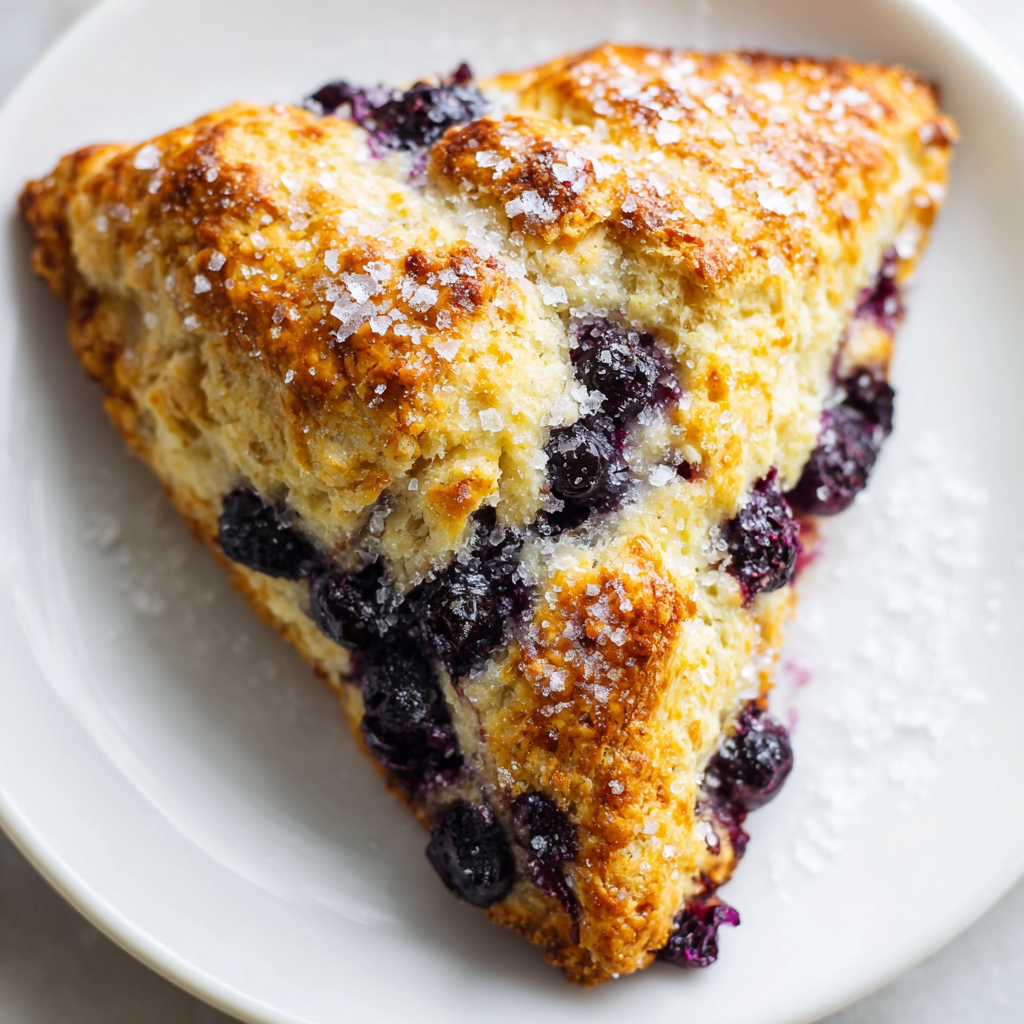
STEP 7: Preheat the oven to 425°F. Brush the tops with egg wash, sprinkle with turbinado sugar, and bake for 5 minutes. Lower the temperature to 375°F and continue baking until golden, set in the center, and tender inside. Let them cool slightly before serving.
Why did my scones spread in the oven?
Scones usually spread when the butter gets too warm before baking or the dough is overworked. Keep the butter cold, freeze the shaped wedges before baking, and avoid pressing the dough too much. A hot oven start also helps the outside set quickly.
Can I use frozen blueberries instead of fresh?
Yes, frozen blueberries can work, but add them straight from the freezer without thawing. Thawed berries release too much juice and can stain the dough. Toss them in gently and work quickly so the dough stays cold.
Helpful Tips
- Keep everything cold from start to finish. If the butter softens or the dough feels loose, pause and chill it before moving on.
- Use a sharp knife for cutting the wedges. Clean downward cuts help the sides rise better than dragging or sawing through the dough.
- Do not chase a perfectly smooth dough. A rustic, slightly shaggy dough often bakes into more tender scones than one that has been kneaded too much.
What to Serve with Sourdough Blueberry Scones
Blueberry jam is a natural match because it doubles down on the fruit flavor and adds a glossy sweetness to each bite. It is especially good when the scones are still slightly warm and the jam softens into the crumb.
Clotted cream or lightly whipped cream makes these scones feel brunch-worthy. The rich creaminess balances the lemon and sourdough tang without covering up the blueberry flavor.
For a simple breakfast plate, serve the scones with fresh fruit and hot coffee or tea. They also fit well on a brunch board with eggs, yogurt, and a small bowl of extra berries.
Can I make the dough ahead of time?
Yes. Shape and cut the scones, freeze them on a baking sheet until firm, then move them to an airtight freezer bag or container. Bake from frozen when needed, adding a few extra minutes if necessary.
How do I know when the scones are done?
The tops should look golden and the edges should feel set. For the most accurate check, the center should register about 200–205°F. This helps prevent underbaked centers, especially because blueberries add moisture to the dough.
Storage & Reheating
Store cooled sourdough blueberry scones in an airtight container at room temperature for up to 2 days. For a slightly longer window, refrigerate them for about 4 days, though the texture is usually best the day they are baked.
For freezing baked scones, let them cool completely first. Wrap them well and freeze for up to 2 months. Thaw at room temperature, then warm them in a low oven until the outside lightly crisps again.
To reheat, place the scones in a 300°F oven for 8–10 minutes, or just until warmed through. Avoid overheating, since too much heat can dry out the crumb. For a slightly drier, more bakery-style finish, you can warm them gently and let them rest in the turned-off oven for a few minutes with the door cracked.
Can I leave out the lemon?
You can leave out the lemon juice and zest, but the flavor will be softer and less bright. The lemon helps lift the blueberries and balance the richness of the butter and cream. If skipping it, keep the vanilla for warmth and add a tiny splash of cream if the dough feels dry.
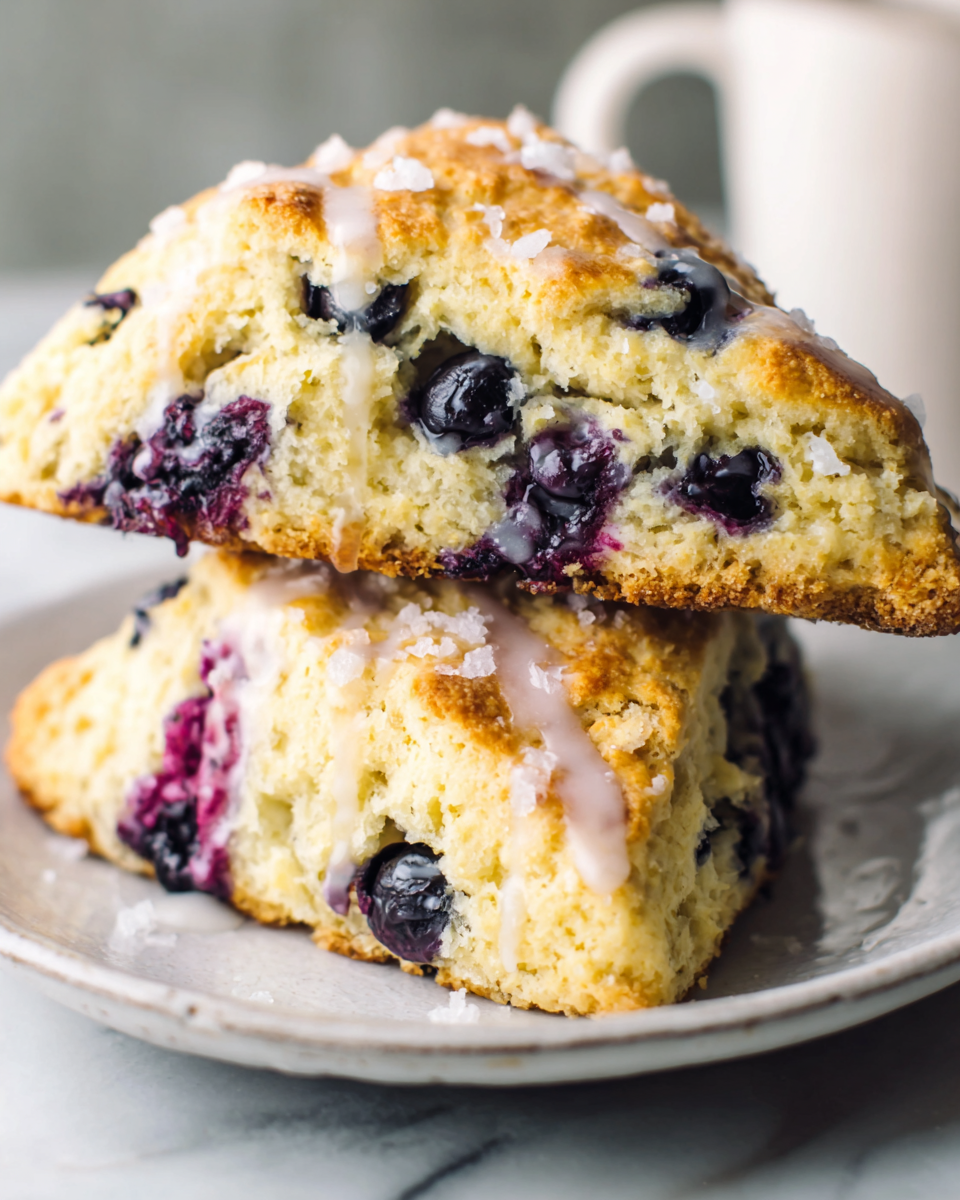
Sourdough Blueberry Scones
Ingredients
For the Dough
- 1 cup fresh blueberries
- 1/2 cup unsalted butter well chilled and cut into 1/2-inch cubes
- 1/2 cup sourdough discard
- 1 tablespoon freshly grated lemon zest
- 1/4 cup heavy cream
- 1 teaspoon vanilla essence
- 1 large egg
- 1 tablespoon cornstarch
- 1/3 cup granulated sugar
- 1 3/4 cups plus 2 tablespoons unbleached all-purpose flour
- 2 tablespoons fresh lemon juice
- 1 1/2 teaspoons aluminum-free baking powder
- 1/2 teaspoon fine sea salt
For the Egg Wash
- 1 large egg
For the Topping
- Turbinado sugar as needed for sprinkling
Instructions
- Line a large baking sheet with parchment paper and make room for it in the freezer. Use two smaller trays if needed, then set the prepared pan aside.
- In a large spouted measuring cup, whisk together the sourdough discard, heavy cream, egg, vanilla essence, lemon zest, and lemon juice until the mixture is smooth and evenly blended.
- In a separate large bowl, combine the flour, cornstarch, granulated sugar, baking powder, and fine sea salt, whisking until the dry ingredients are fully distributed.
- Using the large holes of a box grater, grate the cold butter directly into the flour mixture. Gently toss the butter through the dry ingredients until the pieces are lightly coated.
- Add the blueberries and toss with a delicate hand until they are evenly dispersed. Keep the butter cold and flexible; if it begins to soften, place the bowl in the freezer for about 10 minutes before adding any liquid.
- Create a well in the center of the flour mixture and pour in the prepared wet ingredients. Stir gently with a silicone spatula until the flour is just moistened, leaving a few small dry areas visible.
- Using your hands, lift and fold the dough over itself 10–12 times, pressing lightly to bring it together without crushing the blueberries. The dough should look rustic, uneven, and slightly messy.
- Move the shaggy dough onto a lightly floured work surface and carefully press it into a compact disk, working efficiently so the butter stays cold.
- Roll the dough to about 3/4–1 inch thick and approximately 7 1/2–8 inches wide. If any blueberries burst, dust those areas with a little flour and continue shaping.
- If the dough feels soft or the kitchen is warm, transfer the disk to the parchment-lined pan and freeze it for 15 minutes before cutting.
- Cut the chilled dough into 8 wedges with a sharp knife, using one clean downward motion for each slice.
- Place the wedges evenly on the prepared parchment-lined baking sheet or sheets. Freeze the shaped scones for 30 minutes.
- Position an oven rack in the center of the oven and preheat to 425°F.
- Just before baking, whisk the remaining egg with 1 tablespoon of water in a small bowl. Brush the tops of the scones with the egg wash, then sprinkle them with turbinado sugar.
- Bake at 425°F for 5 minutes. Reduce the oven temperature to 375°F and continue baking for 20–25 minutes, until the tops are golden and the centers register 200–205°F.
- Let the scones cool slightly before serving.