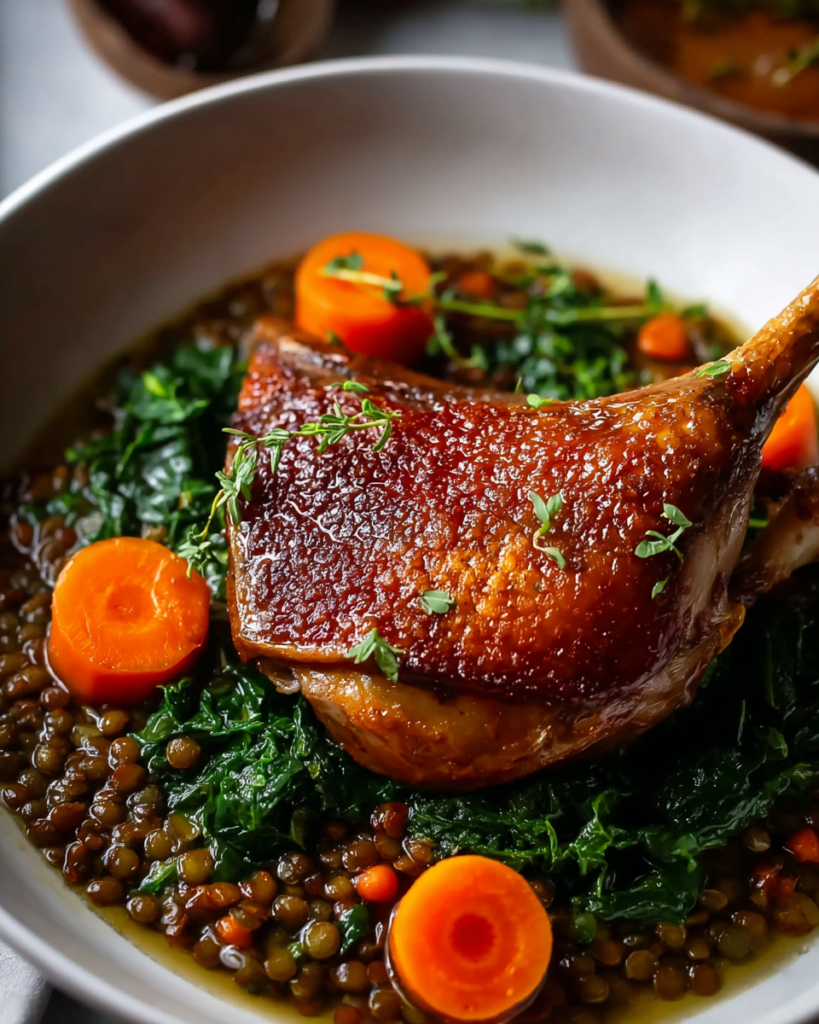
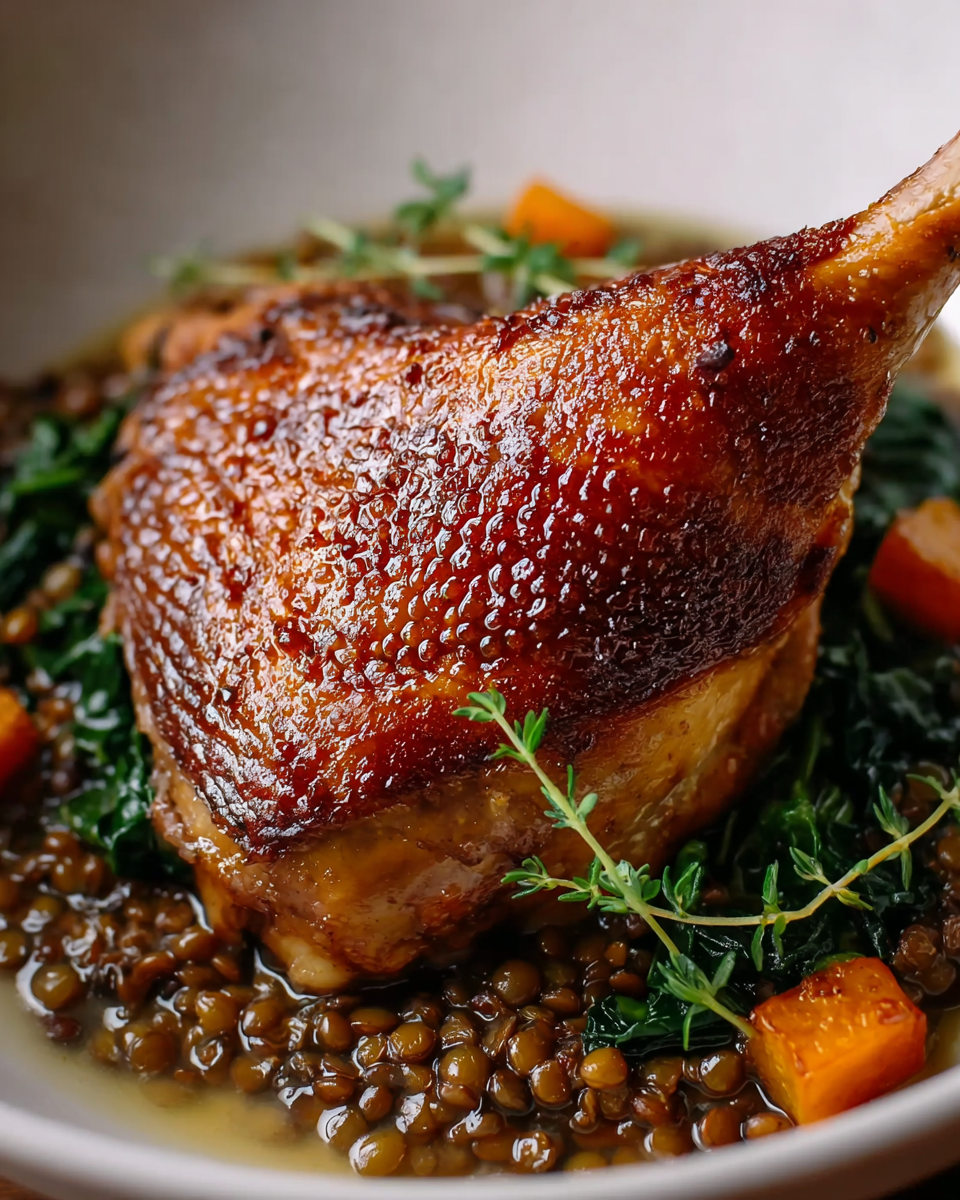
Tender Roasted Duck Confit is a make-ahead French main dish with rich flavor, meltingly tender meat, crisp golden skin, and a dinner-party feel that rewards patience with a deeply reliable, restaurant-style result.
This is the kind of dish you make when you want something classic and impressive without spending the final hour rushing around your kitchen. Most of the work happens early, and the long, gentle cooking does the heavy lifting for you.
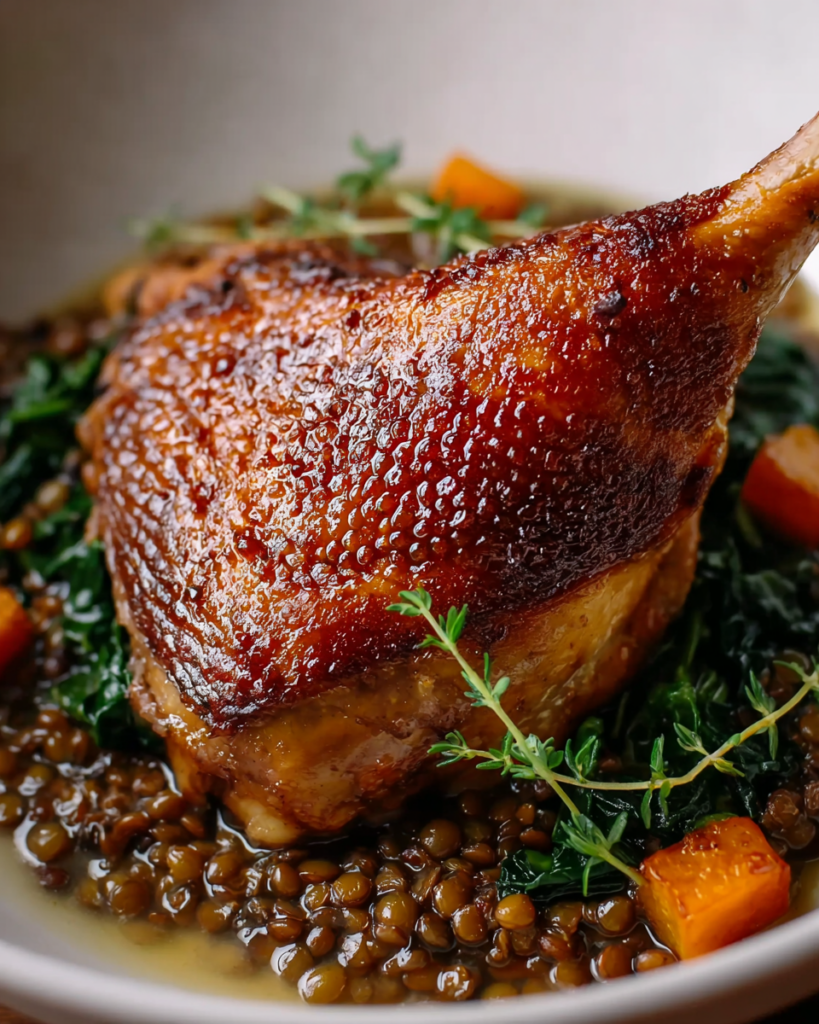
What makes duck confit so memorable is the contrast. The meat turns silky and deeply savory after its slow bath in fat, while the final roast gives you that crackly, browned skin that makes every bite feel special.
It also happens to be a smart make-ahead option. You can cure the duck, cook it slowly, store it, and then roast it off when you are ready to serve, which makes it especially handy for weekend dinners or a small holiday meal.
Tender Roasted Duck Confit Ingredients
Duck legs bring the rich, dark meat flavor that makes confit such a classic. Bone-in, skin-on pieces give you the best texture and the crisp finish you want at the end.
Kosher salt anchors the cure and helps season the duck all the way through while drawing out some moisture for a more concentrated flavor.
Shallot and garlic add a gentle savory sweetness and aromatic depth that rounds out the stronger herbal notes.
Fresh thyme gives the cure a woodsy, earthy character that feels especially at home with duck.
Fresh rosemary adds a piney, robust flavor that holds up well during the long curing and cooking process.
Fresh oregano and sage bring warmth and a slightly rustic herbal edge that keeps the confit from tasting flat or one-note.
Bay leaves add background depth and a subtle, classic braised aroma.
Black peppercorns and coriander seeds give the cure gentle spice and a little brightness without overpowering the duck.
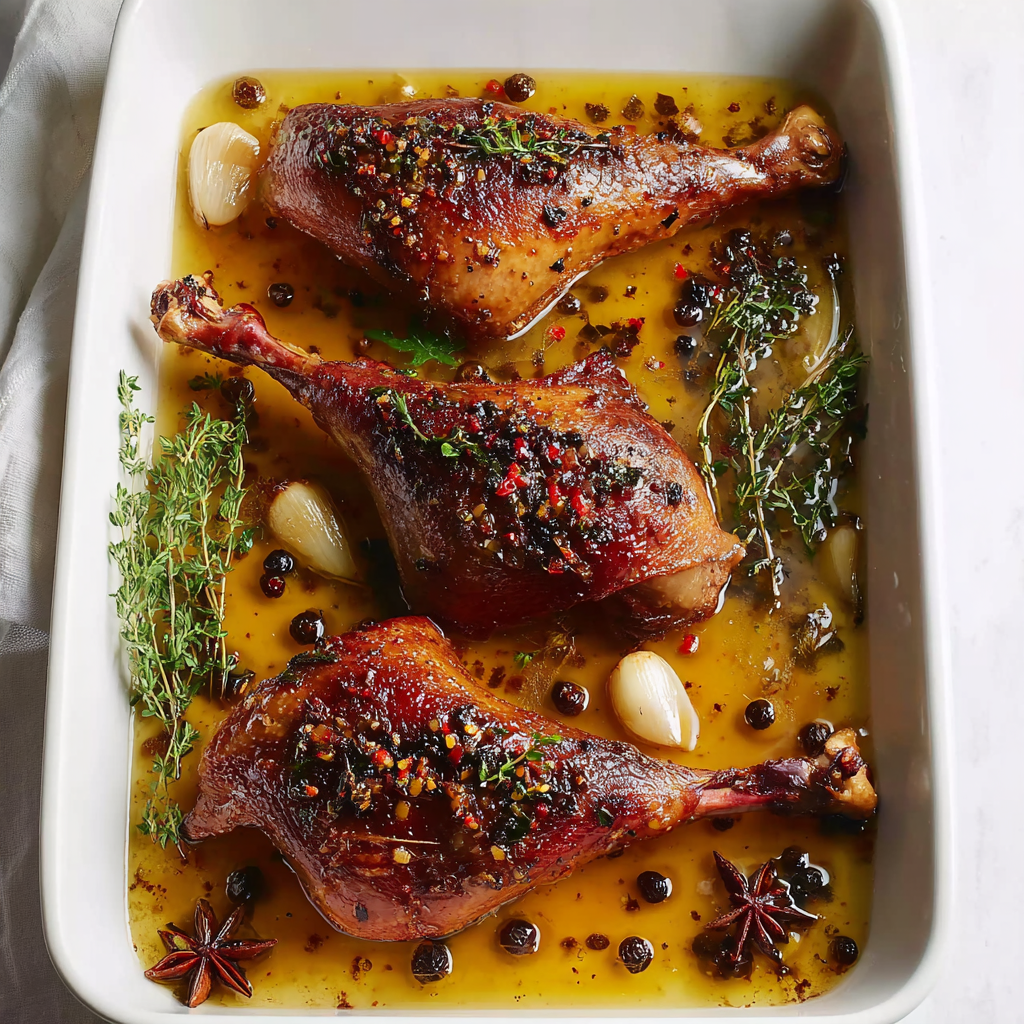
Juniper berries, cloves, and star anise create a more traditional French-style cure with depth, warmth, and a faint aromatic sweetness that complements the richness of the meat.
Duck fat is essential for the slow poach. It keeps the meat moist, cooks it gently, and later helps preserve the confit before you crisp it for serving.
Cooking Steps
STEP 1: Start by curing the duck legs with the salt, herbs, aromatics, and spices. Toss everything thoroughly so the legs are evenly coated, then place them in a snug dish in a single layer. Cover and refrigerate for 12 to 24 hours so the seasoning has time to work into the meat.
STEP 2: Once the cure is finished, brush off the herbs and spices, rinse the duck well, and dry it very thoroughly. This step matters because excess moisture will get in the way of both the slow fat-poaching stage and the crisp skin you want later.
STEP 3: Arrange the duck legs in a small roasting pan where they fit closely together, then pour in enough duck fat so they are nearly submerged. Warming the pan briefly on the stovetop helps get the fat fluid and ready for the long, low oven cook.
STEP 4: Cover the surface with baking paper, then seal the pan tightly with foil before transferring it to a low oven. The goal here is a very gentle, steady cook that slowly breaks down the duck until the meat is exceptionally tender without drying out.
STEP 5: Let the duck cook for about 8 hours, then test one leg. It should feel very soft, and the meat should pull away easily. At this point, you can serve it later rather than right away, which is one of the biggest advantages of confit.
STEP 6: For make-ahead storage, place the cooked duck in a close-fitting container and strain away any meat juices before pouring the cooled fat over the top. The duck should be fully covered so it stays protected until you are ready for the final roast.
STEP 7: When it is time to serve, lift the duck from the fat, let the excess drip away, and pat the skin dry. Roast the legs on a rack over a pan with a little boiling water underneath until the skin turns deeply golden and crisp. That water helps catch the dripping fat and keeps the oven from getting smoky while the duck finishes.
Perfect Pairings
A lentil ragout is the most classic match, and for good reason. Earthy lentils balance the richness of the duck beautifully and give the plate that unmistakable French bistro feel.
Roasted potatoes also work especially well here. Their crisp edges and fluffy centers make a natural partner for duck confit, and they are perfect for catching any juices from the plate.
For something lighter, serve the duck with simple green beans or a sharp salad dressed with mustard vinaigrette. That little bit of acidity helps cut through the richness and keeps the meal feeling balanced.
Can I make duck confit ahead of time?
Yes, and it is actually one of the best reasons to make it. Once the duck is fully cooked, you can store it under its fat and roast it later, which makes serving much easier when you are planning a dinner.
Do I need to rinse off the cure before cooking?
Yes. Rinsing removes excess salt and the heavier bits of herbs and spices so the finished duck is seasoned, not harsh or overly intense. Just make sure you dry the legs very well afterward so the texture stays right.
How do I know the duck is done after the slow cook?
The meat should be extremely tender and easy to pull away from the bone. It should not feel tight or springy. If it still seems firm, it usually needs a bit more time in the low oven.
Why roast the duck after it has already been cooked?
That final roast is what gives you the signature texture. The long fat-poach makes the meat tender, but the high heat at the end transforms the skin into something crisp, browned, and far more satisfying to serve.
Helpful Tips
- Keep the duck legs packed fairly close together in the pan so the fat covers them more effectively and cooks them evenly.
- Dry the legs well before the final roast. Moisture is the enemy of crisp duck skin, so this small step makes a big difference.
- Use a rack over a pan with hot water underneath during roasting to catch dripping fat and reduce the chance of smoking in the oven.
Storage & Reheating
Once the confit has finished its slow cook, let it cool and store the duck legs in a non-reactive container covered completely with the strained duck fat. In the refrigerator, they will keep well for up to 5 days. For longer storage, freeze them for up to 3 months.
When you want to serve the duck again, warm the container just enough for the fat to loosen so you can remove the legs cleanly. Pat them dry, then roast until heated through and crisp on the outside. If the duck has been frozen, thaw it in the refrigerator first for the best texture.
Tender Roasted Duck Confit
Ingredients
For the dry cure
- 1 shallot peeled
- 1/3 cup fresh thyme sprigs
- 8 whole cloves
- 1 tablespoon coriander seeds
- 6 garlic cloves lightly crushed with the skins left on
- 1/3 cup fresh oregano sprigs
- 2 tablespoons juniper berries
- 4 teaspoons kosher salt
- 1/3 cup fresh rosemary sprigs
- 2 bay leaves
- 1/3 cup fresh sage sprigs
- 8 whole star anise
- 1 tablespoon whole black peppercorns preferably freshly ground
- 1/3 cup fresh rosemary sprigs
For the confit
- 4 duck legs bone-in and skin-on, about 8 ounces each
- 25 fluid ounces duck fat preferably a good-quality brand such as D’artagnan
Instructions
- Place the duck legs in a large mixing bowl with the shallot, garlic, herbs, spices, and salt for the cure. Toss thoroughly by hand so every piece is evenly coated.
- Arrange the seasoned duck legs in a ceramic or glass dish that holds them in one close-fitting layer. Cover and refrigerate for 12 to 24 hours.
- Remove the duck from the refrigerator and brush away the cure. Rinse the legs under running water to clear off the salt and any dark seasoning residue, then dry them well with paper towels.
- Heat the oven to 100°C/210°F, or 80°C for a fan oven, with a rack set in the center position.
- Set the duck legs in a small, high-sided metal roasting pan so they sit snugly in a single layer and touch slightly. Pour in the duck fat until the legs are nearly submerged.
- Place the roasting pan over medium-high heat on the stovetop and warm the fat until it begins bubbling vigorously. Turn off the heat, lay a sheet of baking paper directly over the surface of the fat, press gently to release trapped air, and seal the pan tightly with a double layer of foil.
- Transfer the pan to the oven and cook for 8 hours.
- Check one duck leg to confirm the meat is extremely tender and easily falling away. At this stage, the confit may be stored in the fat.
- For storage, strain off any meat juices first. Place the duck legs in a non-reactive container so they fit closely together, then pour the cooled duck fat over them until fully covered. Once completely cold, cover with a lid and refrigerate for up to 5 days or freeze for up to 3 months. The fat will harden as it chills.
- When ready to finish the dish, gently warm the container just enough to liquefy the duck fat. Preheat the oven to 240°C/465°F, or 220°C for a fan oven.
- Set a rack over a deep roasting pan and pour in 2.5 cm / 1 inch of boiling water. Remove the duck from the fat, let the excess drip away, and pat the legs dry with paper towels. Arrange them on the rack with the skin facing upward.
- Roast for 40 minutes, turning the pan as needed so the color develops evenly, until the skin is deeply golden and crisp. The rendered fat will drip into the water below, which helps prevent smoking.
- Let the duck cool briefly before serving.