Tender Sous Vide Boneless Lamb Roast delivers a beginner-friendly way to get juicy, evenly cooked lamb with a rosemary-garlic aroma, a reliable doneness edge-to-edge, and a fast high-heat sear that adds real flavor without drying the meat out.
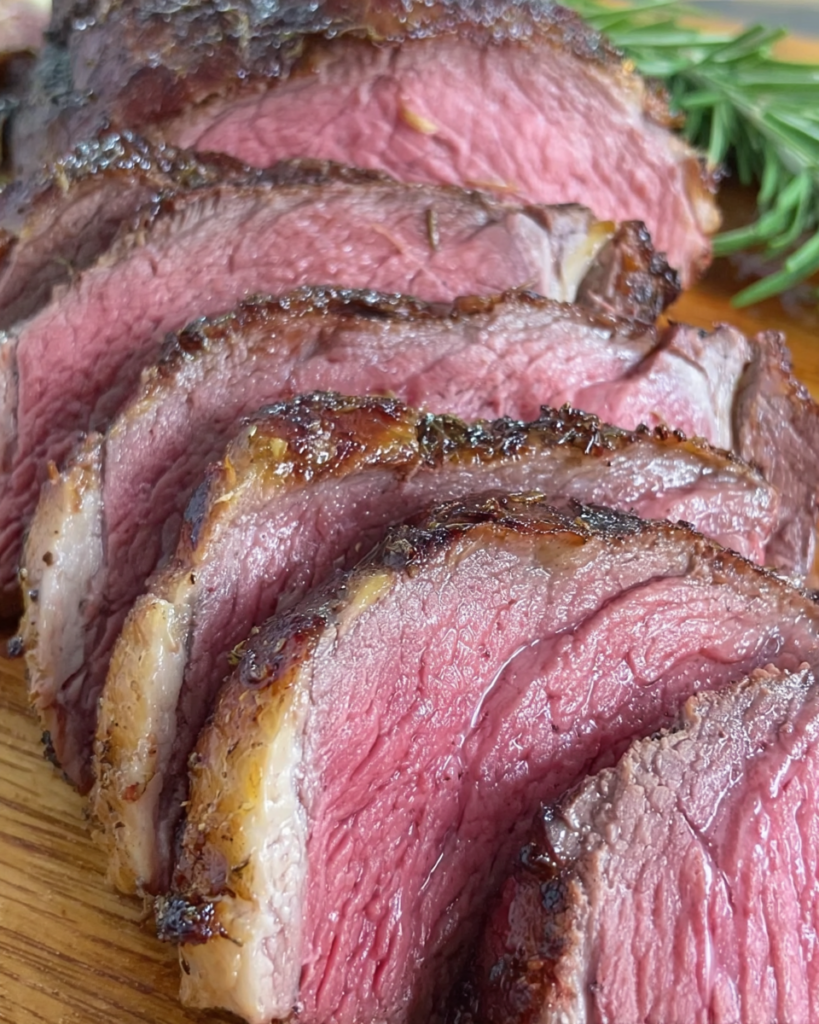
If lamb feels intimidating, sous vide is the method that takes the guesswork out of it. You set the temperature, let time do the work, and you end up with a roast that slices beautifully for weeknight dinners or a special weekend meal.
The rosemary, garlic, and Dijon paste does a lot with a short ingredient list. It perfumes the meat from the inside, and it pairs perfectly with a quick browning step that builds that craveable “roast” taste you want on the outside.
The final touch is simple but smart: drying the lamb well and brushing on a thin mayo-Dijon layer before searing. It helps the surface brown fast, so you get a flavorful crust in minutes while keeping the center exactly where you want it.
Sous Vide Lamb Roast Ingredients
- Boneless leg of lamb (about 4 1/2 pounds): The main event; rolling and tying helps it cook evenly and slice like a classic roast.
- Extra-virgin olive oil: Helps the herb paste spread and carry flavor across the meat.
- Minced garlic: Brings bold savory notes that hold up to long, gentle cooking.
- Dijon mustard: Adds tang and depth; it’s a great bridge between lamb and rosemary.
- Fresh rosemary (chopped) + a rosemary sprig: Chopped rosemary seasons the inside; the sprig reinforces that fragrant, piney aroma.
- Kosher salt + black pepper: Season generously to make the lamb taste full and “roasty,” not flat.
- Garlic powder: Optional extra savory lift, especially if you like a stronger garlic profile.
- Mayonnaise: A thin coating for the outside helps rapid browning during the final sear.
- More Dijon, salt, and pepper (for finishing): Adjust the exterior seasoning right before high heat so it tastes lively and fresh.
Step-by-Step Sous Vide Lamb Roast
STEP 1: Heat your water bath to the doneness you want. A temperature of 134°F (56°C) is a solid target for medium-rare lamb that stays juicy and tender without turning mushy.
STEP 2: Stir together chopped rosemary, Dijon, minced garlic, and olive oil until you have a thick paste. You’re looking for something spreadable that will cling to the meat rather than slide off.
STEP 3: Unwrap the lamb and remove any netting. Open it up so it lays flatter, then make a few shallow cuts where it’s unusually thick to help it roll into a more even shape later.
STEP 4: Rub the seasoning paste across the inner surface of the lamb. Use your hands to press it in, then roll the roast into a tight cylinder, tucking in the ends so the shape feels compact and tidy.
STEP 5: Tie the rolled lamb with kitchen twine in several places so it holds its shape. Slide it into a large resealable bag and use the water-displacement method to push out air: lower the bag slowly into the water, keep the seal above the waterline, then close it once most air is forced out.
STEP 6: Cook in the sous vide bath for about 5 1/2 to 6 hours. If your rolled roast is thicker than 5 inches (13 cm), give it more time (around 7 to 8 hours) so the center becomes tender and consistent.
STEP 7: Remove the lamb from the bag and dry it thoroughly with paper towels. Preheat a grill to high heat, then whisk mayonnaise with a little Dijon and brush a thin layer over the outside. Sear quickly, turning often, for roughly 4 minutes total until browned all around. Rest briefly, slice, and serve with gravy or your favorite sides.
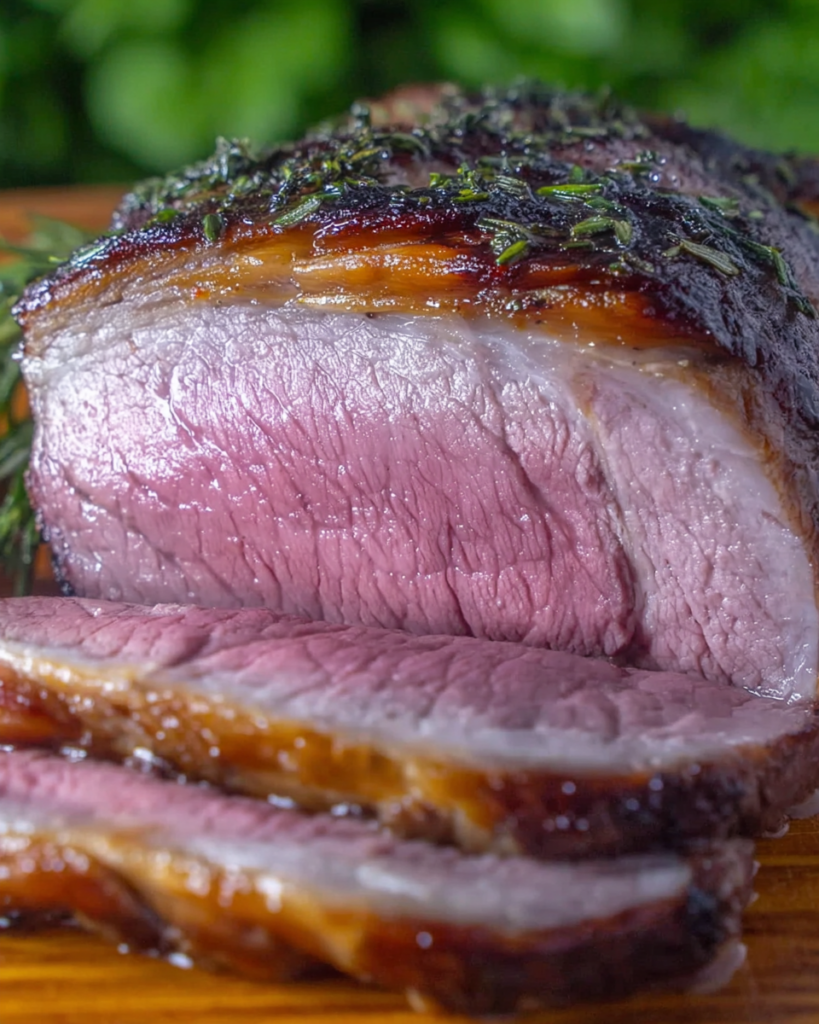
Serving Ideas for Sous Vide Lamb
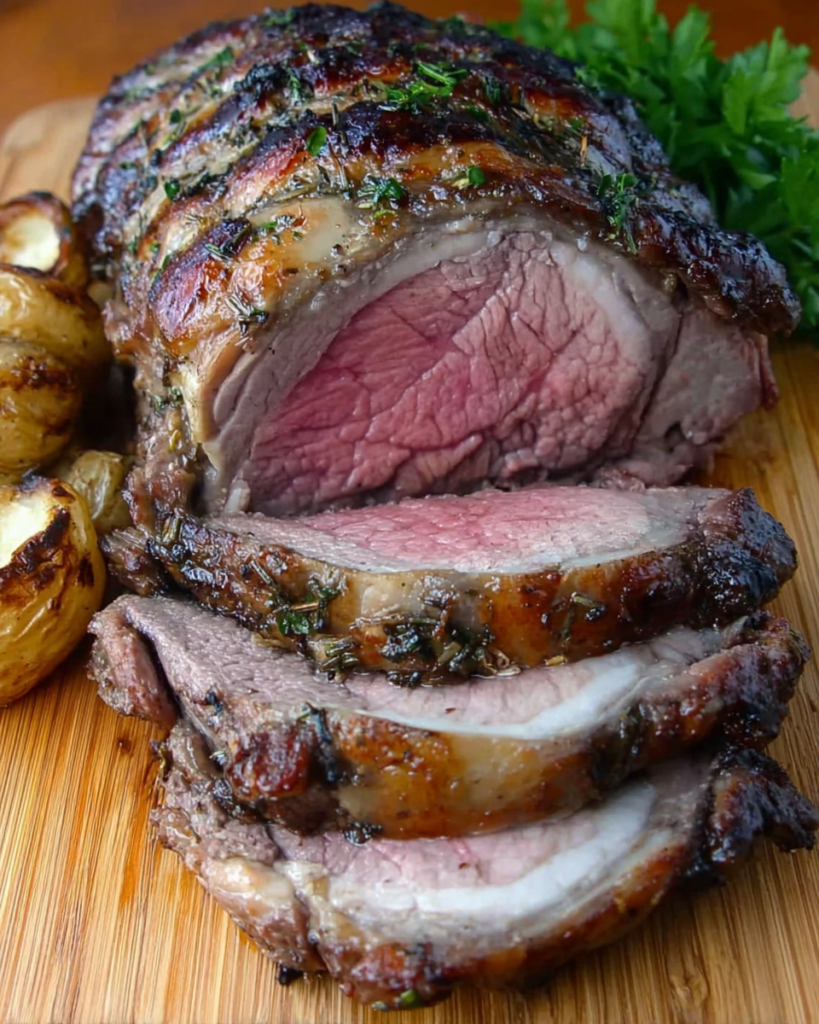
- Creamy mashed potatoes or roasted potatoes: The lamb’s rosemary-garlic flavor loves something starchy that can soak up juices (or gravy, if you’re serving it).
- Roasted carrots, onions, or mixed vegetables: A simple tray of roasted veg keeps the meal “modern European” and balanced without competing flavors.
- Bright salad with lemony dressing: Something crisp and acidic is a great contrast to rich lamb, especially if you’re serving the roast for a gathering.
Helpful Tips
- Tie it tighter than you think you need to. A compact, even cylinder cooks more uniformly and gives you cleaner slices that look like a traditional roast.
- Dry the lamb until the surface feels almost tacky. Moisture is the enemy of browning, and a dry exterior is the fastest path to a crust.
- Sear fast, not long. High heat and quick turning builds color without overcooking the center you worked so hard to get perfect.
How to Store & Reheat
Store sliced lamb in an airtight container in the refrigerator for up to 3 to 4 days. For the best texture, keep slices as thick as practical rather than shaving them thin.
To freeze, wrap portions tightly and store up to 2 to 3 months. Thaw overnight in the fridge before reheating.
Reheat gently so the lamb stays tender. The easiest approach is a covered skillet over low heat with a small splash of water or broth until warmed through. If you want to refresh the crust, do a quick, hot sear for a minute or two at the very end, watching closely so it doesn’t dry out.
Can I cook it longer than 6 hours?
Yes, within reason. If your roast is especially thick, the longer 7 to 8 hour window helps the center become tender and consistent. Try not to push far beyond that unless you like a softer, more fall-apart texture.
What temperature should I use for doneness?
134°F (56°C) is a reliable medium-rare option that stays juicy and evenly pink. If you prefer lamb more done, increase the temperature slightly rather than relying on extra searing time, which can overcook the outer layer.
Do I need a vacuum sealer?
No. A sturdy resealable bag works well when you remove the air using water displacement, then keep the bag fully submerged while cooking. If the bag wants to float, clip it to the side or weigh it down safely.
How do I prevent flare-ups on the grill?
Trim any large, loose fat pieces before cooking, and keep the sear short and controlled. Turn the lamb frequently and move it to a cooler spot if flames jump up. You’re aiming for even browning, not heavy charring.
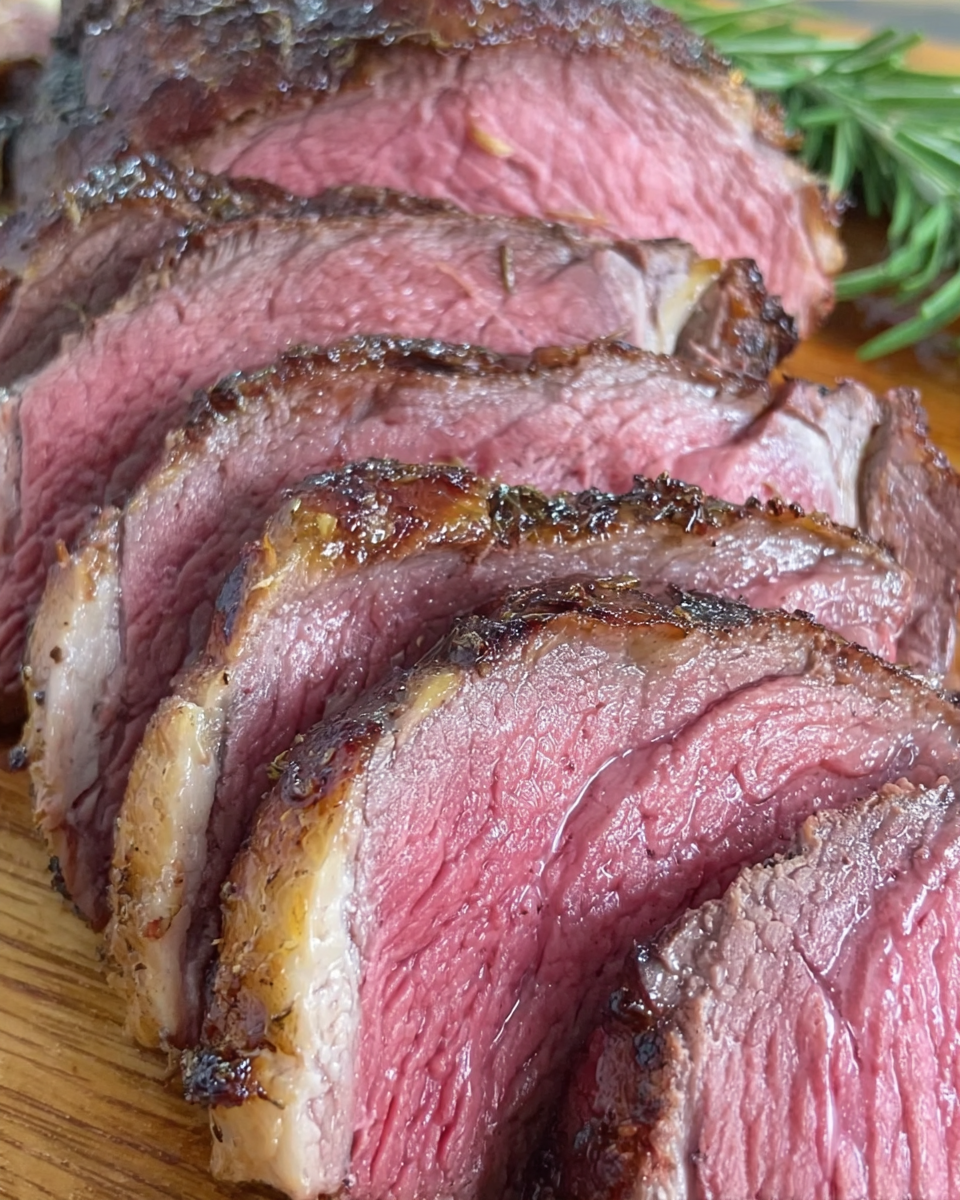
Tender Sous Vide Boneless Lamb Roast
Ingredients
For the lamb and herb seasoning mixture
- 1 tablespoon extra-virgin olive oil
- 1 tablespoon garlic minced
- 4.5 pounds boneless leg of lamb
- Kosher salt as needed
- 1 teaspoon Dijon mustard
- Freshly ground black pepper as needed
- 2 tablespoons fresh rosemary finely chopped
- Garlic powder as needed
- 1 sprig rosemary
For finishing the lamb
- 2 teaspoons mayonnaise
- Salt as needed
- 1 teaspoon Dijon mustard
- Pepper as needed
Instructions
- Set up a water bath with an immersion circulator and heat it to the temperature you prefer for lamb. For a medium-rare result, bring the water to 134°F (56°C).
- In a small bowl, stir together the chopped rosemary, Dijon mustard, minced garlic, and olive oil until a thick, spreadable paste forms.
- Remove the boneless lamb from its packaging and take off any netting if present. Open the roast flat, and make small cuts where necessary to create a more even thickness.
- Spread the rosemary seasoning paste evenly across the entire inner surface of the lamb using your hands.
- Fold in the longer ends, then roll the lamb into a compact cylinder. Slide four pieces of kitchen twine underneath the roast and tie securely at both ends and through the center so the shape holds firmly. Make sure the rolled lamb will fit inside a large resealable bag.
- Place the tied lamb into a resealable bag. Lower the bag gradually into the heated water, keeping the seal just above the waterline so the pressure pushes out the air, then close the bag completely. If sealed properly, the lamb should sink; secure it with a clip if needed to keep it submerged.
- Cook the lamb in the sous vide bath for 5 1/2 to 6 hours. If the rolled roast measures more than 5 inches (13 cm) thick, extend the cooking time to 7 to 8 hours.
- Once the lamb has finished cooking, remove it from the bag and dry it thoroughly with paper towels so the exterior browns more effectively.
- Preheat a grill to high heat. In a small bowl, combine the mayonnaise and Dijon mustard, then brush this mixture over the outside of the lamb.
- Sear the lamb on the grill for about 4 minutes total, turning it so all sides develop an even brown crust. Do not let it char excessively, as the fat in the lamb may cause flare-ups.
- Transfer the browned roast to a cutting board, slice, and serve with gravy or any preferred accompaniment.


