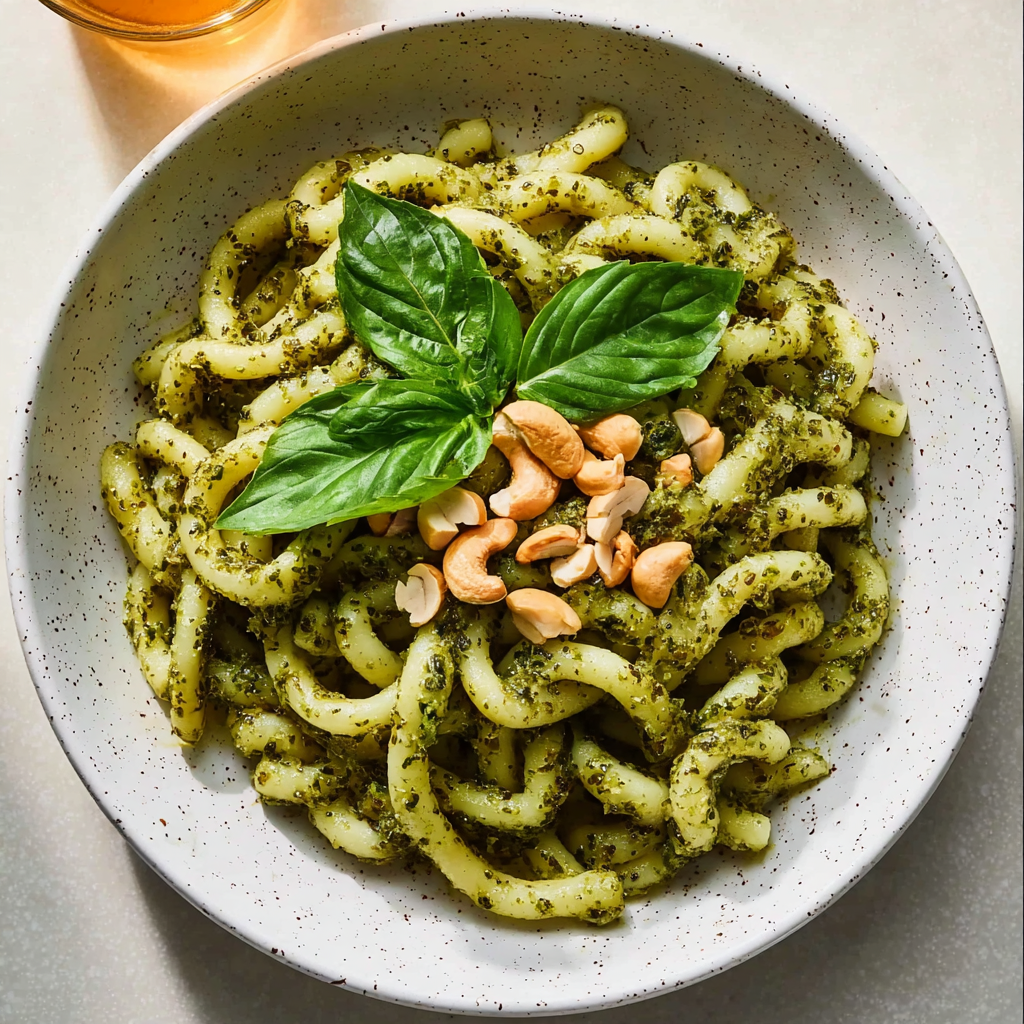
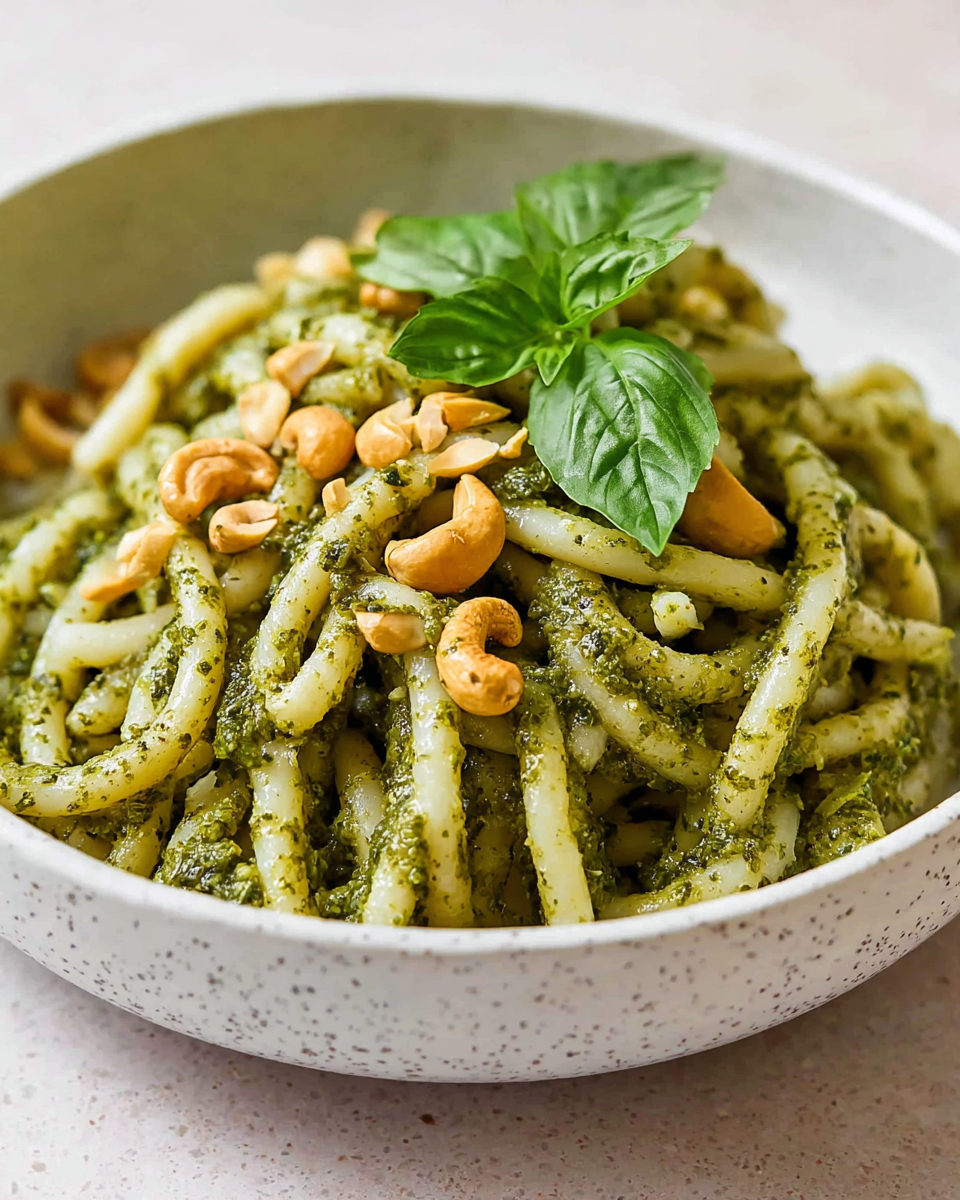
Quick and flavor-packed, Thai Basil Pesto Udon brings together chewy noodles, roasted cashews, fresh herbs, miso, and sesame oil in one satisfying bowl. This weeknight-friendly noodle dish is bold, creamy, aromatic, and simple enough for a fast lunch or no-fuss dinner.
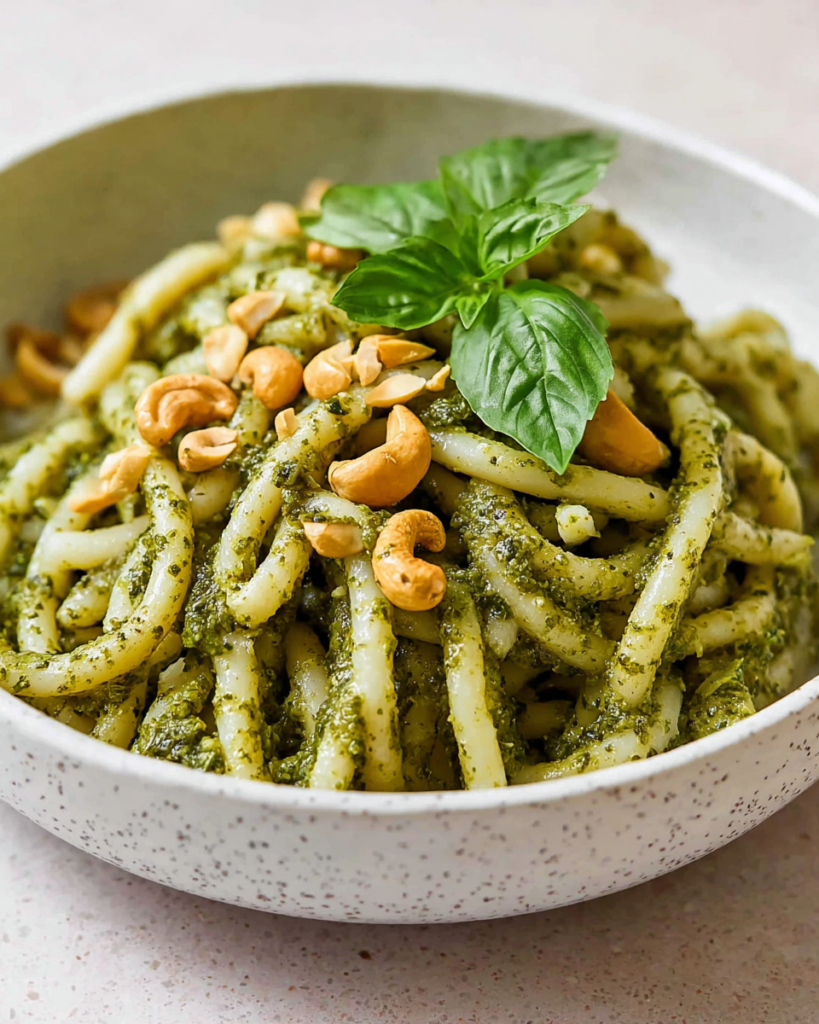
This is the kind of meal you make when you want something fresh and comforting at the same time. The udon stays pleasantly chewy, while the pesto clings to every strand with rich nutty flavor and a bright herbal finish.
What makes this dish work so well is the balance. Thai basil and cilantro keep it lively, miso adds savory depth, and lime at the end cuts through the richness just enough to keep each bite feeling light.
It also fits real life beautifully. You can blend the pesto while the cashews toast, cook the noodles in minutes, and pull everything together without a long list of steps or complicated prep.
Thai Basil Pesto Udon Ingredients
Udon noodles bring the chewy, satisfying base that makes this dish feel hearty enough for a main meal.
Thai basil gives the pesto its signature sweet-anise aroma and makes the whole bowl taste vibrant and fresh.
Cilantro adds brightness and a softer herbal note that rounds out the stronger basil flavor.
Raw cashews create body and richness in the pesto, and the extra toasted pieces on top add welcome crunch.
Miso paste deepens the flavor with savory, salty complexity and helps the pesto taste fuller without needing many ingredients.
Sesame oil adds a warm, toasted note that pairs especially well with the herbs and noodles.
Neutral cooking oil helps the pesto blend smoothly and keeps the flavor focused on the basil, chili, and miso.
Green chili brings a small kick of heat that wakes up the sauce without overpowering the herbs.
Lime wedges finish the dish with a sharp, fresh squeeze that brightens the nutty pesto right before serving.
Cooking Steps
STEP 1: Start by toasting most of the cashews until lightly golden and fragrant. This quick step builds deeper flavor and gives the pesto a richer, warmer taste than raw nuts alone.
STEP 2: Add the Thai basil, cilantro, green chili, miso, sesame oil, neutral oil, and most of the toasted cashews to a food processor. Blend until the mixture becomes mostly smooth with a little texture still left from the nuts.
STEP 3: Check the pesto before moving on. If it seems very thick, loosen it with a spoonful of water or a bit more oil so it will coat the noodles more easily later.
STEP 4: Cook the udon according to the package directions until tender and springy. Before draining, save a little of the cooking water in case you want to thin the pesto after tossing.
STEP 5: Combine the hot drained noodles with the pesto in a large bowl, or portion the noodles first and spoon the sauce over the top. Toss gently so every strand gets coated.
STEP 6: Add a splash of reserved noodle water if needed to loosen the sauce and help it gloss the noodles evenly. Finish with the remaining cashews and serve with lime wedges on the side.
What to Serve with Thai Basil Pesto Udon
A crisp cucumber salad works especially well here because it cools the heat from the chili and adds a refreshing contrast to the rich pesto.
Simple sautéed greens are another great match. Something like bok choy or spinach keeps the meal balanced without competing with the basil and sesame flavors.
For a fuller spread, serve the noodles with pan-seared tofu or grilled chicken on the side. Both pair nicely with the nutty, savory sauce and turn the bowl into a more substantial dinner.
Can I make the pesto ahead of time?
Yes. The pesto can be blended ahead and kept chilled for a short time, which makes dinner even faster later on. Give it a stir before using, and loosen it slightly if it firms up in the fridge.
Is Thai basil necessary for this dish?
Thai basil gives the pesto its distinct flavor, so it is worth using when possible. If you need a substitute, regular basil can work, but the final bowl will taste softer and less peppery.
How spicy is Thai Basil Pesto Udon?
It has a gentle to moderate kick, depending on the chili you use and how much of it goes into the pesto. For a milder bowl, use less chili. For more heat, leave in more of the seeds.
Can I use another noodle instead of udon?
Yes, though udon gives the dish its signature chewy texture. Thick wheat noodles, ramen-style noodles, or even rice noodles can work, but you may need a little extra sauce adjustment depending on how much liquid they absorb.
Storage & Reheating
Leftover Thai Basil Pesto Udon keeps well in the refrigerator for about 2 days in a covered container. The noodles will absorb some of the sauce as they sit, so the texture will be a little thicker the next day.
For reheating, warm the noodles gently in a skillet or microwave with a small splash of water. That added moisture helps loosen the pesto and brings the sauce back to a smoother consistency.
The pesto on its own can also be stored separately for a short time if you want to prep ahead. I would not freeze the finished noodle dish, since the herbs lose some freshness and the texture of the noodles is best when recently cooked.
Helpful Tips
- Toast the cashews just until fragrant and lightly golden, since overbrowned nuts can make the pesto taste bitter.
- Reserve a little noodle water every time, because it is the easiest way to loosen the pesto without washing out the flavor.
- Serve with lime right at the table so each bowl stays bright and fresh instead of overly sharp from sitting too long.
This noodle dish stands out because it feels a little different from the usual pesto pasta, yet it is just as simple to make. The Thai basil changes the whole direction of the sauce, giving it a more aromatic, slightly spicy personality, while the miso and cashews keep it rich and deeply savory.
It is also a smart recipe for days when you want big flavor without a long cooking session. There is no complicated sauce to reduce, no lengthy simmering, and no heavy prep work. A quick roast for the nuts, a fast blend, and a short noodle boil are really all it takes.
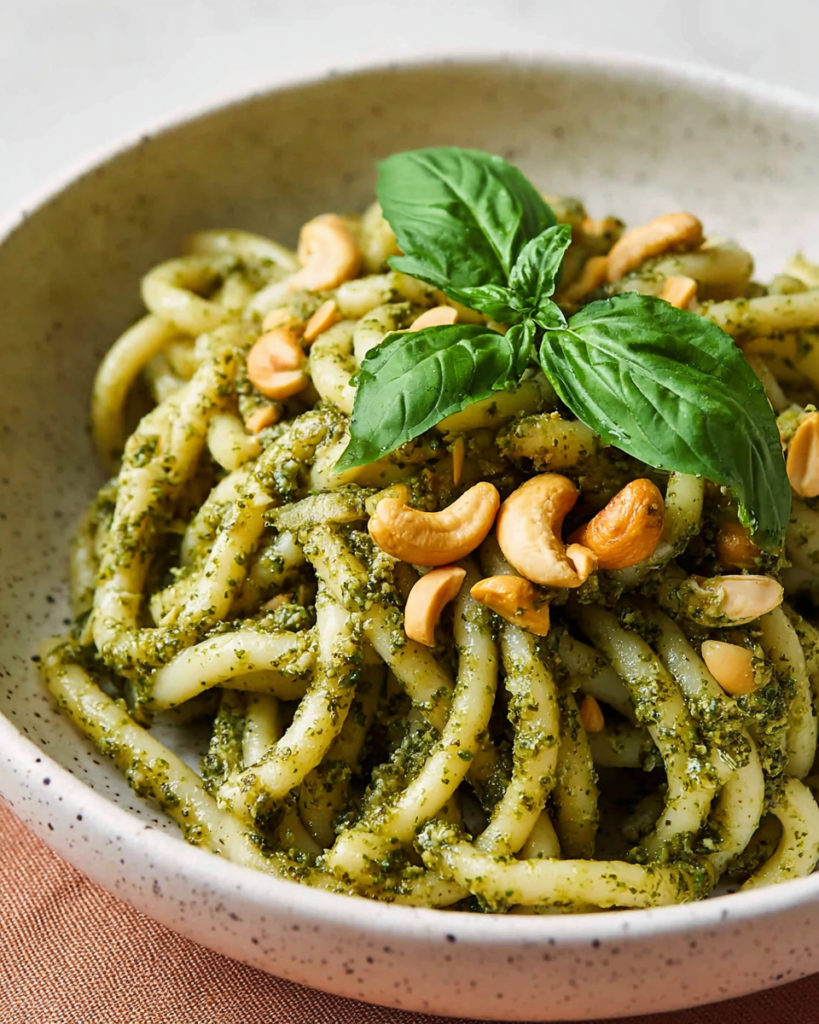
The finished bowl lands in a sweet spot between comforting and fresh. You get the chew of the udon, the creaminess of the pesto, the crunch of the extra cashews, and that final squeeze of lime that lifts everything at the end. It is a simple combination, but it tastes layered and complete.
For a casual lunch, you can serve it exactly as written and let the noodles be the star. For dinner, it is easy to build around with vegetables or protein. That flexibility makes it the sort of dish you will come back to when you want something dependable but not boring.
Thai Basil Pesto Udon is especially good for cooks who like strong, clear flavors. Every ingredient has a job, and nothing feels unnecessary. The herbs bring freshness, the cashews add richness, the miso adds depth, and the chili keeps the whole bowl from tasting flat.
Once you make it the first time, it is easy to see how this recipe earns a regular place in your kitchen. It is quick, deeply flavorful, and just polished enough to feel special even on an ordinary night.
Thai Basil Pesto Udon
Ingredients
For the pesto
- 1 green chili such as serrano, roughly cut
- 3 teaspoons miso paste
- 2 teaspoons sesame oil
- 1 ounce fresh cilantro using the leaves and tender stems
- 4 tablespoons neutral cooking oil such as avocado or grapeseed oil
- 1.5 ounces fresh Thai basil
- 2.25 ounces raw unsalted cashews
For the udon
- 17.66 ounces udon noodles
- Lime wedges for serving
- 0.5 ounce cashews coarsely chopped, for garnish
Instructions
- Preheat the oven to 180°C/350°F. Roughly chop the cashews intended for roasting, spread them over a baking tray, and toast for 5–7 minutes until lightly golden and aromatic. Watch them carefully so they do not overbrown.
- Remove the Thai basil leaves from the thicker stems, keeping the delicate tops. Discard the thicker cilantro stems and place the leaves along with the tender stems into a food processor. Add the chopped green chili, miso paste, sesame oil, cooking oil, and three-quarters of the roasted cashews. Blend until the mixture becomes a smooth pesto with a slight bit of texture from the nuts. If it appears too dense, loosen it with 1 tablespoon of cooking oil or a little water. Add a pinch of salt, if desired, for additional flavor.
- Cook the udon noodles following the package instructions. Drain well once tender, reserving a little of the cooking water in case the pesto needs thinning later.
- To serve, either divide the noodles among bowls and spoon a generous amount of pesto over each portion, or combine all of the noodles and pesto together in a large bowl. Add a little reserved noodle water if needed to loosen the sauce. Finish with the remaining roasted cashews and serve with lime wedges.
Notes
A small pinch of salt can be stirred into the pesto for a fuller flavor.