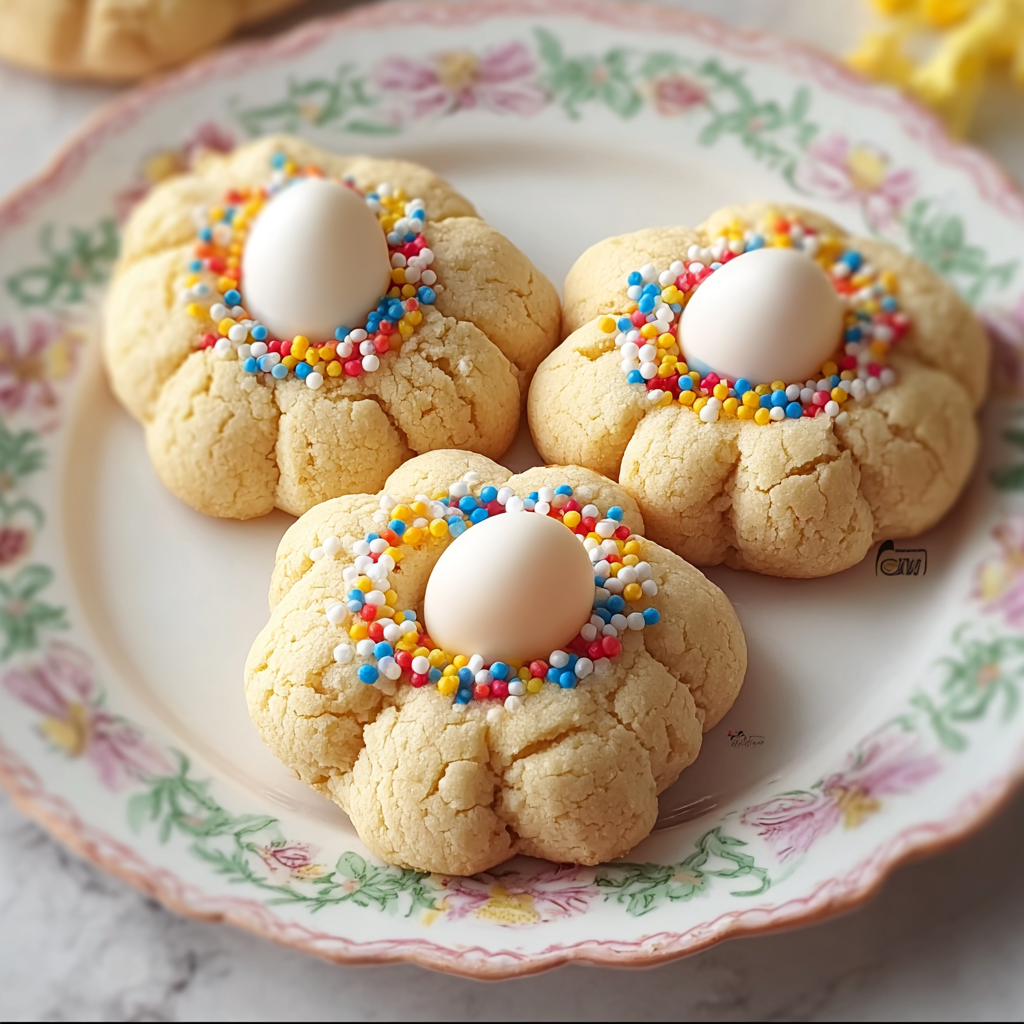
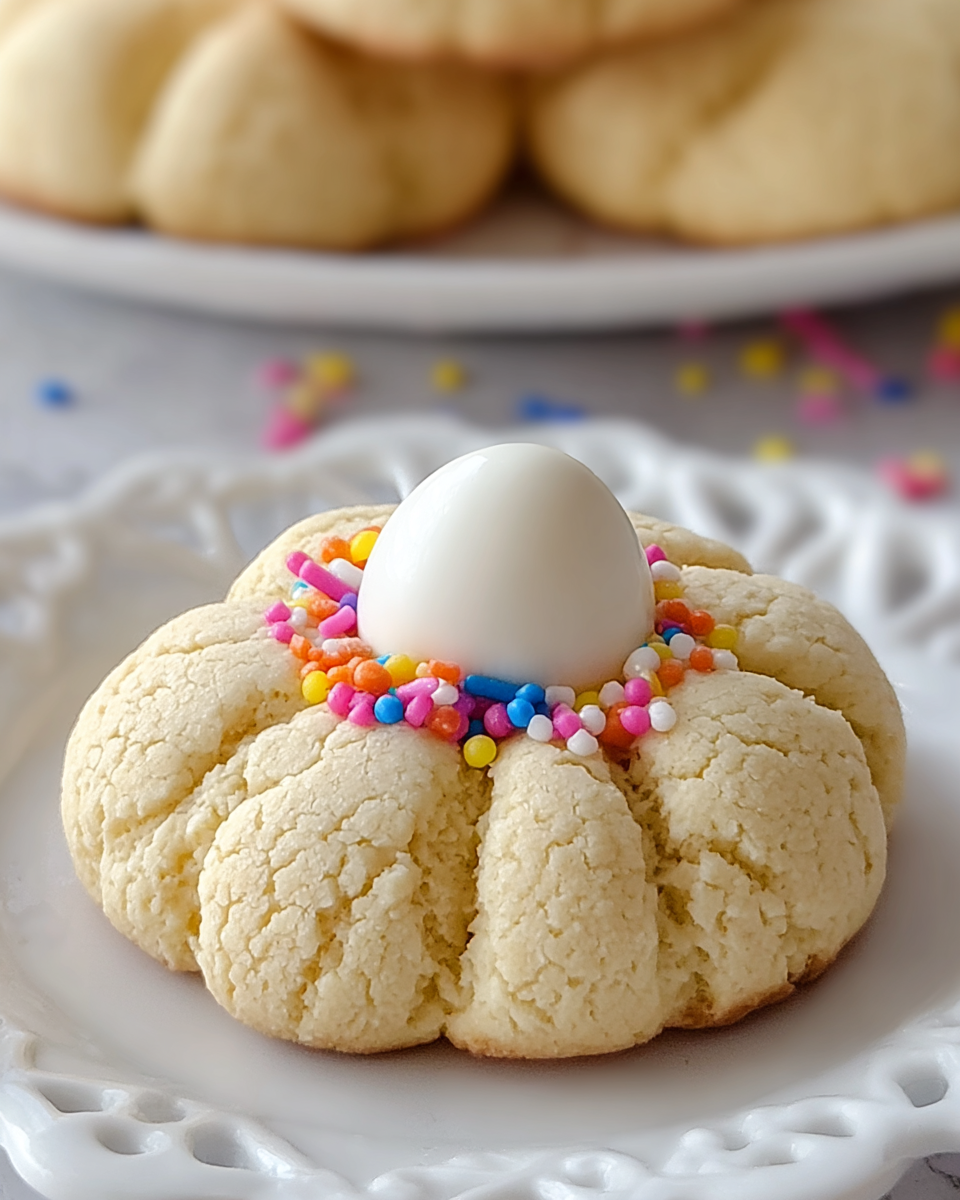
Traditional Italian Egg Cookies are a beginner-friendly Easter bake with tender lemon-scented dough, cheerful sprinkles, and a festive whole egg tucked into the center. They feel special on a holiday table, but the method is simple, reliable, and very doable in a home kitchen.
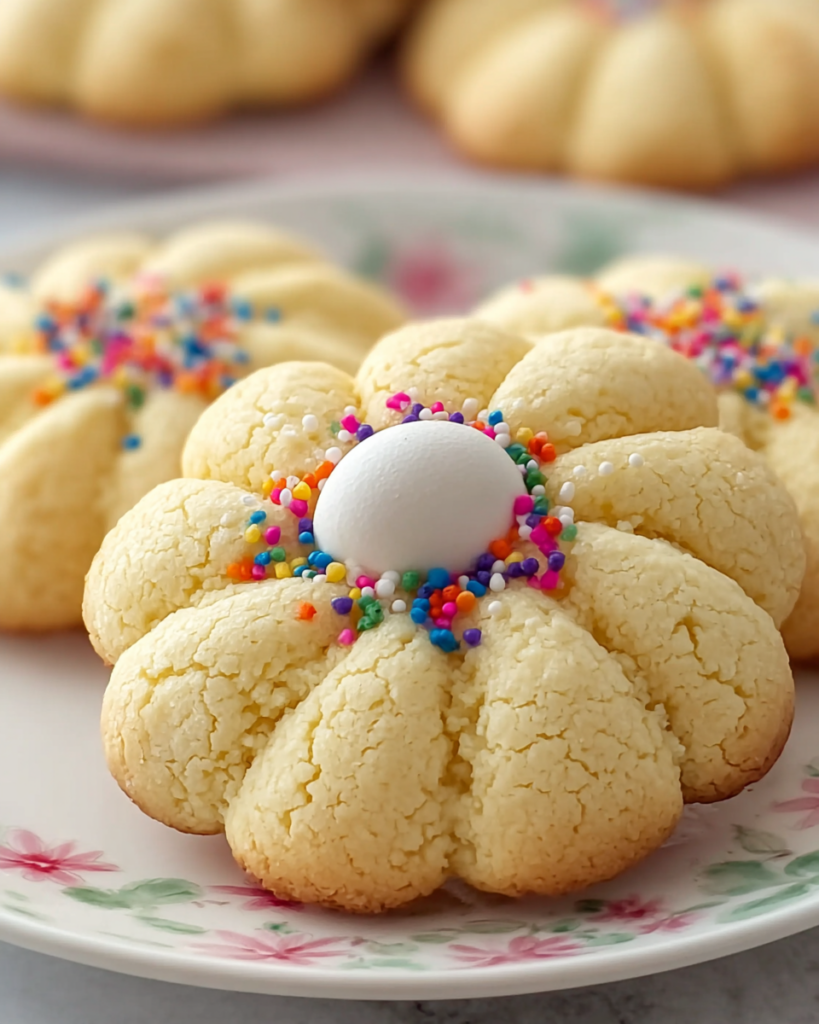
These cookies are one of those bakes that instantly look celebratory, even before you take the first bite. The soft dough shapes easily, the lemon keeps the flavor light and bright, and the colored sprinkles give every ring a classic holiday finish.
What makes them so appealing is the balance between beauty and comfort. You are not making a fussy pastry here. You are working with a straightforward dough that comes together by hand, then turns into cookies that look charming and old-fashioned once baked.
They are especially nice for Easter brunch, dessert platters, or gifting because they hold their shape well and bring a lot of visual appeal to the table. If you enjoy recipes that feel meaningful, traditional, and still practical enough for a weekend bake, this one fits beautifully.
Ingredients
Whole eggs are the signature decoration here, sitting right in the center of each cookie ring and giving the finished batch its traditional festive look.
Eggs for the dough help bind everything together and give the cookies a tender, rich texture without making them heavy.
Granulated sugar sweetens the dough just enough, keeping the flavor classic and clean rather than overly rich.
Flour forms the structure of the cookies and creates a soft dough that is easy to roll, twist, and shape with your hands.
Baking powder gives the dough a little lift so the cookies bake up light instead of dense.
Milk and neutral oil keep the dough supple and easy to handle, which is especially helpful when you are rolling it into ropes.
Lemon zest and vanilla bring the character of the cookies to life. The lemon adds freshness, while the vanilla rounds everything out with a gentle bakery-style aroma.
Candy sprinkles add the bright finishing touch and give the tops that cheerful, traditional look these cookies are known for.
Cooking Steps
STEP 1: Start by bringing the eggs closer to room temperature, especially the whole eggs that will sit in the middle of the cookies. Warmed eggs are less likely to crack in the oven, and this small step makes the baking process smoother from the start.
STEP 2: Whisk the dough eggs with the sugar until the mixture looks pale and a little airy. Stir in the milk, oil, lemon zest, and vanilla until the wet mixture looks smooth and evenly combined.
STEP 3: Add the flour and baking powder, then stir until a soft dough forms. It should feel tender and slightly tacky rather than stiff. Once it comes together, use your hands to gently finish mixing without overworking it.
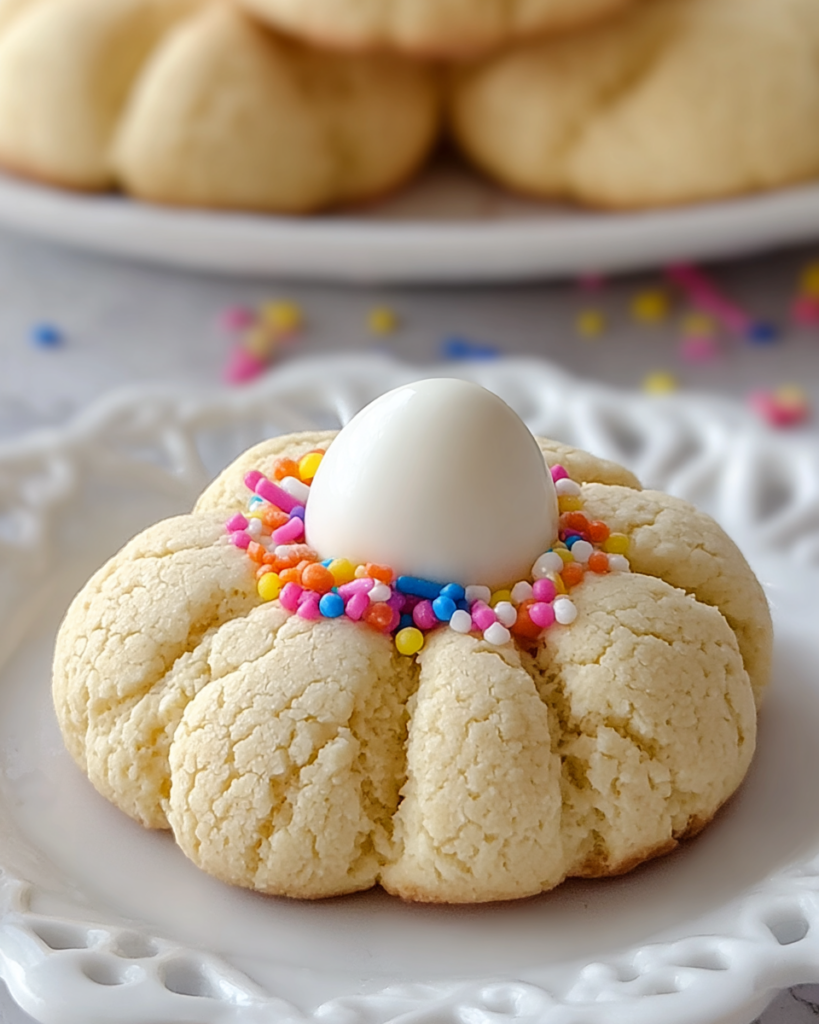
STEP 4: Lightly oil your fingertips before shaping. Pull off portions of dough, roll each piece into a rope, fold it over itself, twist it, and connect the ends into a ring. This gives the cookies their classic braided appearance.
STEP 5: Nestle one whole egg into the center of each ring and transfer the shaped cookies to lined baking trays. Leave a little space between them so they can bake evenly and color nicely around the edges.
STEP 6: Finish with sprinkles, then bake until the tops are golden and the bottoms are lightly browned. Let the cookies cool completely on a rack so the dough sets properly and the texture becomes pleasantly tender.
Serving Ideas for Traditional Italian Egg Cookies
A hot cup of coffee is one of the simplest and most fitting pairings for these cookies. The lemon in the dough tastes especially nice with espresso, cappuccino, or even a mild breakfast blend if you are serving them in the morning.
They also work beautifully on an Easter brunch table alongside fresh fruit and other small baked treats. Because they are decorative, they help fill out a platter without needing much extra styling or garnish.
For a dessert spread, serve them with tea or a light citrus drink. Since the cookie itself is mildly sweet, it pairs best with something not too heavy, letting the lemon and vanilla remain the stars.
Can I make the dough ahead of time?
Yes, you can prepare the dough in advance and keep it covered in the refrigerator for about a day before shaping. Let it sit for a short time at room temperature if it feels too firm to roll comfortably when you are ready to bake.
Do the eggs in the center fully cook?
They should cook through during baking, especially when brought closer to room temperature before going into the oven. The exact texture can vary slightly by egg size, so it helps to use large eggs and bake until the cookies are clearly golden and set.
Why is my dough sticky while shaping?
This dough is meant to be soft, so a little stickiness is normal. Instead of adding much more flour, lightly oil your fingertips as you work. That keeps the dough easy to roll and twist without making the finished cookies dry or tough.
Can I use different sprinkles or flavoring?
Absolutely. Bright nonpareils give the most traditional look, but other colorful sprinkles can work if they do not melt too quickly. You can also lean more citrus-forward by increasing the lemon aroma slightly, as long as the dough stays balanced and not overly wet.
Helpful Tips
- Keep your hands lightly oiled while shaping so the ropes stay smooth and easy to handle.
- Do not pack the flour too tightly when measuring, or the dough may become firmer than needed.
- Cool the cookies fully before moving or serving them so the structure sets and the centers stay neat.
How to Store & Reheat
Because each cookie includes a baked whole egg, leftovers are best stored in the refrigerator once fully cooled. Place them in an airtight container and enjoy them within 3 days for the best texture and freshness.
For longer storage, you can freeze the baked cookies, though the texture is nicest when enjoyed fresh or within a few days. Wrap them well and freeze for up to 1 month. Thaw in the refrigerator, then bring to room temperature before serving.
Reheating is usually not necessary, but if you want to take the chill off, let the cookies sit out briefly or warm them very gently for a few minutes in a low oven. Avoid overheating, since that can dry the dough and dull the delicate lemon-vanilla flavor.
Traditional Italian Egg Cookies
Ingredients
- 12 large eggs kept whole for decorating the centers
- 1 teaspoon vanilla essence
- 1 cup granulated white sugar
- 3 1/4 cups plain all-purpose flour
- 2 tablespoons multicolored candy sprinkles preferably round nonpareils
- 1/2 cup milk
- 2 large eggs
- 3 teaspoons baking powder
- 1/3 cup neutral vegetable oil such as Wesson, plus a little extra for handling the dough
- Finely grated zest of 1 lemon
Instructions
- Remove the eggs from the refrigerator about 2 hours before beginning so they may come to room temperature. To help prevent cracking during baking, place the 12 whole eggs intended for the centers in a bowl and cover them with hot tap water. Preheat the oven to 350°F (175°C) and line two baking trays with parchment paper.
- In a large bowl, whisk the 2 eggs together with the sugar for about 2 minutes, or until the mixture looks pale and foamy. Add the vegetable oil and milk, then stir in the lemon zest and vanilla essence until thoroughly combined.
- Add the flour and baking powder to the wet mixture, preferably by sifting them in. Stir with a wooden spoon until no dry patches remain, then use your hands to bring the mixture together into a soft, slightly sticky dough ball.
- Pour a small amount of vegetable oil into a separate bowl for greasing your fingertips while shaping. Take a piece of dough roughly the size of a golf ball and, with lightly oiled fingers, roll it into a rope about 1/2 inch thick and approximately 14 inches long. Fold the rope in half, twist it, and join the ends to create a ring.
- Place one of the whole eggs in the center of each dough ring, then transfer the shaped cookies to the prepared baking trays. Repeat until all the dough and eggs have been used.
- Scatter the colorful sprinkles over the tops of the formed cookies. Bake for 25 minutes, or until the bottoms are lightly browned and the tops are golden. Move the baked cookies to a wire rack and let them cool completely before serving.