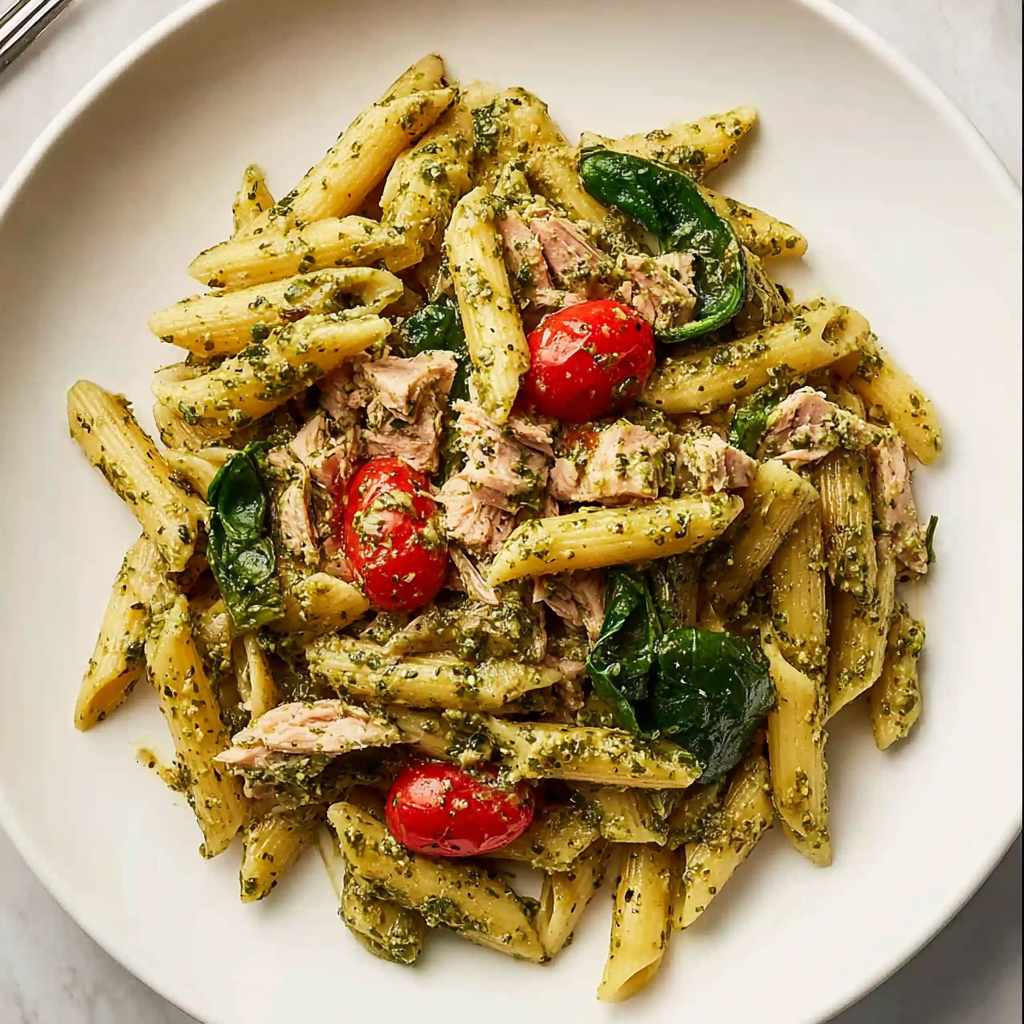
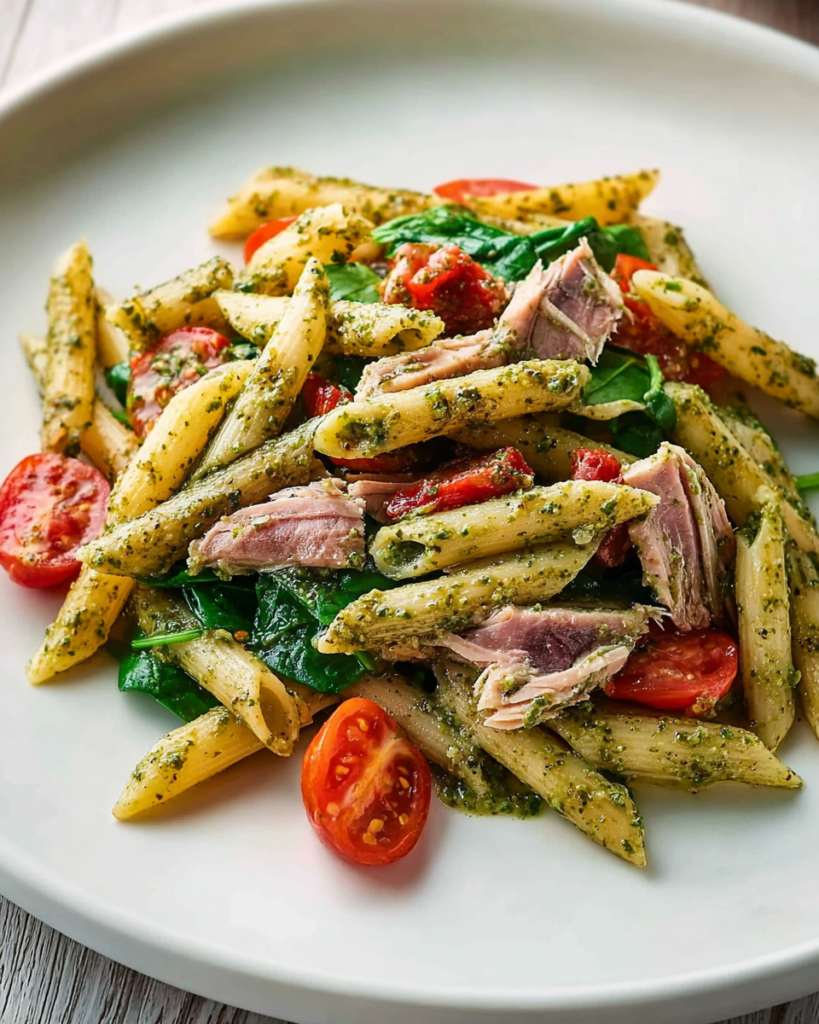
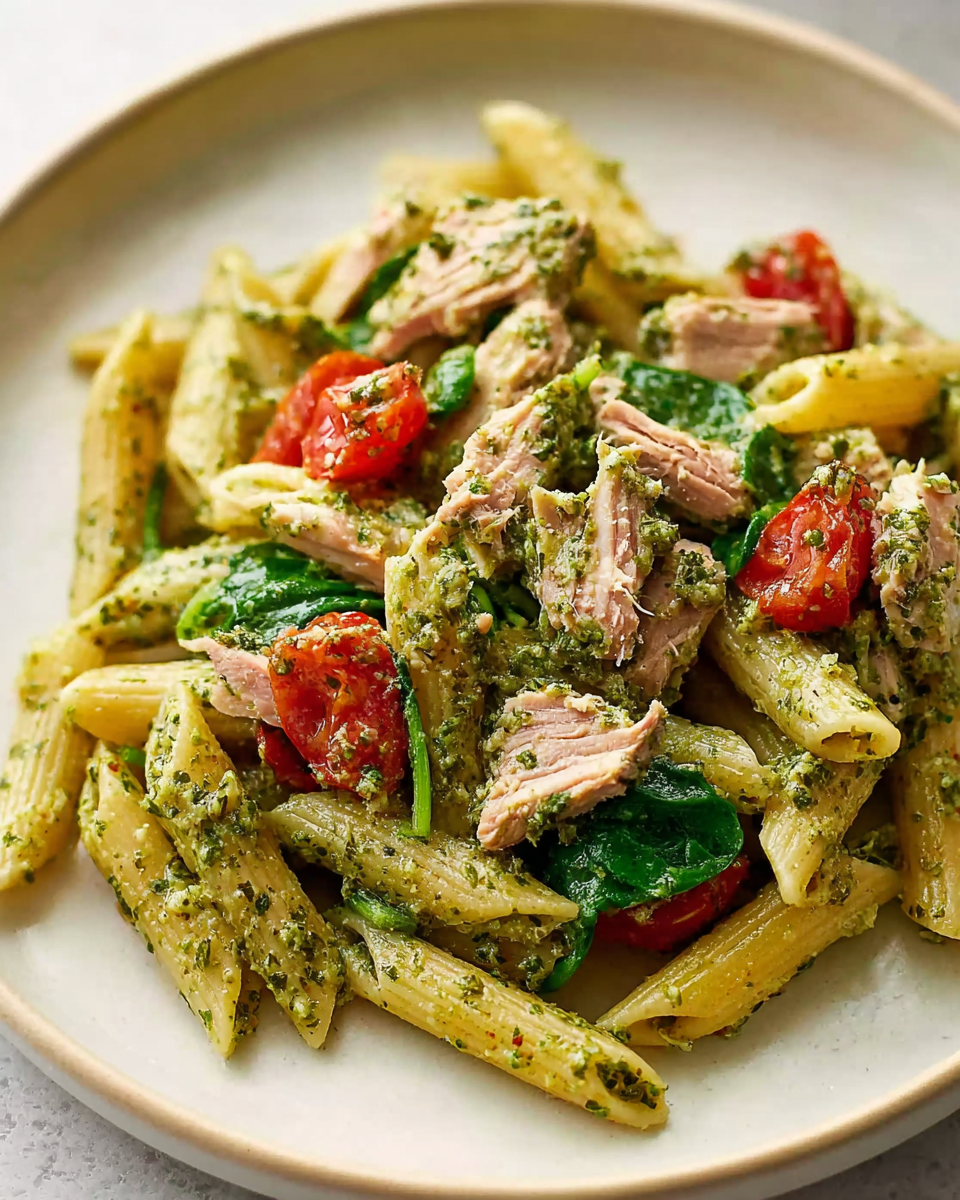
Tuna pesto pasta is a quick, hearty dinner with silky sauce, sweet cooked tomatoes, tender rotini, and pantry-friendly tuna. It comes together in about 30 minutes and fits beautifully into busy weeknights, simple family meals, or a low-effort lunch prep.
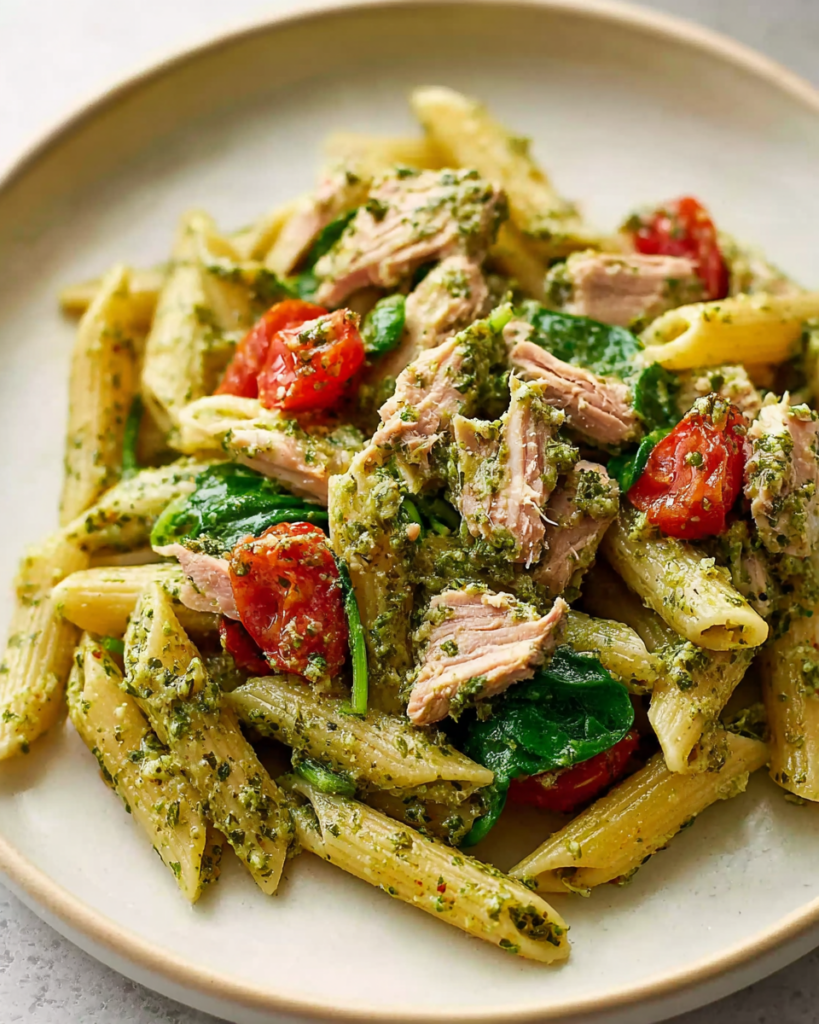
This is the kind of pasta you make when you want something comforting but not heavy. The pesto gives it that bold basil-and-garlic flavor right away, while the tomatoes cook down into a soft, savory base that makes the whole dish taste more finished than the short ingredient list suggests.
I also love how practical it is. You are working with a few easy staples, but the combination still feels balanced and satisfying, especially once the spinach wilts into the sauce and the tuna flakes through the pasta.
What makes this one work so well is the contrast. You get rich pesto, juicy tomatoes, tender pasta, and small savory bites of tuna in every forkful. Nothing is complicated, but everything pulls in the same direction.
What You Need to Make This Tuna Pesto Pasta
- Rotini pasta keeps this dish especially good because all those spirals catch the pesto, tomato juices, and little flakes of tuna.
- Tuna packed in oil brings the best texture here. It stays moist, flavorful, and blends into the sauce without turning dry or chalky.
- Prepared pesto gives you instant depth from basil, garlic, cheese, and oil, which means you can build a full-tasting sauce without extra steps.
- Cherry tomatoes soften and collapse as they cook, creating a naturally sweet, lightly saucy base that keeps the pasta from feeling flat.
- Fresh baby spinach adds color and freshness and melts into the hot mixture in just a minute or two.
- Garlic lays down the savory foundation at the start and gives the pesto and tuna a little more punch.
- Olive oil helps the garlic bloom and gets the tomatoes started so they soften evenly in the pan.
- Kosher salt matters both in the pasta water and in the skillet because the tomatoes and pasta need seasoning to really wake up.
Cooking Steps
STEP 1: Bring a large pot of water to a full boil and salt it well. Cook the rotini until just al dente so it still has a little bite, then scoop out some of the pasta water before draining. That starchy water is what helps turn the pan mixture into a smooth, clingy sauce later.
STEP 2: While the pasta cooks, warm the olive oil in a large skillet over medium heat. Add the minced garlic and stir only until fragrant. You want it soft and aromatic, not browned, because the flavor should stay mellow and blend into the pesto rather than dominate it.
STEP 3: Add the halved tomatoes and a light pinch of salt, then let them cook down gradually. This is where a lot of the flavor happens. As the tomatoes soften, press them gently so they release their juices and become a loose, chunky base instead of just sitting in the pan as separate pieces.
STEP 4: Once the tomatoes are soft and jammy, stir in the pesto until the skillet looks glossy and evenly combined. Add the spinach and tuna next, folding gently so the spinach wilts and the tuna warms through without breaking up too much. You want tender flakes, not a mashed filling.
STEP 5: Tip the drained pasta into the skillet and toss everything together until the rotini is fully coated. Add a splash of the reserved pasta water and keep tossing. The sauce should loosen just enough to coat the spirals smoothly without becoming watery.
STEP 6: Taste and adjust before serving. A little extra salt may be all it needs, depending on your pesto and tuna. Serve it hot while the tomatoes are still soft, the spinach is bright, and the sauce has that fresh, silky finish.
Can I use tuna packed in water instead of oil?
Yes, you can, but the finished pasta will be a little leaner and less rich. If that is what you have on hand, add a small extra drizzle of olive oil when you combine the sauce so the texture stays smooth and full.
What other pasta shapes work well here?
Anything with ridges, curves, or twists will do a good job holding the sauce. Fusilli, cavatappi, and penne are all solid choices. Long noodles are less ideal because the tuna and softened tomato mixture clings better to shorter shapes.
Can I make this ahead for lunch or meal prep?
You can. It keeps well for a couple of days and tastes especially good once the flavors settle together. For the best texture, cook the pasta just to al dente and save a little water or olive oil to refresh it when reheating.
Why should I save the pasta cooking water?
That water contains starch from the pasta, which helps the pesto and tomato juices come together into a glossy sauce. It loosens the mixture without thinning out the flavor the way plain water would.
Perfect Pairings
A crisp green salad with lemony dressing works really well beside this pasta. The freshness cuts through the richness of the pesto and tuna and keeps the meal feeling bright.
Warm garlic bread or a simple toasted baguette is another great match. It gives you something to swipe through the extra tomato-pesto sauce left on the plate.
For a vegetable side, roasted zucchini or broiled green beans fit naturally with the flavors in the skillet. They stay simple and let the pasta remain the center of the meal.
Helpful Tips
- Let the tomatoes cook long enough to really soften. That extra time is what gives the sauce a sweeter, more rounded flavor.
- Add the tuna near the end and fold it in gently so it stays flaky instead of disappearing into the pan.
- Use the reserved pasta water a little at a time. It is much easier to loosen the sauce gradually than to fix a skillet that has become too thin.
Keeping Leftovers Fresh
Store leftovers in an airtight container in the refrigerator for up to 3 days. The pasta will absorb some of the sauce as it sits, so it may look a little tighter the next day, but that is easy to fix.
To reheat, place it in a skillet over low heat with a splash of water and stir gently until warmed through. You can also microwave it in short bursts, stirring in between, but the stovetop gives you a better texture and keeps the tuna from overheating too fast.
Freezing is possible, but it is not the best option for this dish. The pasta, spinach, and pesto tend to lose some of their fresh texture after thawing, so this one is better enjoyed from the fridge within a few days.
Tuna Pesto Pasta
Ingredients
- 1 pound rotini pasta
- 10 ounces tuna packed in oil thoroughly drained
- 6 ounces store-bought pesto
- 1 pint cherry tomatoes cut in half
- 5 ounces fresh baby spinach stems removed and leaves roughly chopped
- 2 garlic cloves finely minced
- 1 tablespoon olive oil
- Kosher salt as needed
Instructions
- Bring a large pot of water to a boil and season it generously with kosher salt. Add the rotini once the water reaches a full boil, then cook according to the package directions until al dente.
- As the pasta cooks, place a large pan over medium heat and add the olive oil. When the oil is hot, stir in the minced garlic and cook briefly until aromatic, about 30 seconds to 1 minute.
- Add the halved cherry tomatoes to the pan and pierce them with a paring knife. Season lightly with salt, then cook for 15 to 20 minutes, gently pressing them with the back of a wooden spoon as they soften and release their juices.
- Stir the pesto into the cooked tomatoes and garlic mixture, then taste and adjust the seasoning as needed. Add the chopped spinach and drained tuna, and stir until everything is evenly combined and heated through.
- Before draining the pasta, reserve 1 cup of the cooking water. Add the drained rotini directly to the pan and toss well so the pasta is fully coated in the sauce. If needed, add a little of the reserved pasta water at a time until the sauce reaches the desired consistency.
- Taste once more and adjust the seasoning as necessary. Serve immediately while hot.