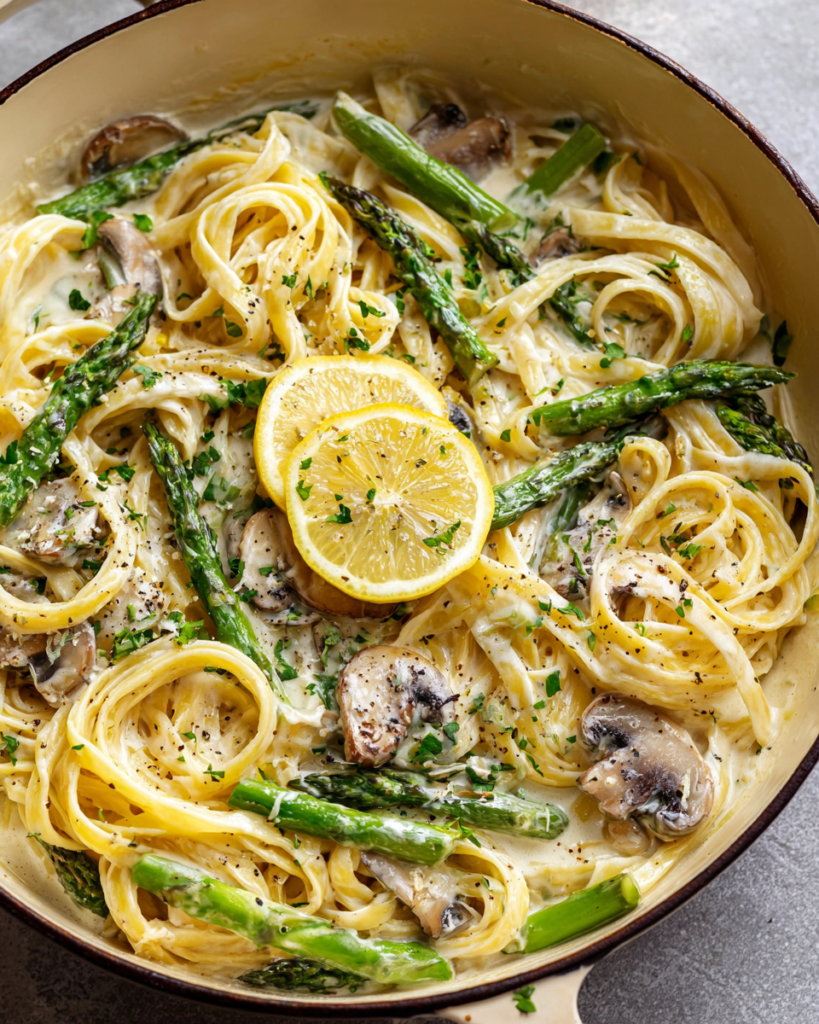
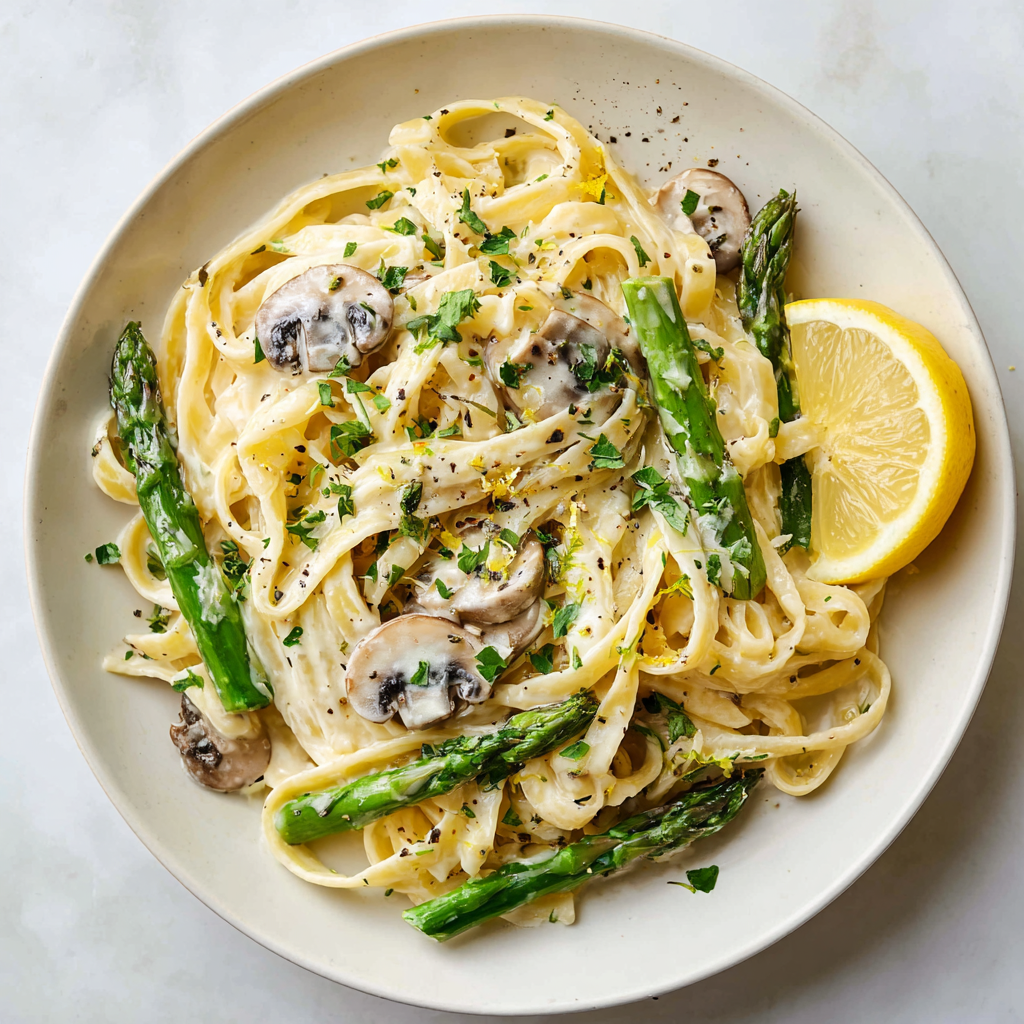
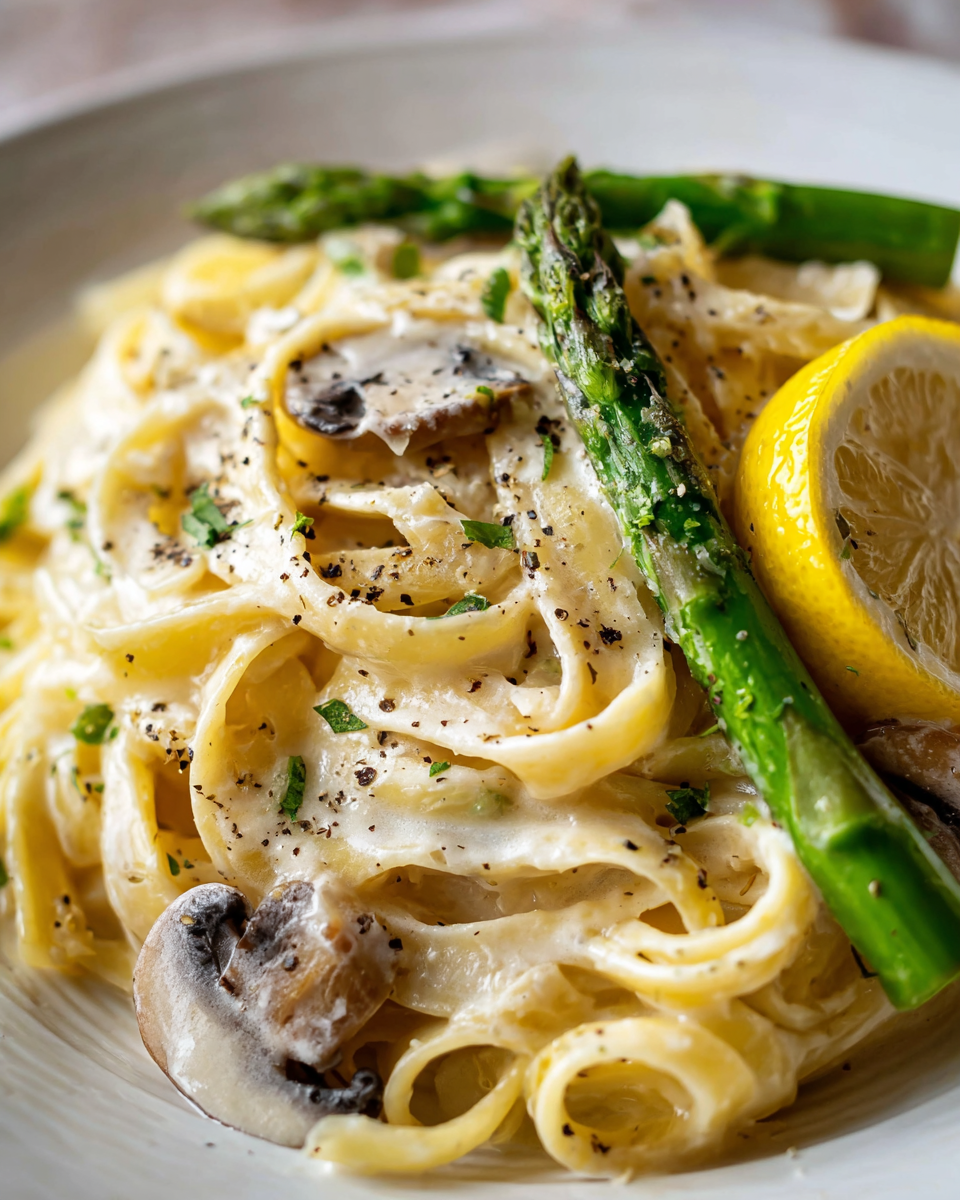
Vegan Lemon Asparagus Pasta is a creamy, bright, beginner-friendly dinner made with tender fettuccine, fresh asparagus, mushrooms, garlic, and a silky tofu-based lemon sauce that feels comforting without using dairy.
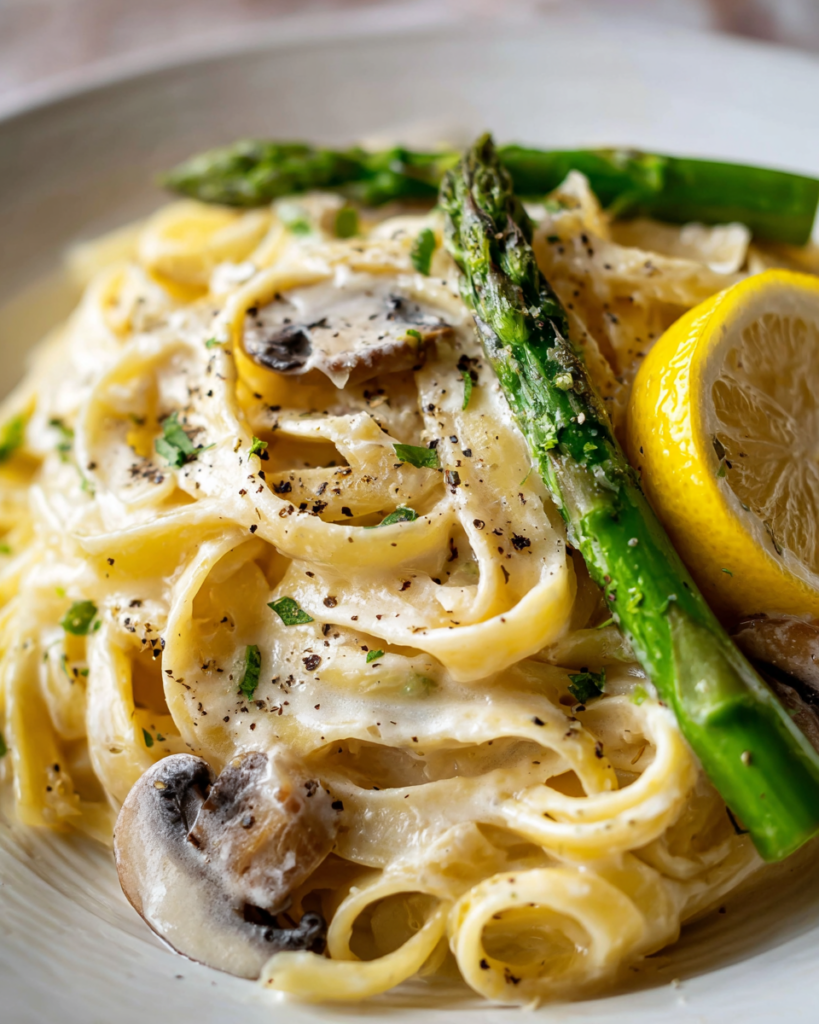
This is the kind of pasta you can make when you want something fresh but still satisfying. The asparagus adds a crisp-tender bite, the lemon keeps the sauce lively, and the tofu blends into a smooth base that coats the noodles beautifully.
What makes this dish work so well is the balance between richness and brightness. The plant-based milk softens the sauce, the garlic and onion build savory depth, and the lemon zest brings that fresh finish that keeps every forkful from feeling too heavy.
It is especially useful for weeknight cooking because the vegetables cook quickly, the sauce comes together in a blender, and the pasta only needs a short rest at the end to absorb the flavors. Serve it hot, with vegan Parmesan and red pepper flakes, for a cozy vegan pasta dinner that still tastes light and springy.
What You Need to Make This Vegan Lemon Asparagus Pasta
Fettuccine forms the hearty base of the dish and gives the creamy lemon sauce plenty of surface area to cling to.
Asparagus adds a fresh green bite and a tender-crisp texture that pairs naturally with lemon.
Olive oil helps sauté the garlic, asparagus, onion, and mushrooms without weighing down the sauce.
Fresh garlic gives the pasta its savory backbone, used in both the asparagus and sauce base.
Salt and black pepper season the vegetables and help bring the lemony sauce into balance.
Tofu creates the creamy vegan sauce; silken tofu gives the smoothest texture, while firm tofu makes it slightly thicker.
Unsweetened plant-based milk loosens the blended tofu into a pourable sauce. Almond milk works well, as long as it is unsweetened.
Lemon juice and lemon zest bring brightness, freshness, and the signature citrus flavor.
Diced onion adds gentle sweetness and depth once softened in the skillet.
Mushrooms give the sauce a savory, earthy note that makes the pasta feel more complete.
Flour helps the sauce lightly thicken as it warms in the pan.
Ground mustard and onion powder add quiet background flavor without overpowering the lemon.
Italian herbs give the dish a familiar pasta-style aroma and tie the sauce together.
Nutritional yeast is optional, but it adds a savory, cheese-like note that works well with the tofu sauce.
Vegan Parmesan finishes the pasta with extra richness and a salty touch.
Red pepper flakes add a mild heat that keeps the creamy sauce lively.
Cooking Steps
STEP 1: Cook the fettuccine in a large pot according to the package directions until it is just tender. Drain it well, rinse briefly with cold water to stop the cooking, and set it aside while you prepare the vegetables and sauce.
STEP 2: Warm a teaspoon of olive oil in a skillet over medium heat. Add one minced garlic clove and cook for about 30 seconds, just until fragrant. Stir in the asparagus pieces with a small pinch of salt and black pepper.
STEP 3: Cover the skillet and let the asparagus cook for about 3 minutes, tossing once if needed. It should look bright green and feel tender but not mushy. Transfer it to a bowl and keep it nearby for finishing the pasta.
STEP 4: Return the skillet to medium heat and add a little more oil if the pan looks dry. Add the remaining minced garlic, then stir in the diced onion and sliced mushrooms. Cook for about 2 minutes, until the onion begins to soften and the mushrooms release some moisture.
STEP 5: While the vegetables cook, blend the tofu, plant-based milk, flour, onion powder, ground mustard, lemon juice, and part of the lemon zest until completely smooth. A silky texture is important here because this mixture becomes the creamy base for the pasta.
STEP 6: Pour the blended sauce into the skillet with the onion and mushrooms. Stir in the Italian herbs, nutritional yeast if using, and salt. Let the sauce come to a gentle simmer so it can thicken slightly and pick up the flavor from the vegetables.
STEP 7: Add the cooked fettuccine and about two-thirds of the asparagus to the skillet. Gently fold everything together until the noodles are evenly coated in the lemon sauce. If the sauce feels too thick, splash in a small amount of plant-based milk to loosen it.
STEP 8: Remove the skillet from the heat, cover it, and let the pasta rest for 2 minutes. Finish with red pepper flakes, black pepper, extra lemon zest, vegan Parmesan, and the reserved asparagus arranged over the top. Serve hot while the sauce is creamy.
Can I use silken tofu instead of firm tofu?
Yes, silken tofu is a great choice if you want the sauce to be extra smooth and creamy. Firm tofu also works, but it may create a slightly thicker sauce. Blend it very well and add a little more plant-based milk if needed.
How do I keep the sauce from tasting too sharp?
Start with the listed lemon juice, then taste before adding more zest or extra lemon. The tofu and plant-based milk mellow the citrus, while salt, herbs, mushrooms, and nutritional yeast help round out the flavor so the sauce tastes bright, not sour.
Helpful Tips
- Do not overcook the asparagus. It should stay bright green and lightly crisp so it adds freshness against the creamy pasta.
- Blend the sauce until completely smooth. A high-speed blender gives the most velvety texture, especially if you are using firm tofu.
- Let the pasta rest briefly after tossing. Those 2 minutes help the noodles absorb the lemon, garlic, and herb flavors.
Serving Ideas for Vegan Lemon Asparagus Pasta
A simple green salad is one of the easiest pairings because it keeps the meal fresh and balanced. Choose crisp lettuce, cucumber, or arugula with a light vinaigrette so the pasta stays the main focus.
Garlic bread or toasted sourdough also works beautifully with this dish. The creamy lemon sauce is light but still rich enough that a crisp slice of bread feels right alongside it.
For a more colorful plate, serve the pasta with roasted cherry tomatoes or a small side of sautéed spinach. Both options add extra vegetables without competing with the asparagus and lemon flavors.
How to Store & Reheat
Store leftovers in an airtight container in the refrigerator for up to 3 days. The sauce will thicken as it cools, so the pasta may look less creamy straight from the fridge.
To reheat, place the pasta in a skillet over low heat with a splash of unsweetened plant-based milk. Toss gently until the sauce loosens and the noodles are warmed through. You can also microwave it in short intervals, stirring between each round.
Freezing is possible, but the texture of tofu-based sauces can change after thawing. If you do freeze it, store it for up to 1 month and reheat slowly with extra plant-based milk to help bring the sauce back together.
Can I make this pasta ahead of time?
You can prepare parts of it ahead. Cook the asparagus and blend the tofu sauce earlier in the day, then store them separately in the refrigerator. For the best texture, cook or reheat the pasta and combine everything just before serving.
What can I use instead of asparagus?
Broccoli florets, green peas, zucchini, or spinach can work well with the lemon sauce. Keep the cooking time short so the vegetables stay fresh and tender. If using spinach, stir it in near the end because it wilts quickly.
Is this pasta spicy?
It is only mildly spicy if you add red pepper flakes as a garnish. You can skip them completely for a softer, creamier flavor, or add a pinch at the table so each serving can be adjusted to taste.
Vegan Lemon Asparagus Pasta
Ingredients
For the Pasta and Asparagus
- 1 pound asparagus trimmed and sliced into 2-inch lengths
- 1 teaspoon olive oil
- 8 ounces fettuccine
- 1 fresh garlic clove finely minced
- Small pinch of salt
- Small pinch of ground black pepper
For the Sauce
- 2 tablespoons lemon juice
- 7 ounces firm tofu or silken tofu used for a smoother and more hydrated sauce texture
- 1 teaspoon olive oil
- 1/4 teaspoon ground mustard
- 1/3 cup onion diced
- 1 cup unsweetened plant-based milk such as almond milk
- 1/4 teaspoon onion powder
- 2 ounces mushrooms thinly sliced
- 1 teaspoon flour
- 1/2 teaspoon salt
- 3 garlic cloves minced
- Zest from 1/2 lemon
- 1 to 2 tablespoons nutritional yeast optional, for a savory cheese-like note
- 2 teaspoons mixed Italian herbs
For Garnish
- Vegan Parmesan
- 3 to 4 slender lemon rounds
- Red pepper flakes
- Zest from 1/2 lemon
- Freshly ground black pepper
Instructions
- Cook the fettuccine according to the directions printed on the package.
- Drain the pasta, then rinse it under cold water to halt further cooking and help keep the noodles from clinging together.
- Place the prepared fettuccine aside until needed.
- Warm a small amount of oil in a skillet set over medium heat.
- Add the minced garlic and sauté for about 30 seconds, just until its fragrance becomes noticeable.
- Stir in the asparagus pieces, along with a light pinch of salt and black pepper.
- Toss the mixture well, then cover the skillet and allow the asparagus to cook and lightly steam for about 3 minutes, or until it becomes vivid green.
- Transfer the cooked asparagus to a bowl and reserve it for later.
- Return the same skillet to medium heat, adding a little more oil only if necessary.
- Add the remaining minced garlic and sauté briefly until aromatic.
- Stir in the diced onion and sliced mushrooms, then cook for about 2 minutes, or until they begin to soften.
- While the onion and mushrooms are cooking, blend the tofu, plant-based milk, onion powder, and flour until the mixture becomes completely smooth.
- Pour the blended sauce into the skillet with the softened onion and mushrooms.
- Add the Italian herbs and stir until the sauce is evenly combined.
- Bring the sauce to a gentle simmer, then fold in the remaining lemon zest and the thin lemon slices.
- Taste the sauce and refine the seasoning as needed with salt, garlic powder, extra herbs, or additional black pepper.
- Add the cooked fettuccine and about two-thirds of the sautéed asparagus to the skillet.
- Gently fold everything together until the pasta is thoroughly coated in the lemony sauce.
- Cover the skillet, take it off the heat, and allow the pasta to rest for about 2 minutes so the flavors can settle together.
- Finish the dish with red pepper flakes, a little black pepper, and fresh basil for added brightness.
- Top with vegan Parmesan if desired, then arrange the reserved asparagus over the pasta.
- Serve hot.