Fresh, colorful, and simple to arrange, this veggie platter presentation is a beginner-friendly party appetizer that makes entertaining feel effortless. Crisp vegetables, creamy dips, and a balanced layout give you a vibrant vegetable tray that looks inviting and serves beautifully.
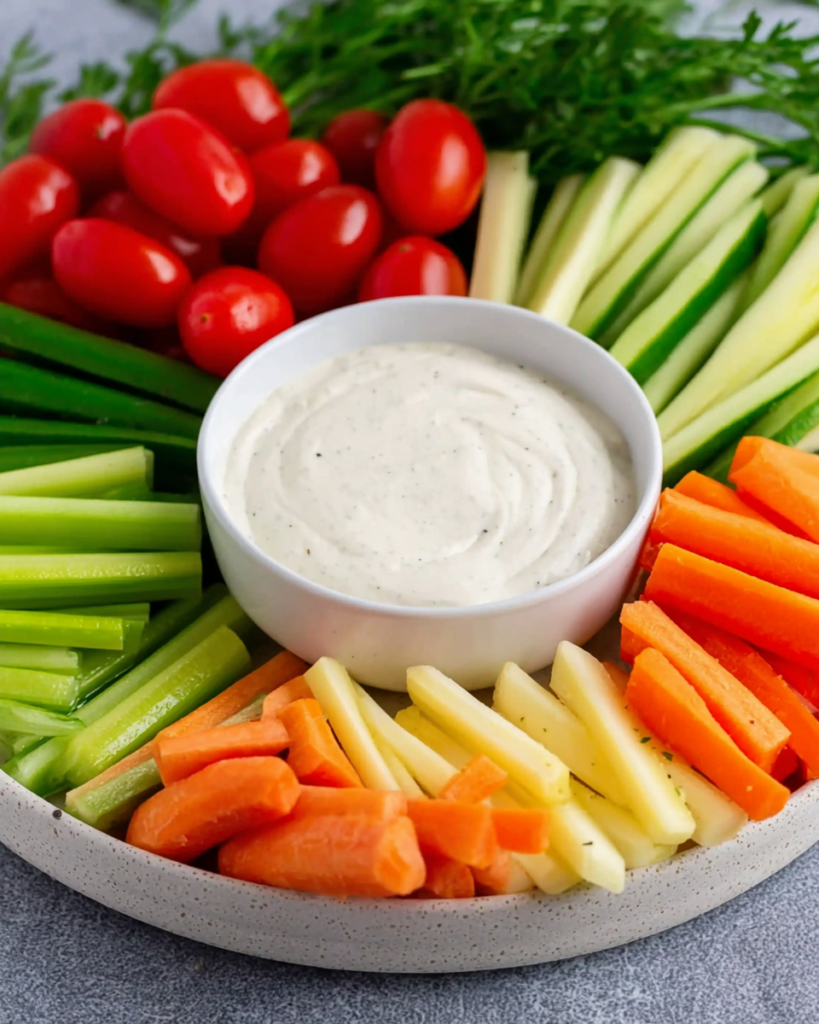
This is the kind of platter that works for almost anything on your calendar. It fits casual snacking, holiday hosting, game day tables, and those moments when you want something fresh on a spread full of heavier dishes.
What makes it so reliable is the mix of textures and colors. You get juicy cherry tomatoes, cool cucumber, crisp celery, sweet carrots, and tender blanched vegetables, all anchored by dips that make the platter feel generous and complete.
It also gives you a lot of flexibility in your kitchen. You can keep it simple, use the vegetables you already have prepped, or make it look a little fuller with optional additions like broccoli or bell peppers without losing the clean, polished look.
What You Need to Make This Veggie Platter Presentation
You do not need a long shopping list to make this platter look abundant. The key is choosing vegetables with different shapes, colors, and textures so every section feels distinct.
Cucumber adds a cool, refreshing crunch and brings a soft green contrast to the platter.
Asparagus spears give the arrangement height and a slightly elegant touch, especially after a quick blanch that keeps them tender-crisp.
Assorted dips make the platter feel complete and useful for a crowd. A mix like hummus, ranch, and spinach artichoke gives you variety in flavor and texture.
Celery keeps things crisp and sturdy, making it one of the easiest vegetables to scoop through thicker dips.
Radishes add sharpness, color, and a delicate sliced look that fills small gaps on the board nicely.
Fresh herb sprigs help the platter look finished without much work. Dill or parsley adds freshness and a little softness around the edges.
Cherry tomatoes bring brightness and juiciness, which helps balance the drier, crunchier vegetables.
Green beans add another tender-crisp element and give the platter a nice middle ground between raw and lightly cooked vegetables.
Carrots bring sweetness, firm texture, and a bright orange color that helps the whole arrangement pop.
Cooking Steps
STEP 1: Start by preparing all the vegetables before you arrange anything. Slice the cucumbers, trim the celery, peel and cut the carrots into short batons, thinly slice the radishes, and rinse the cherry tomatoes well so everything is ready to place.
STEP 2: Briefly blanch the asparagus and green beans until they are just tender but still bright and crisp. This quick step keeps the platter fresh-looking while making those vegetables easier to eat.
STEP 3: Dry the blanched vegetables thoroughly before they go onto the platter. Excess moisture can make the board look messy and can thin out the dips over time.
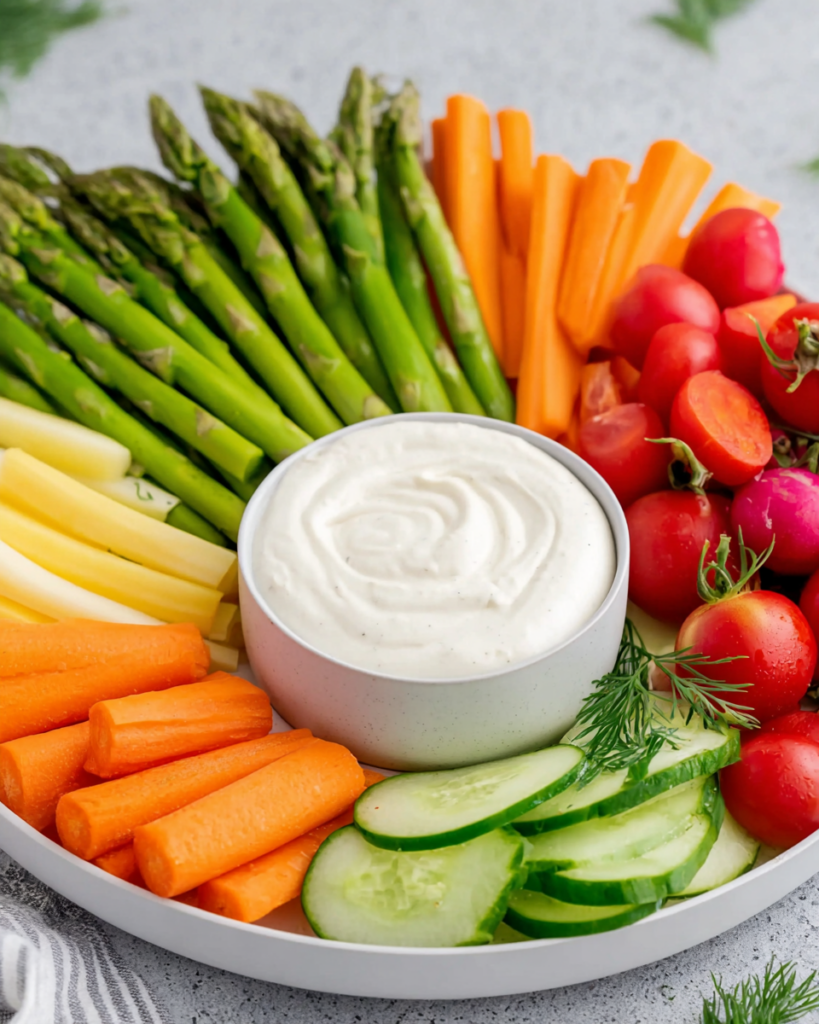
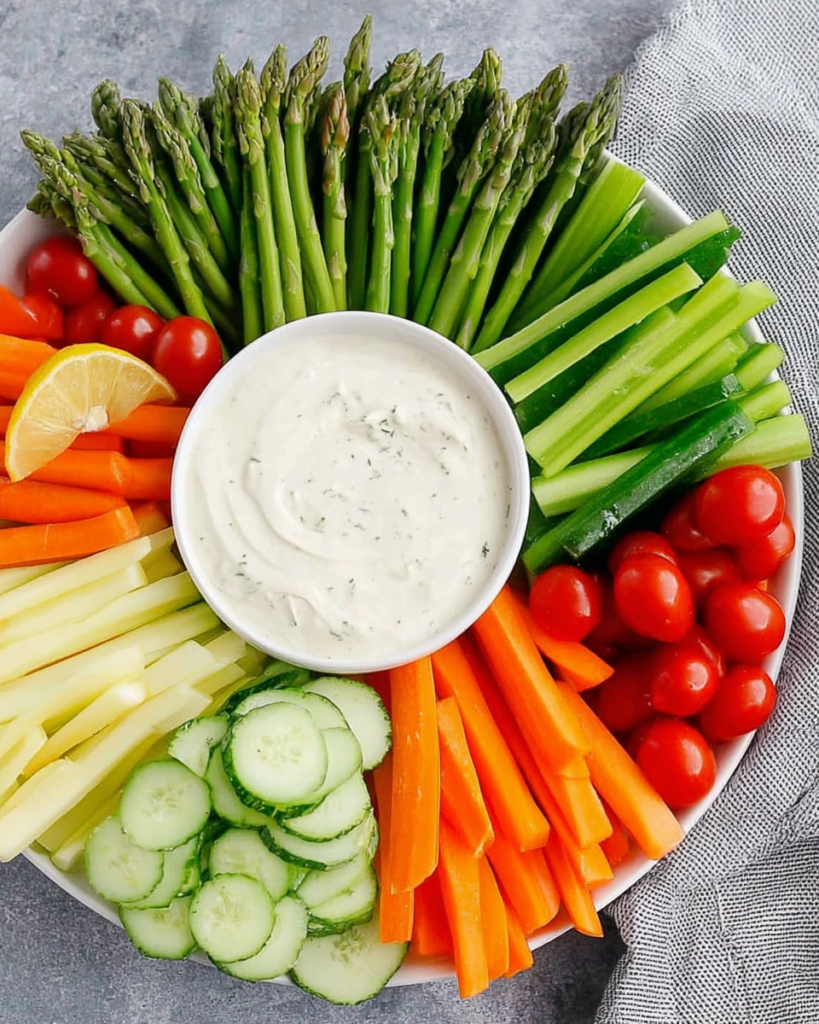
STEP 4: Set your dips into small bowls first and place those bowls on the platter as anchors. Spacing them around the tray helps guests reach them from different sides and makes the arrangement feel balanced.
STEP 5: Arrange the vegetables in grouped sections around the dips instead of scattering them randomly. Keeping each vegetable in its own area gives the platter that full, polished party look and makes it easier for guests to serve themselves.
STEP 6: Fill smaller spaces with cherry tomatoes, radish slices, or herb sprigs so the platter looks abundant without feeling crowded. Serve right away, or cover and chill for a few hours until guests arrive.
Perfect Pairings
A veggie platter like this works especially well beside sliders, sandwiches, or wraps because it adds freshness without competing for attention. It gives the table a lighter option that still feels generous.
It also pairs nicely with other finger foods for parties. Think small savory bites, a cheese board, or simple crackers and spreads if you want a fuller appetizer table.
For brunches or daytime gatherings, this platter fits beautifully next to fruit, deviled eggs, or a chilled pasta salad. It keeps the spread colorful and gives guests something crisp between richer dishes.
Can I make this platter ahead of time?
Yes, and that is one reason it is so useful for entertaining. You can prep the vegetables and dips ahead, then assemble the platter a few hours before serving. For the freshest look and texture, keep it covered and chilled for up to 4 hours.
What vegetables work best on a platter like this?
The best choices are vegetables that stay crisp, hold their shape, and are easy to grab. Cucumbers, carrots, celery, cherry tomatoes, radishes, green beans, and asparagus all work well because they create a good balance of color and texture.
How do I keep the platter looking fresh?
Drying the vegetables well is the biggest detail. Water on the produce can collect on the platter and make everything look tired more quickly. Arranging in neat sections and adding herbs at the end also helps the board stay vibrant and appealing.
What dips go best with a vegetable platter?
A combination of creamy, savory, and slightly hearty dips gives the best variety. Hummus, ranch, and spinach artichoke work nicely together because they suit different vegetables and make the platter feel more complete for guests.
Helpful Tips
- Use bowls for the dips first, then build the vegetables around them so the platter feels balanced instead of crowded.
- Mix shapes and heights by combining rounds, sticks, spears, and sliced vegetables for a more eye-catching presentation.
- Leave a little open space between sections so each vegetable stands out and guests can serve themselves more easily.
How to Store & Reheat
This platter is best enjoyed fresh, but you do have a little flexibility. Once assembled, cover it tightly and refrigerate for up to 4 hours. That keeps the vegetables crisp and the dips safe while still letting you prep before guests arrive.
If you want to work farther ahead, store the cut vegetables in separate containers in the refrigerator for 1 to 2 days, depending on the vegetable. Keep the dips chilled in covered bowls or containers and assemble everything closer to serving time for the freshest presentation.
Freezing is not recommended for the finished platter. Raw vegetables like cucumber, celery, radishes, and tomatoes lose their texture after thawing, and the overall platter will not look its best. There is also no real reheating needed for the vegetables. If one of your dips is usually served warm, such as spinach artichoke, warm that separately just before serving and add it to the platter at the end.
A good veggie platter does more than fill space on the table. It gives your spread freshness, color, and something easy for everyone to enjoy. With a few simple vegetables, a trio of dips, and a thoughtful layout, you can make a platter that looks generous, tastes crisp and satisfying, and fits almost any gathering without adding stress to your prep.
Veggie Platter Presentation
Ingredients
- 1 cup cucumber rounds or half-moons
- 1 cup asparagus spears briefly blanched
- 3 cups assorted dips such as homemade hummus, ranch, and spinach artichoke
- 1 cup celery trimmed into sticks
- 1/2 cup radishes sliced thinly
- Fresh herb sprigs for garnish such as dill or parsley
- 1 cup cherry tomatoes
- 1 cup green beans blanched
- 1 cup carrots peeled and cut into 3-inch batons
Instructions
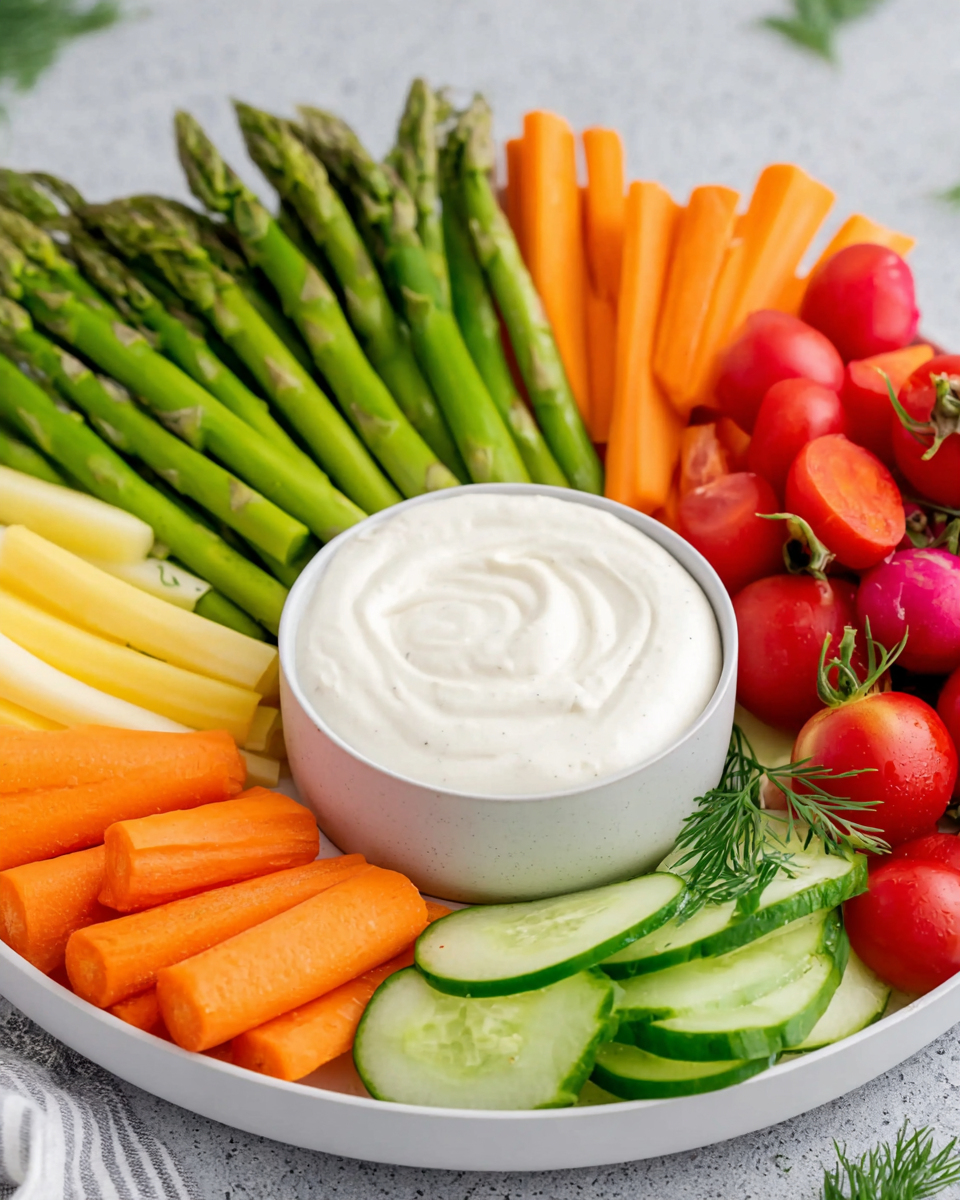
- Arrange the prepared vegetables across a large serving platter, distributing each variety evenly to create a vibrant and attractive presentation.
- Spoon the dips into small serving bowls, then position the bowls around the platter among the vegetables so they are easy to reach from different sides.
- Finish the platter with a scattering of fresh herbs for decoration and added freshness. Serve at once for the best texture, or cover and refrigerate for up to 4 hours before serving.